

Askhabali Alibekov promised to appeal the court's decision in Adygea.
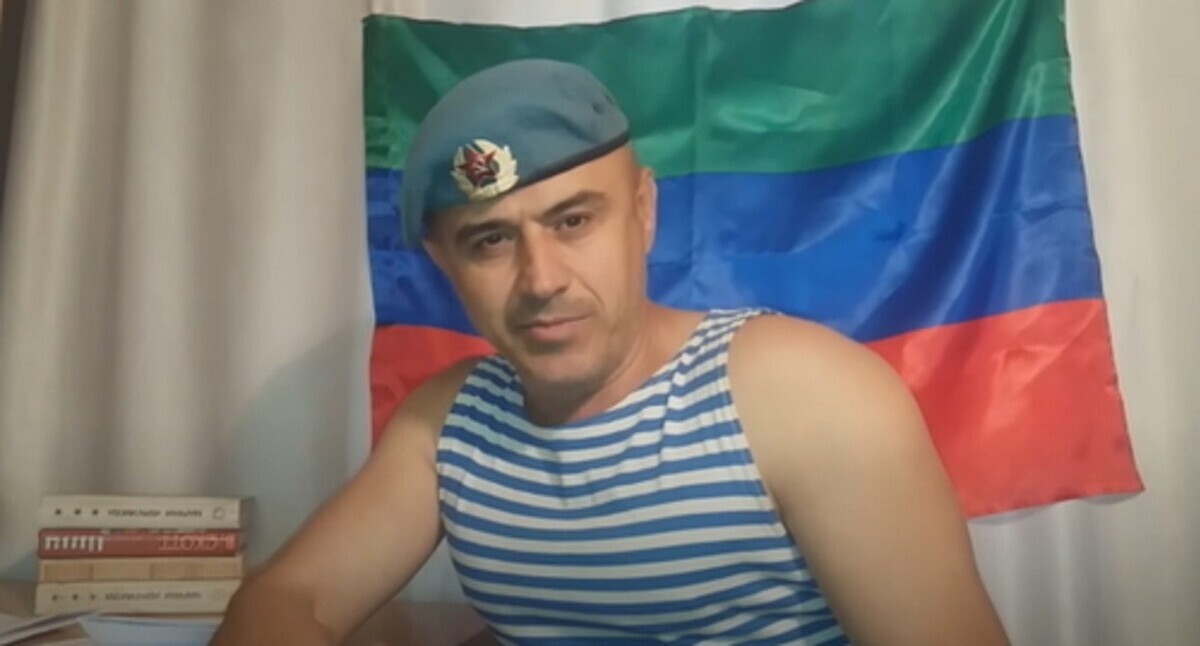
Blogger Askhabali Alibekov intends to seek an increase in compensation for the violation of his rights in the colony and will appeal the court's decision, which assessed his moral damage at 20,000 rubles. Russian appellate courts very rarely increase compensation amounts, the lawyer noted.
As reported by "Caucasian Knot", on March 3, Alibekov was released from colony No. 1 in Adygea after serving time for a case involving violence against a police officer. After his release, he filed a lawsuit against the colony where he served his sentence, demanding 1 million rubles in compensation. On August 31, the Teuchezhsky District Court of Adygea partially satisfied the blogger's claim but reduced the compensation amount to 20,000 rubles.
Askhabali Alibekov is a native of Dagestan, a former serviceman, and the author of the YouTube channel "Wild Paratrooper", where he published videos criticizing the Russian authorities. In 2017, a military court sentenced him to three years of conditional imprisonment, establishing that Alibekov, while being a platoon commander, struck a subordinate and broke his jaw. Alibekov admitted his guilt. In March 2018, he reported that he was dismissed from the navy after publicly calling on Vladimir Putin to step down as president. That same year, Alibekov was detained before a trip to an opposition rally in Moscow, and later his conditional sentence was replaced with actual imprisonment after an administrative arrest for disobeying the police.
Alibekov was compelled to file a lawsuit against colony No. 1 in Adygea and demand compensation for the violation of his rights due to the behavior of the institution's staff.
"They delayed the documents I sent. For example, my wife needed a certificate, I sent it, but the dispatch was delayed for a month, making it pointless. They also massively delayed letters to me. Of more than 300 letters sent to me, I received only 78. They also opened prosecutor's mail, which is prohibited, as they were interested in my complaints – including a complaint about the situation where, due to the absence of a doctor in the penal colony and the ambulance taking 2 hours and 47 minutes to arrive, a guy literally died in my arms. In total, during the time I was in the colony, nine people died before reaching 50 years old," he told a correspondent from the "Caucasian Knot".
The judge of the Teuchezhsky District Court, who considered his claim, based the compensation amount on the absence of health damage certificates. "I told the judge: 'How can you measure moral damage? It is measured differently for each person.' He did not hear me. At the same time, the court preferred not to notice that there was a statement from the colony's management that a check was conducted, a violation was identified, and a penalty was imposed; there is even a report about it. I filed a motion to recuse the judge twice, but he, of course, did not recuse himself," the blogger explained.
Alibekov, who participated in the court process without a lawyer, emphasized that he would definitely appeal the court's decision regarding the compensation amount. By reducing the amount to 20,000 rubles, the court, in his words, "threw a bone".
The amount of 20,000 rubles assigned to Alibekov is quite typical, and for many categories of civil cases, it can even be considered substantial, noted a lawyer who wished to remain anonymous.
"In Russian judicial practice, the amounts of compensation for moral damage traditionally remain low, and the final amount entirely depends on the category of the dispute. All judicial practice regarding moral damage can be conditionally divided into two large groups: disputes not related to causing harm to health and disputes that resulted in physical injuries or death. The law does not have fixed tariffs for assessing suffering. The court determines the amount 'by eye', guided by the principles of reasonableness and fairness. Moreover, in large claims, general jurisdiction courts 'cut' them down to 5-10% of the initial request if it concerns property violations or minor offenses," he stated to a correspondent from the "Caucasian Knot".
The lawyer emphasized that in recent years, the Supreme Court of the Russian Federation has regularly demanded that lower courts stop formally reducing compensations and award more substantial amounts, especially for illegal criminal prosecution or harm to health, but in practice, the situation has not changed yet.
He also noted that achieving an increase in the compensation amount on appeal is extremely difficult. "Russian appellate courts historically work 'downward' or leave the first instance's decision in force. Appellate judges are reluctant to increase amounts, as the size of compensation is considered a discretionary right, meaning it is a matter of the internal conviction of the first instance judge, who personally studied the case materials and heard the parties. An exception may be a situation where the first instance court made a procedural or logical error, for example, not explaining why it reduced the amount from the claimed 1 million to 20,000 rubles. In this case, the appeal or cassation may change the amount," concluded the lawyer.
Translated automatically via OpenAI from https://www.kavkaz-uzel.eu/articles/426452
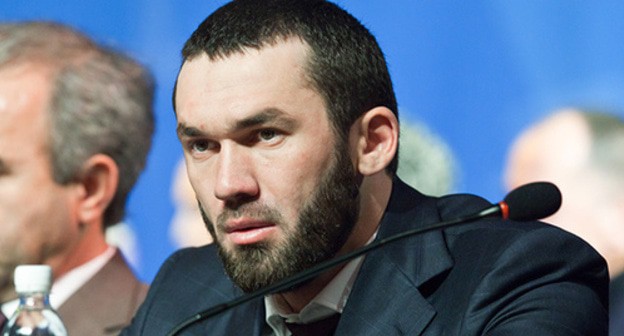
![Tumso Abdurakhmanov. Screenshot from video posted by Abu-Saddam Shishani [LIVE] http://www.youtube.com/watch?v=mIR3s7AB0Uw](/system/uploads/article_image/image/0001/18460/main_image_Tumso.jpg "Tumso Abdurakhmanov. Screenshot from video posted by Abu-Saddam Shishani [LIVE] http://www.youtube.com/watch?v=mIR3s7AB0Uw")