

The kidnapping of Movlaev's relatives fits into a trend in the fight against critics of the Chechen authorities.
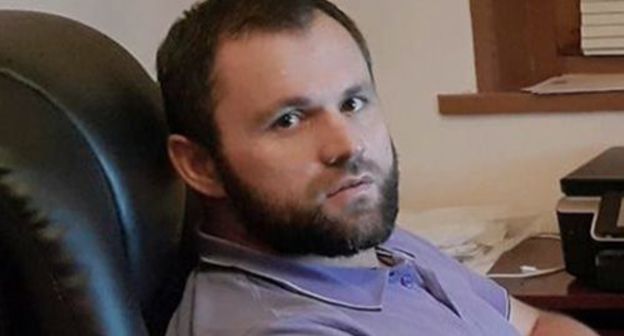
The kidnapping of Mansur Movlaev's family, who is facing extradition to Russia, is an attempt to silence him. Fear for the lives and health of loved ones often becomes the main constraint on political activity, but such pressure does not always produce the desired result for the Chechen authorities.
As reported by "Caucasian Knot," on May 18, a court upheld Mansur Movlaev's arrest in Kazakhstan. This exhausted the legal avenues for appealing the arrest of the Chechen native. On May 21, Movlaev called on members of the European Parliament to record appeals to the Kazakh authorities calling for his extradition to Russia to be revoked. His lawyer pointed out that Movlaev's extradition would violate international law. On June 3, Movlaev reported that his brother Zelimkhan had been kidnapped in Chechnya and subjected to violence, and on June 6, that his parents had been forcibly taken away to an unknown location in Chechnya.
Chechen activist in exile Islam Belokiev* stated that such methods—kidnapping the opposition leader's relatives—have several goals.
"First of all, this is an attempt to exert psychological pressure on Mansur Movlaev himself. Even if he is in custody in Kazakhstan and the issue of his possible extradition depends on the Kazakh authorities, his very existence in the information space remains a problem for the Russian authorities. Movlaev is dangerous not because he possesses any resources or power, but because he represents an alternative point of view and publicly voices information that contradicts the official position of the Russian authorities. "As long as such a platform and such a voice exist, there will be an alternative opinion that the authorities cannot fully control," he told a "Caucasian Knot" correspondent.
According to the activist, this is precisely why pressure is being exerted not only on Movlaev himself but also on his loved ones.
"The kidnapping of his parents and brother, as well as the beating of his brother, can be seen as an attempt to silence him by any means necessary. This is not only about achieving procedural decisions or extradition, but also about the desire to push him out of the information space. For authoritarian systems, simply isolating a person physically is often not enough. It's important that he stop influencing public debate. History shows that even while in custody, political opponents of the government can maintain influence through publications, statements, and the work of their supporters. In this regard, the example of Alexei Navalny**, who continued to be a prominent political figure even while in prison, is indicative," Belokiev explained*.
Fear for relatives is one of the main factors holding back many representatives of the Chechen opposition abroad.
Therefore, the main goal of such actions, in his opinion, may be not only to silence a person, but also to completely eliminate them from the public and information space.
"As for the question of whether the practice of pressuring the relatives of Ramzan Kadyrov's critics has been successful, it is impossible to give a definitive answer. Everything depends on the individual and their willingness to continue their activities, despite the risks to themselves and their loved ones. It's important to understand that fear for their families is one of the main factors holding back many members of the Chechen opposition abroad. Among Chechens living in Europe and other countries, there are many who would openly oppose the arbitrary actions of the Russian and Chechen authorities. However, in private conversations, many of them admit to fearing the consequences for their relatives back home. This fear often becomes the main constraint on political activity. Therefore, pressure on families is one of the most frequently used tools in the fight against dissent," Belokiev* noted.
He believes that in some cases, this tactic is indeed effective, forcing people to remain silent or significantly reduce their public activity.
"But not always. We see many examples of people who continued their activities despite pressure on their relatives. This is what happened with the Yangulbayev brothers." Despite the persecution of their family and the imprisonment of their mother on a case they consider fabricated, they have not abandoned their public activities," he emphasized.
You can read about Kadyrov's conflict with the Yangulbayevs in the "Caucasian Knot" reports "How the Yangulbayevs Became Kadyrov's Enemies" and "The Main Thing About the Struggle Between Kadyrov's Men and the Yangulbayevs".
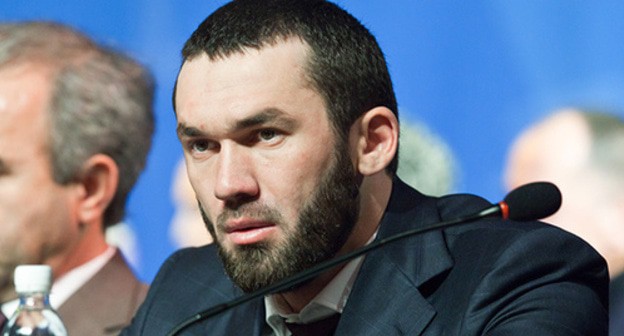
He cited several other examples. "Tumso Abdurakhmanov* also has not ceased his activities, despite pressure on his relatives. Over the years, pressure has been exerted on Akhmed Zakayev's relatives, but this hasn't led to an end to his political activities. Therefore, it's impossible to claim that such tactics are universally effective. Some people withdraw from public life under the threat of their loved ones. Others continue their activities despite the high personal cost. It's not a matter of some loving their relatives more or less than others. It's a matter of personal choice and priorities. For some, fighting for political convictions, human rights, or the interests of their people becomes a priority they consider more important than their own safety and the well-being of their families. That's why such pressure tactics, although extremely painful, don't always produce the results the authorities desire," Belokiev* concluded.
A human rights activist familiar with the situation in Chechnya reported that there are no details about the detention or condition of Movlaev's parents.
"But there is a threat to the parents' lives and health." "We know how the kidnappers treat the hostages. No one will care about their health," he told a "Caucasian Knot" correspondent.
According to the human rights activist, they are using such actions to force Mansur to return voluntarily.
"This war against the relatives of their critics suggests that the Chechen authorities are afraid of critics. Such vile tactics have never been used in the Caucasus, and especially in Chechnya, even against blood enemies. Even if we follow pre-Islamic customs. And Islam directly prohibits such actions," he explained.
At the same time, he believes this kind of pressure on the relatives of Chechen opposition figures is not producing any visible results.
"I don't recall such examples. Quite the opposite. Wounded pride and revenge also play a role here. And Kadyrov's men take revenge on those they can reach, regardless of morality and honor," he believes. Human rights activist.
As a reminder, Mansur Movlaev was detained by security forces in Chechnya in 2022 and held in an illegal prison. After escaping, he managed to reach Kyrgyzstan in January 2023. In August 2023, security forces in Kyrgyzstan detained Movlaev, who was wanted in Russia for financing extremist activity. A court in Bishkek sentenced Movlaev to six months in prison and subsequent deportation from the country. On November 20, 2023, Movlaev was released, but the deportation order remained in effect, and he voluntarily left Kyrgyzstan to avoid being sent home.
In May 2025, Movlaev was detained in Kazakhstan and placed under extradition arrest. On January 30, it was reported that the Prosecutor General's Office of Kazakhstan had ordered his extradition to Russian security forces. His defense appealed this decision. In February, the Supreme Court of Kazakhstan suspended the execution of the decision to extradite Movlaev pending the final review of his asylum application. Human rights defenders and activists considered the connection between this decision and Movlaev's appeal to the UN Human Rights Committee, which in February called on the Kazakh authorities to suspend Movlaev's extradition pending the review of this appeal. On May 8, a court in Almaty extended the extradition arrest by two months, until July.
The "Caucasian Knot" published a report entitled "Murders of Kadyrov's Critics in the European Union."
The "Caucasian Knot" is posting materials about human rights violations in Chechnya, Kadyrov's attacks on the opposition, and his fight against dissent in the republic on a special thematic page called "Dissent in Chechnya.".
We have updated the applications on href="https://play.google.com/store/apps/details?id=ru.sambino.ionic&hl=ru" target="_blank" rel="noopener">Android and IOS! We will be grateful for criticism, ideas for development both in Google Play/App Store, and on KU pages in social networks. Without installing a VPN, you can read us on Telegram (in Dagestan, Chechnya, and Ingushetia – with a VPN). Using a VPN, you can continue reading "Caucasian Knot" on the website as usual, and on social networks: Facebook***, Instagram***, "VKontakte", "Odnoklassniki" and X. You can watch the "Caucasian Knot" video on YouTube. Send messages on WhatsApp*** to +49 157 72317856, on Telegram to the same number, or write to @Caucasian_Knot.
* are included in the register of foreign agents.
** Alexei Navalny was added to the Rosfinmonitoring list of extremists and terrorists, and was sentenced to 19 years in prison for extremism. He died in prison in February 2024. Navalny was recognized as a "prisoner of conscience." The "Caucasian Knot" article "Navalny: The Caucasian Dimension" outlines the opposition leader's views on issues related to the Caucasus.
*** Meta (owner of Facebook, Instagram, and WhatsApp) is banned in Russia.
Translated automatically via OpenAI from https://www.kavkaz-uzel.eu/articles/424008
![Tumso Abdurakhmanov. Screenshot from video posted by Abu-Saddam Shishani [LIVE] http://www.youtube.com/watch?v=mIR3s7AB0Uw](/system/uploads/article_image/image/0001/18460/main_image_Tumso.jpg "Tumso Abdurakhmanov. Screenshot from video posted by Abu-Saddam Shishani [LIVE] http://www.youtube.com/watch?v=mIR3s7AB0Uw")