


On the day of the revival of the Karachay people, Karachays recalled the consequences of deportation.
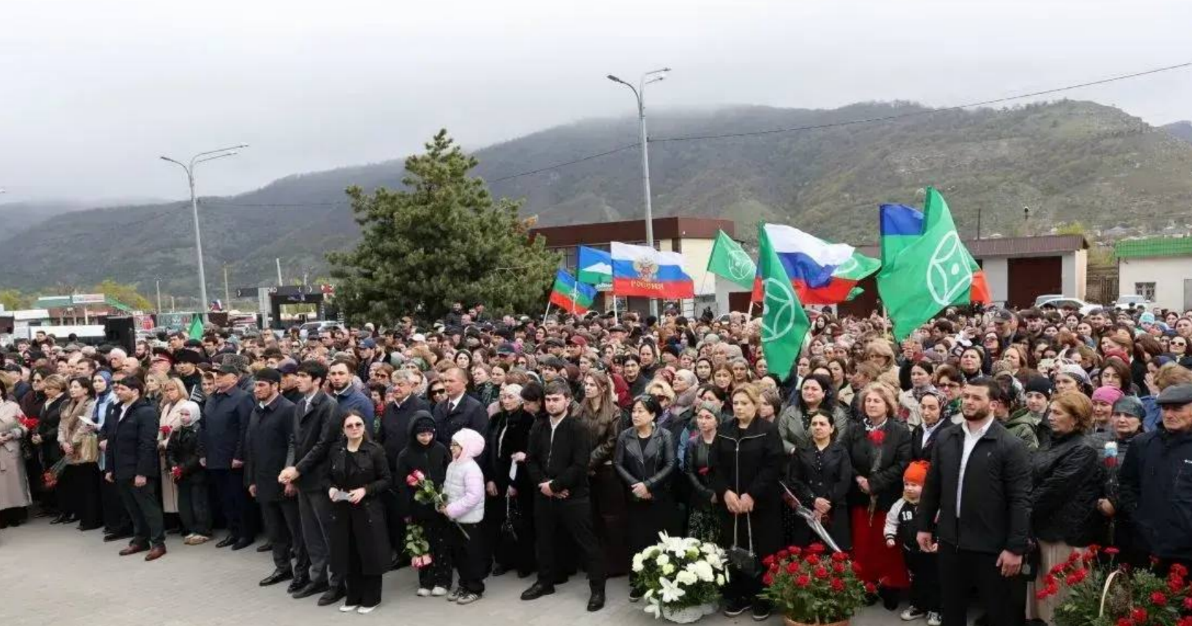
The consequences of the deportation of the Karachay people still affect their demography, language, culture, family memory, and the issue of national autonomy, and the process of rehabilitation remains incomplete, analysts and residents of Karachay-Cherkessia noted on the day of the revival of the Karachay people.
As reported by the "Caucasian Knot," Karachay-Cherkessia today marks the 69th anniversary of the return of the Karachay people from the deportations carried out under Stalin. Revival Day has become a family holiday for the Karachays, but they do not consider the people's rehabilitation complete.
On this day in 1957, the first echelon of Karachays arrived in their historical homeland, having been deported to Kazakhstan and Central Asia in November 1943. The memorable date of May 3 was established in 1997, according to the "Caucasian Knot" report "Revival Day of the Karachay People: Difficulties of Rehabilitation".
Historian points out peculiarities of the Karachay deportation
The Karachays were the first people in the North Caucasus to be subjected to complete deportation, and the operation itself was distinguished by a number of peculiarities, Karachay historian Alan Kara told the "Caucasian Knot."
"Among the peculiarities, I would note that the Karachays were the first people in the North Caucasus to be subjected to complete deportation from their historical homeland. "Also, before the full deportation operation itself, 472 people were deported from the territory of the Karachay Autonomous Region on August 9, 1943," Kara said.
He noted that the operation was notable for the scale of the force involved.
"Another unique feature is the unprecedented concentration of troops participating in this operation per capita. Thus, 53,327 troops were deployed to forcibly support the deportation of just under 70,000 Karachays. This means that for every 1.4 Karachays, regardless of gender and age, there was one armed soldier or NKVD officer," he noted.
The deportation of the Karachays began on November 2, 1943. As a result, 69,267 people (15,980 families) were deported. In total, 79,000 people of Karachay nationality were deported during the pre-war and war periods. Most of the repressed (more than 43,000 people, including 22,000 children) died en route and in resettlement areas. Key data on the deportation of the Karachay people are collected in the "Caucasian Knot" report "Deportation of the Karachays".
The historian compared this to other deportations of peoples in the USSR. "For comparison, during a similar operation in Checheno-Ingushetia on February 23, 1944, the number of troops deployed was one armed soldier or officer for every six people. During the operation in Crimea on May 18, 1944, there was one soldier for every eight people, and in Kalmykia, one soldier for every 31 people subjected to deportation. Only during the operation to evict the Balkars on March 8, 1944, the numbers were similar to those in Karachay. "21,000 NKVD soldiers and officers were deployed to deport less than 40,000 Balkars," Kara said.
Historian Pavel Polyan classified the deportation of the Karachays as a policy of collective punishment and noted that the deportation of the Karachays was one of the first such operations in the North Caucasus. The deportation was accompanied by the liquidation of the Karachay Autonomous Region, whose territory was divided.
The consequences of the deportation are still felt today
Speaking of the consequences, Kara primarily highlighted the demographic factor.
"Among the consequences, I think the demographic factor is the most important. According to some historians and public figures, if not for the deportation, the Karachay population could have been one and a half to two times larger than it is today." “For small peoples, the issue of demography is key and significantly affects the preservation of national culture, native language, and traditional way of life, which is reflected in our time,” Kara noted.
According to Doctor of Historical Sciences, Professor Murat Karaketov, if not for the deportation of 1943, the number of Karachays in Russia today would be 400-450 thousand people - twice as many as today (230-240 thousand).
Kara added that the consequences also affect the linguistic situation. "To put it simply, there could be many more speakers of the Karachay-Balkar language today; as we know, the language issue is especially pressing in the North Caucasus," he said.
The historian also pointed out the political consequences of the deportation. "Among the political consequences, I would note the liquidation of the Karachay Autonomous Oblast. After the return in 1957, the Karachay-Cherkess Autonomous Oblast, now Karachay-Cherkessia, was created in its place. "In the 1990s, attempts were made to revive national autonomy (the Karachay Republic project), but they were unsuccessful," he noted.
According to him, the deportation significantly slowed the development of historical scholarship and cultural heritage.
"I would also note that the deportation had a significant impact on the study of the historical and cultural heritage of the Karachay-Balkar people. The fact is that even before the events of 1943-1944, for a number of reasons, the history and culture of this people were poorly studied. Stalin's repressions and the onset of WWII also played a role. "And during the years of deportation itself, the study of the history and culture of the exiled peoples was effectively banned or deliberately falsified," Kara said.
He added that after their return, the peoples had to essentially rebuild their scientific and cultural foundations.
"After returning to the Caucasus, these peoples were forced to practically revive historical scholarship from scratch. This occurred under difficult conditions, with an acute shortage of local personnel. Many cultural heritage sites were destroyed over the course of 14 years, and part of their spiritual culture was lost. The lack of official rehabilitation of the repressed peoples by the Soviet authorities also greatly hampered this process. "Despite the enormous amount of work done in this area in subsequent years, the consequences are still felt today," he noted.
The historian believes that the consequences of the deportation continue to shape the modern-day problems of the Karachays.
"The root of many of the modern problems facing the Karachays and all repressed peoples more broadly is linked to the events of 1943-1944." "This includes demographics, historical and cultural heritage, the state of native languages, and the form of political representation," Kara said.
He noted that some of the problems could be resolved through closer interaction between society and the authorities.
"Many problems could be resolved through close and systematic interaction between the authorities and public figures, with the involvement of the heads of Karachay clans, if we are talking about the Karachays in particular," he added.
Despite the official rehabilitation, a number of experts believe that the state has not addressed the key problems. Andactivists previously interviewed by the "Caucasian Knot" point tolack of full legal and social compensation. In particular, we are talking about symbolic rehabilitation, preserving memory and recognizing Stalin's role in the deportation, which, according to activists, is often hushed up in official rhetoric. It is also noted that not all issues related to the restoration of historical justice have been resolved at the legislative level,although a number of scientists, such as Vladimir Zorin, Deputy Director of the Institute of Ethnology and Anthropology of the Russian Academy of Sciences, previously stated to the "Caucasian Knot" that the full territorial rehabilitation of all repressed peoplesis impossible for objective reasons..
Speaking about the current agenda, Kara pointed to the need to strengthen educational work.
"May 3 is an official holiday in the Karachay-Cherkess Republic, and festive and educational events are held on this day. However, we would still like to see greater involvement from the regional leadership, especially in the educational aspect. "In my opinion, over the past 5-7 years, events related to this topic have diminished in both number and scale," he noted.
Every year, the day of the revival of the Karachay-Balkar people, May 3rd, increasingly moves into the virtual space of the internet, rather than being felt in real life.
The historian noted a shift in the public perception of the holiday.
"Perhaps this is due to global instability, but as our people notice, every year, the day of the revival of the Karachay-Balkar people, May 3rd, increasingly moves into the virtual space of the internet, rather than being felt in real life. Cultural and educational events often remain in the shadow of the holiday festivities. I would not want May 3rd to turn into an ordinary day of public festivities and lose its connection with history. "This date should, first and foremost, remind us of our love for our homeland and the importance of preserving our national culture and identity," Kara said.
May 3 is celebrated in Karachay-Cherkessia as the Day of the Revival of the Karachay People. Fewer and fewer public events are held on this day, but the holiday helps preserve the memory of the victims of deportation and foster a sense of national unity, residents of Karachay-Cherkessia said in 2024.
Speaking of family traditions, he noted the attention paid to witnesses of the deportation.
"For our family, May 3 is a special date. In addition to attending public events, primarily the rally at the monument to the victims of deportation in Karachayevsk, we try to pay attention to the older generation, who were direct witnesses to those events. Unfortunately, their number is decreasing year by year. When my grandparents were alive, the first thing they did was congratulate them and thank them for doing everything possible to return to their historical homeland," he said.
He emphasized his personal attitude toward commemorative dates. "Personally, I consider the anniversary of the deportation on November 2nd to be a more significant day, and I try to pay more attention to it. Admittedly, it's not always possible to spend these days properly; often circumstances conspire to keep you far from your homeland and loved ones," the historian noted.
He also shared family memories of life in exile and the return.
"I remember a story from my maternal grandmother. During the years of deportation, she lived in the Talas region of the Kyrgyz SSR. As she recalled, while in exile, the Karachays often talked about the Caucasus, and they spoke so positively of life there, which is why some local residents, impressed by these stories, later admitted that the Caucasus seemed to them a paradise where people don't get sick and everyone lives long, because their Karachay acquaintances spoke so much highly of it," he said.
"I remember stories from representatives of the older generation about how people supported and helped each other build after returning to their historical homeland. While houses were being built for one person, several families could live under one roof, and they supported each other in everything." "Many people's homes and farms had fallen into disrepair by the time they returned, and for this reason, social cohesion in society, especially in the early years, helped the people quickly rebuild their farms and daily lives," Kara added.
Karachays avoid discussing the traumatic topic of deportation in families
Residents of Karachay-Cherkessia often perceive Revival Day as the main family and social holiday, while the anniversary of the deportation remains a more subdued date, Karachay Amina Botasheva told the Caucasian Knot.
"We celebrate both Revival Day and the anniversary of the deportation, but Revival Day is, of course, much more important for us. "It's celebrated on May 3rd; it's an official holiday in the republic, and because of that, everyone takes to the streets, everyone celebrates," Botasheva told a "Caucasian Knot" correspondent.
According to her, the festivities span the entire republic and are accompanied by mass festivities.
"Festive events are taking place in every village, aul, and town. In Cherkessk, on Green Island, there are free concerts in the Karachay language from early morning until late at night, along with dances, national games, and wrestling. People sell khichins (traditional dumplings) and roast corn. A real atmosphere of celebration and unity is palpable. "People try to wear something national—clothes, caps, badges," she noted.
At the same time, she said, family celebrations could differ from the generally accepted ones.
"We didn't set the table in our family, but the atmosphere itself—a May day, a day off, Karachay music, dancing—was what I remember most. This day is much more vivid for me than November 2nd," Botasheva said.
The deportation was hardly discussed within the family. The older generation didn't want to remember these events.
The anniversary of the deportation, on the contrary, is perceived as a formalized and less lived-in date.
"November 2nd is something completely different. It's not a day off, and people remember the deportation mostly in the morning, when official events take place, like the laying of flowers at the monument. "They show it on the news, and that's where it ends," she noted.
Botasheva emphasized that the topic of deportation remained taboo in family memory for a long time.
"The deportation was hardly discussed within the family. The older generation didn't want to remember these events. That's why now November 2nd is often limited to posts on social media—'We remember, we mourn, we won't forget.' It's not discussed within the family; it's more of a quiet, somber day," she said.
In her observation, stories about the exile appear primarily in the context of Revival Day and are selective.
"And May 3rd is already a holiday. On this day, elders sometimes tell stories about life in Kazakhstan, but mostly they remember good things. "They hardly told us about the difficult times, so I learned about many things later," Botasheva noted.
Speaking of family memories, she shared a story that has survived as a symbol of the experience.
"When my grandmother was five years old, a few days before the deportation, her father bought her new galoshes—beautiful, shiny ones, big enough to grow into. She wore them and was happy. When the deportation began, her mother took her hand, and they ran to the train cars, when my grandmother lost one of the galoshes. She was taken to Central Asia wearing only one. She kept that galosh and brought it back when the family returned home. "Now my grandmother is gone, but we still keep that childhood galosh at home as a memento of those events," she said.
Activists point to the lack of systemic solutions to overcome the consequences of the deportation
In the Karachay diaspora in Turkey, the topic of deportation is not accompanied by sustainable public memory practices, and assessments of the consequences of these events remain extremely critical, Muhammad Karachay, chairman of the Russian-Turkish Society for Education, Culture, Friendship, and Interaction, told a "Caucasian Knot" correspondent.
"I haven't heard of anyone holding any events before," Karachay said, answering a question about commemorative events in the diaspora.
He noted that he does not have full information about the actions of the Karachay-Cherkessia authorities, but believes that initiatives in this area are limited character.
“I’m not aware of the affairs of the authorities of the Karachay-Cherkessia Republic. There are certainly some events, and not so much the authorities as public organizations hold them—meetings, rallies, speeches, meetings, concerts—but as a rule, they are forgotten the next few days,” he said.
Speaking about the consequences of the deportation, Karachay emphasized the lack, in his opinion, of systemic solutions.
“The consequences are tragic, and unfortunately, there are no concrete solutions for a true and complete revival of the people, including territorial rehabilitation, as stipulated by the Law of the RSFSR ‘On the Rehabilitation of Repressed Peoples,’” he said.
Karachay pointed out the peculiarities of the deportation of the Karachays themselves.
“The difference was that the Karachays were the first to be deported, on November 2, 1943, before the onset of winter. Those able to work were taken from the fields immediately after the harvest. People were poorly dressed, and they died from "From hunger, like others, and from the cold," he noted.
He critically assessed the very concept of Revival Day and the state of the people after their return.
"For me, Revival Day is a deception. The people lost their statehood (there was a Karachay Autonomous Region, but it was not restored). The people lost their religion, language, culture, history, and national traditions; all these losses have not been adequately restored. Of course, permission to return to their homeland is a positive thing, but not everyone has been able to return; many of the people still remain in the vast expanses of Central Asia," Karachay said.
He added that key elements of identity, in his opinion, remain under threat.
"We have not restored our statehood, our former autonomy. The national language is rapidly declining; a large percentage of residents, especially young people, no longer speak their native language. "There have been some small advances in religion, and these are related to the fall of the Soviet regime. While before the deportation, the Karachays were 100% practicing Muslims, now the majority of the population has become ethnic Muslims," he stated.
Karachay also noted changes in the cultural environment.
"The state of culture and traditions is very deplorable. As the popular saying goes: 'At yzy bla it yzy k'atyshkhandy!' (The tracks of a horse and a dog are mixed). Many beautiful national traditions have either already been lost or are on the way to being lost. In their place, Soviet-style, alien, false, and ugly pseudo-cultural practices are prevalent. "They are especially evident at weddings, holidays, and even funerals and memorial services," he said.
According to him, the changes also affect social norms.
"The people who gave their lives for namys (honor), and could also take the life of another for the same, are today forgetting this concept and principle sacred to their ancestors. This manifests itself in the social behavior of some people, in their clothing, in new habits not inherent to our people, and these are the consequences of genocide, deportation, and the subsequent deprivation of the people's right to restore their statehood—the Karachay autonomy as a republic," Karachay stated.
Speaking about his personal perception of the topic of return, he noted the incompleteness of this process.
"My family—my entire people—many thousands have still not been able to return, including my relatives. I'm not even talking about the graves of more than half of my relatives from that time. “Therefore, the joy of ‘return’ is not complete; it’s like a piece of food stuck in the throat,” he said.
Part of society considers the correctness of the term ‘Revival Day’ questionable.
Some Karachays remain critical of commemorative dates, and the term ‘Revival Day’ itself is not perceived as reflecting reality, Karachay activist Ruslan Kipkeev told a “Caucasian Knot” correspondent.
“Revival Day or the anniversary of the deportation – for me, these are historical commemorative dates for my people,” Kipkeev said.
According to him, in the context of emigration, the emphasis has shifted from participating in events to passing on memories within the family.
“Now, being in exile, I don’t so much commemorate these dates as talk about "I want to share this with my children and family, so that they know their history, understand what our people have been through, and what they still have to go through," Kipkeev said.
He added that his personal perception of the topic is directly linked to family experience and the stories of his grandparents.
"In many ways, who I have become and how I view these events was shaped by their stories and the bitter experiences they experienced," he noted.
For me, Revival Day is only possible if there is a truly complete rehabilitation of the people. Until that happens, I don't think there can be any talk of a revival.
Kipkeev emphasized that he considers the very idea of "revival" premature.
"For me, Revival Day is only possible if there is a truly complete rehabilitation of the people. Until this happens, I don't think there can be any talk of a revival," he concluded.
The deportation of the Karachays became one episode in the repression of the peoples of the Caucasus
The Soviet government justified the deportations of peoples with myths about mass betrayal and desertion of their representatives. Under Stalin, mass arrests, deportations, and executions based on nationality were carried out, and entire nations were declared "hostile," according to the "Caucasian Knot" report "10 Myths About Stalin's Role in the Great Patriotic War."
The "Caucasian Knot" also prepared reports on the 1944 deportation of Chechens and Ingush, as well as on the deportation of Kalmyks and the deportation of Balkars.
Natives In 2015, historians Alexei Bezugolny, Nikolai Bugai, and Evgeny Krinko stated that peoples of the Caucasus actively participated in the Great Patriotic War, and myths about their mass desertion and collaboration are based on data intended to justify repressions against Caucasian peoples. According to their research, in 1941-1942, a number of secret decrees and orders were issued restricting the conscription and military service of a significant number of peoples of the USSR, including some peoples of the South Caucasus and all North Caucasian peoples.

There was no mass support for the German fascists in the North Caucasus, and the Soviet authorities' version of collaboration as the pretext for the deportation of peoples is unfounded, historians Pavel Polyan and Pieter van Huis previously pointed out. The historians' arguments are supported by Wehrmacht archival documents analyzed by the "Caucasian Knot" and cited in the article "Operation Shamil: How the Abwehr's Failure Became the Pretext for the Deportation of the Vainakhs".
The decision on which peoples to subject to repression depended directly on Stalin, Boris Sokolov, a historian and member of the Association of Russian Society Researchers, told the Caucasian Knot in 2022.
In February 2024, Oleg Kelemetov, a resident of Nalchik, filed a complaint with the Investigative Committee, demanding an investigation into the decisions of the USSR State Defense Committee (GKO) on the deportation of the peoples of the Caucasus. Kelemetov believes that the GKO decisions on the deportation of peoples violated the Constitution and the Criminal Code of the USSR. In May of the same year, Kelemetov, on behalf of a group of residents of the North Caucasus, sent appeals to the parliaments of the republics of the North Caucasus calling for a ban on the glorification of Stalin and other perpetrators of mass deportations.
Such initiatives are important, but in today's Russian reality they could result in repression against Their authors were indicated by historians interviewed by the "Caucasian Knot."
We have updated the apps for Android and IOS! We would appreciate criticism and development ideas both in Google Play/App Store and on KU social media pages. Without installing a VPN, you can read us on Telegram (with a VPN in Dagestan, Chechnya, and Ingushetia). Using a VPN, you can continue reading the Caucasian Knot on the website as usual and on Facebook*, Instagram*, and VKontakte, and Odnoklassniki. and X. You can watch the "Caucasian Knot" video on YouTube. Send messages on WhatsApp* to +49 157 72317856, on Telegram to the same number, or write to @Caucasian_Knot.
* Meta (owner of Facebook, Instagram, and WhatsApp) is banned in Russia.
Translated automatically via OpenAI from https://www.kavkaz-uzel.eu/articles/422943

![Tumso Abdurakhmanov. Screenshot from video posted by Abu-Saddam Shishani [LIVE] http://www.youtube.com/watch?v=mIR3s7AB0Uw](/system/uploads/article_image/image/0001/18460/main_image_Tumso.jpg "Tumso Abdurakhmanov. Screenshot from video posted by Abu-Saddam Shishani [LIVE] http://www.youtube.com/watch?v=mIR3s7AB0Uw")