


Bakhruz Samedov complained about the conditions in the penal colony.
Political scientist Bahruz Samedov, imprisoned in Azerbaijan, has been placed in a closed cell; prison officials have threatened to keep him there for six weeks. His lawyer has announced an appeal to the Ombudsman.
As reported by the Caucasian Knot, 29-year-old political scientist and doctoral student at Charles University in the Czech Republic, Bahruz Samedov, was sentenced by a Baku court to 15 years in prison on charges of treason. An appeals court upheld the sentence.
Samedov was detained on August 21, 2024, when he arrived in Azerbaijan for vacation. According to investigators, he wrote and translated articles commissioned by Armenian officials. The charges were based on correspondence between Bahruz Samedov and three women from Armenia. Samedov himself categorically denied the charge of treason. He is known for his criticism of the Azerbaijani authorities, which he has expressed in foreign publications. The defense believes that his "anti-war views" were the reason for his arrest.
Bahruz Samedov has been placed in a closed cell at Correctional Facility No. 11, his grandmother, Zibeyda Osmanova, told a "Caucasian Knot" correspondent.
He has been placed in a closed cell in the penal colony and will remain there for a month and a half.
"Bahruz called me and said that he has been placed in a closed cell in the penal colony and will remain there for a month and a half. Although, according to their rules, he should be held in such a place for no more than two weeks. Moreover, the warden told Bahruz that after a month and a half, he will not be released into the general part of the colony, but returned to the Umbaki [penitentiary complex], where he will again be in cell conditions,” she said.
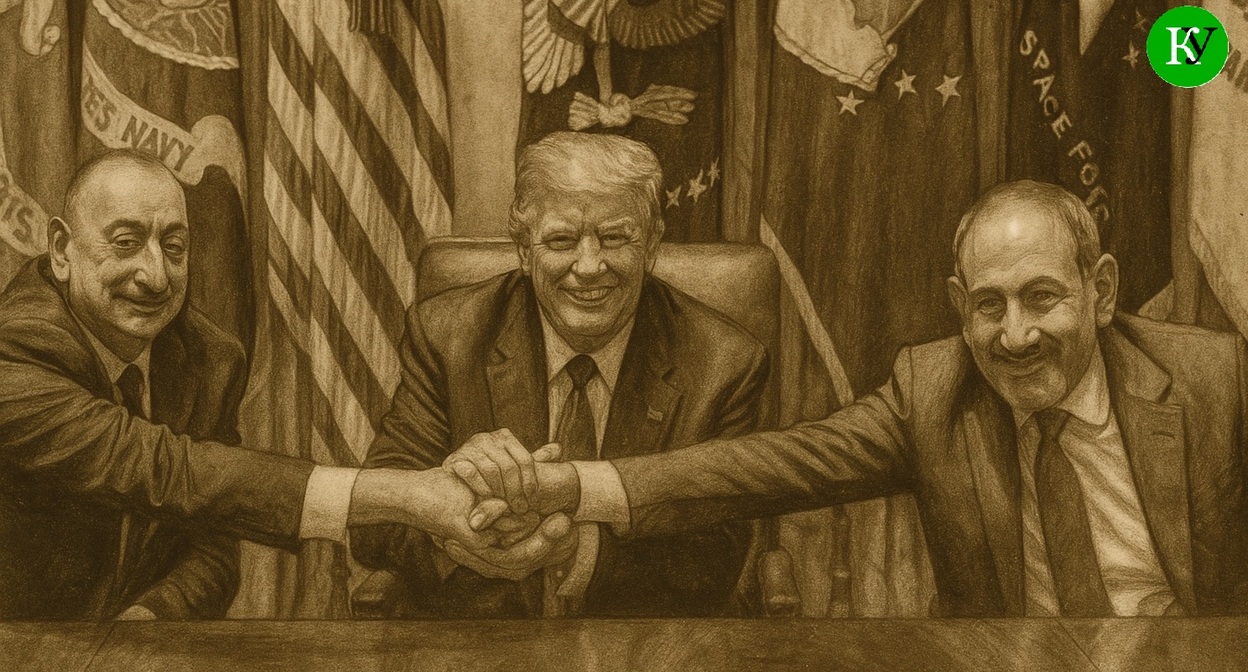
According to the woman, Samedov is desperate. “Bahruz doesn’t understand why they are torturing him like this; he has committed no crime and is innocent. He advocated for peace between Armenia and Azerbaijan. And now, at the level of heads of state, they signed (initialed) a peace agreement to end the conflict. Then why languish Bahruz in prison? Bahruz is hopeless. He said he would commit suicide. "Bakhruz has already resorted to this, and he was saved. But if something happens to him, I won't live either," said Zibeyda Osmanova.
82-year-old Zibeyda Osmanova is Bakhruz Samedov's only living relative, and he is her only living relative, Samedov's lawyer, Zibeyda Sadygova, said in January. "This elderly woman has no one but Bakhruz. Fate decreed that Bakhruz was raised by his grandmother from the age of one. Now, they have no other relatives besides each other," she said.
Lawyer Zibeyda Sadygova told a "Caucasian Knot" correspondent today that she will meet with Samedov in the coming days and also appeal to the ombudsman. She noted that if a convicted person has already been delivered to a correctional facility, they must serve their sentence there.
"Quarantine" is used to intimidate and ensure compliance among prisoners.
When a prisoner is admitted to a penal colony, they are held in so-called "quarantine" for no more than two weeks, and then they are subject to transfer to a dormitory-barracks, Elshan Gasanov, head of the Center for Monitoring Political Prisoners, told a "Caucasian Knot" correspondent.
"In fact, the concept of 'quarantine' does not exist in the Penal Code. Formally, prisoners are supposedly instructed in the internal regulations during this period and gradually adapted to the punishment regime. However, in reality, 'quarantine' is used to intimidate and ensure compliance among prisoners, to prevent any disobedience. Only after "quarantine" are prisoners released into the common area, where for a certain part of the day they can move freely around the facility and interact with other prisoners," Gasanov said.
The Penitentiary Service was unable to comment, a "Caucasian Knot" correspondent reported.
Translated automatically via OpenAI from https://www.kavkaz-uzel.eu/articles/416521
![Tumso Abdurakhmanov. Screenshot from video posted by Abu-Saddam Shishani [LIVE] http://www.youtube.com/watch?v=mIR3s7AB0Uw](/system/uploads/article_image/image/0001/18460/main_image_Tumso.jpg "Tumso Abdurakhmanov. Screenshot from video posted by Abu-Saddam Shishani [LIVE] http://www.youtube.com/watch?v=mIR3s7AB0Uw")