

The Georgian Parliament has toughened penalties for participating in protests.
The Georgian Parliament has expeditiously reviewed and adopted in three readings legislative amendments that increase penalties for violations at protests. A package of laws was also adopted that allows for the designation of political parties as unconstitutional.
As reported by Kavkazsky Uzel, the ruling Georgian Dream party has developed a package of bills designed to increase penalties for violating rules for holding rallies. Irakli Kirtskhalia, leader of the ruling party's parliamentary faction, announced the new package of bills at a briefing.
On October 4, the day of municipal elections, thousands of people gathered in central Tbilisi. After opera singer Paata Burchaladze declared that power in Georgia belongs to the people, clashes broke out between protesters and security forces near the presidential palace. Security forces used riot gear, while protesters used firecrackers. Six demonstrators and 21 security forces were hospitalized, and another 30 people received medical treatment on the spot. Police have opened a criminal investigation into calls to overthrow the government, the attack on police officers, and the storming of the palace. Five protest leaders—opera singer Paata Burchuladze, Secretary General of the Strategy Agmashenebeli party Paata Manjgaladze, former Deputy Chief of the General Staff of the Georgian Armed Forces Colonel Lasha Beridze, and United National Movement activists Murtaz Zodelava and Irakli Nadiradze—have been arrested on charges of organizing group violence, calling for the overthrow of the government, and attempting to seize the presidential palace. They face up to nine years in prison; all five refused to plead guilty.
Now, appearing at a rally wearing a mask or blocking a road is punishable by 15 days of administrative arrest. If the offender is an organizer, the term is increased to 20 days. If the police demand that the rally be stopped, failure to comply will result in arrest for up to 60 days. A similar sentence applies for carrying firearms or pyrotechnics at a rally. Amendments to the Criminal Code introduce imprisonment of up to one year for repeated violations of the rules for participating in protests and up to two years for subsequent violations, according to Newsgeorgia.
The authors of the initiative from Georgian Dream claim that the law is aimed at protesters who regularly block Rustaveli Avenue. By law, demonstrators may occupy the roadway only if they cannot fit on the sidewalk. Currently, this carries a fine of 5,000 lari.
About 30 non-governmental organizations have condemned the amendments, calling them a de facto ban on peaceful protests. Human rights activists emphasize that the new measures violate the Constitution and the European Convention on Human Rights, the publication reports.
Furthermore, in accordance with the amendments, imprisonment for up to one year will be applied to a person who resists a police officer for the third time or fails to obey his order, writes Tabula.
"A new article is being added to the Criminal Code, according to which a person who insults a law enforcement officer for the third time or fails to comply with his legal order will be subject to criminal liability. The said person will be punished with imprisonment for up to one year, and in case of a repeat offense, with imprisonment for up to two years. However, other types of punishment will not be applied," the publication quotes Ivanishvili's representative Irakli Kirtskhalia.
The Georgian Parliament also expeditiously reviewed and adopted in three readings a bill that will prohibit a wide range of people from engaging in party activities, holding political office and participation in elections.
The changes apply to members of parties deemed unconstitutional, as well as politicians "associated" with them. According to the amendments, they will no longer be able to exercise passive electoral rights—the right to be elected to parliament or municipal government bodies. These individuals will also be prohibited from holding leadership positions in constitutional bodies, joining other parties, or making donations, reports TV Pirveli.
If a political association accepts a "banned" politician into its ranks, it will result in criminal prosecution and a fine. And if such individuals become "decision-makers," the party will be recognized as the "successor" to unconstitutional forces and also banned. Those forced to cease political activity will not be able to register a new party, the television company clarifies.
"When our political landscape is freed from such individuals, then truly statist-minded people, for whom Georgia, and not any other country or union, is their homeland, will have the opportunity to engage in politics," said Archil Gorduladze, chairman of the parliamentary committee on legal issues, who presented the bill.
Georgian Dream will also soon file a lawsuit with the Constitutional Court demanding a ban on the National Movement party. The lawsuit is based on a report by a controversial parliamentary commission that examined possible crimes committed by the previous government. The focus was on issues such as the 2008 Russian-Georgian war, pressure on businessmen, and the cruel treatment of prisoners.
Protesters in Georgia have been demanding new parliamentary elections and the release of political prisoners since November 28, 2024. . Security forces violently dispersed the protests, using tear gas and water cannons, and detained protesters. Over a thousand people were subjected to administrative prosecution during the protests. Caucasian Knot has compiled materials about the parliamentary elections and subsequent protests on the page "Elections in Georgia-2024".
Municipal elections were held in all municipalities of Georgia on October 4. Candidates from the ruling Georgian Dream party were elected mayors in all 64 cities where elections were held, receiving 100% of the vote in 26 of them. These elections will determine the political balance in Georgia for the coming years. The next major elections in the country are scheduled for 2028, so the current vote is essentially a key one for both the government and the opposition, according to the "Caucasian Knot" report "Municipal Elections in Georgia on October 4, 2025".
The "Caucasian Knot" is posting materials about the recent municipal elections and protests by opposition supporters on the thematic page "Georgia: Elections Amid Protests".
Translated automatically via OpenAI from https://www.kavkaz-uzel.eu/articles/416378

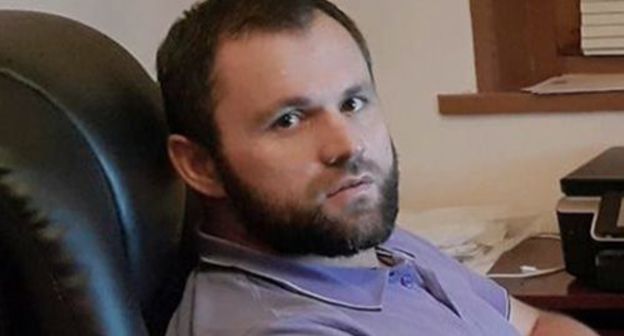
![Tumso Abdurakhmanov. Screenshot from video posted by Abu-Saddam Shishani [LIVE] http://www.youtube.com/watch?v=mIR3s7AB0Uw](/system/uploads/article_image/image/0001/18460/main_image_Tumso.jpg "Tumso Abdurakhmanov. Screenshot from video posted by Abu-Saddam Shishani [LIVE] http://www.youtube.com/watch?v=mIR3s7AB0Uw")