

The ECHR found the actions of the Azerbaijani authorities to be a violation
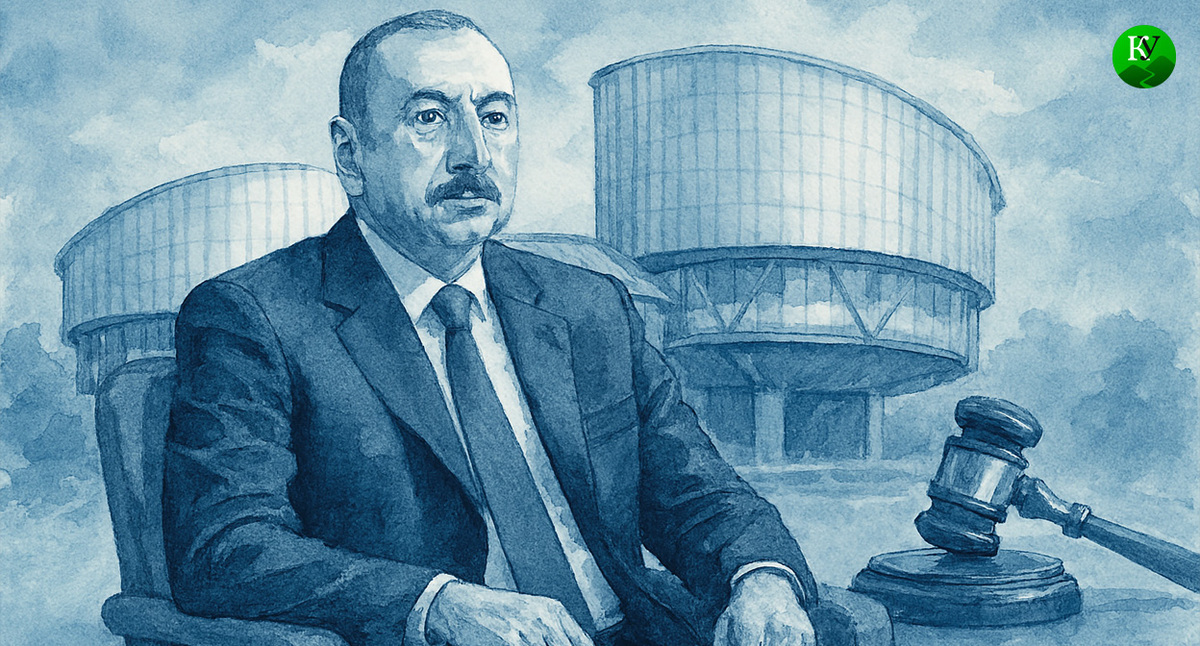
The European Court of Human Rights has ruled that the Azerbaijani presidential administration's ignoring of journalist Ramin Deko's requests, which were sent in 2012, constitutes obstruction of the journalist's professional activities.
As reported by the Caucasian Knot , on September 20, the Khatai District Court of Baku extended the pretrial detention of journalists Aynur Elgunesh, Khayala Agayeva, Natig Javadli, Aysel Umudova, and Ramin Deko, who were arrested in the Meydan TV case and charged with eight criminal offenses. The defense promised to appeal the decision.
By August 2025, 11 people had been arrested in the Meydan TV case.
In late August, it was announced that the investigation had been completed, and a 12th suspect, photojournalist Akhmed Mukhtar, had been identified . The arrested journalists were also charged with seven additional criminal offenses.
In 2012, Ramin Jabrailzade (Deko) sent a request to the presidential administration asking for a list of prominent individuals (artists, athletes, and government officials) who had been granted apartments by presidential decree and the sources from which these apartments were acquired. He also inquired whether the state had other housing funds and whether the Baku city executive authority had the authority to manage these funds, according to Meydan TV.
However, the presidential administration did not respond to the journalist's request. Jabrailzade filed a lawsuit regarding this matter, but local courts dismissed his claim. He then appealed to the European Court of Human Rights.
In its decision, the ECHR stated that the journalist was exercising a "public oversight" function and that the information he requested was necessary for his professional activities. Furthermore, the court noted that the information the journalist requested concerned an issue of significant public importance, namely, the distribution of housing among citizens using public funds, the publication reports.
The court concluded that such actions by employees of the Azerbaijani presidential administration were "not provided for by law" and constituted obstruction of the journalist's lawful professional activities . Thus, the European Court found a violation of Articles 10 (freedom of expression) and 13 (effective remedy) of the European Convention on Human Rights.
The court noted that in this case, the mere fact of establishing a violation is sufficient to compensate for the moral damage that the applicant may have suffered, and therefore did not award compensation, the publication notes.
Journalists from other media outlets, including Toplum TV, Abzas Media, and Kanal-13, have also been persecuted in Azerbaijan. On June 20, journalists and employees of Abzas Media were sentenced to prison terms ranging from 7.5 to 9 years. They denied the charges in court, emphasizing that they were being persecuted for their professional activities and for investigating corruption.
The number of political prisoners in Azerbaijan reached its highest level in 2024 since the country's 23-year membership in the Council of Europe, according to the Caucasian Knot report " Key Points on the Record Number of Political Prisoners in Azerbaijan ." However, Azerbaijani authorities deny the existence of political prisoners in the country.
Translated automatically via Google translate from https://www.kavkaz-uzel.eu/articles/416355

![Tumso Abdurakhmanov. Screenshot from video posted by Abu-Saddam Shishani [LIVE] http://www.youtube.com/watch?v=mIR3s7AB0Uw](/system/uploads/article_image/image/0001/18460/main_image_Tumso.jpg "Tumso Abdurakhmanov. Screenshot from video posted by Abu-Saddam Shishani [LIVE] http://www.youtube.com/watch?v=mIR3s7AB0Uw")