

Representatives of the Ingush clans agreed to seek ways to reconcile in the dispute over the towers.
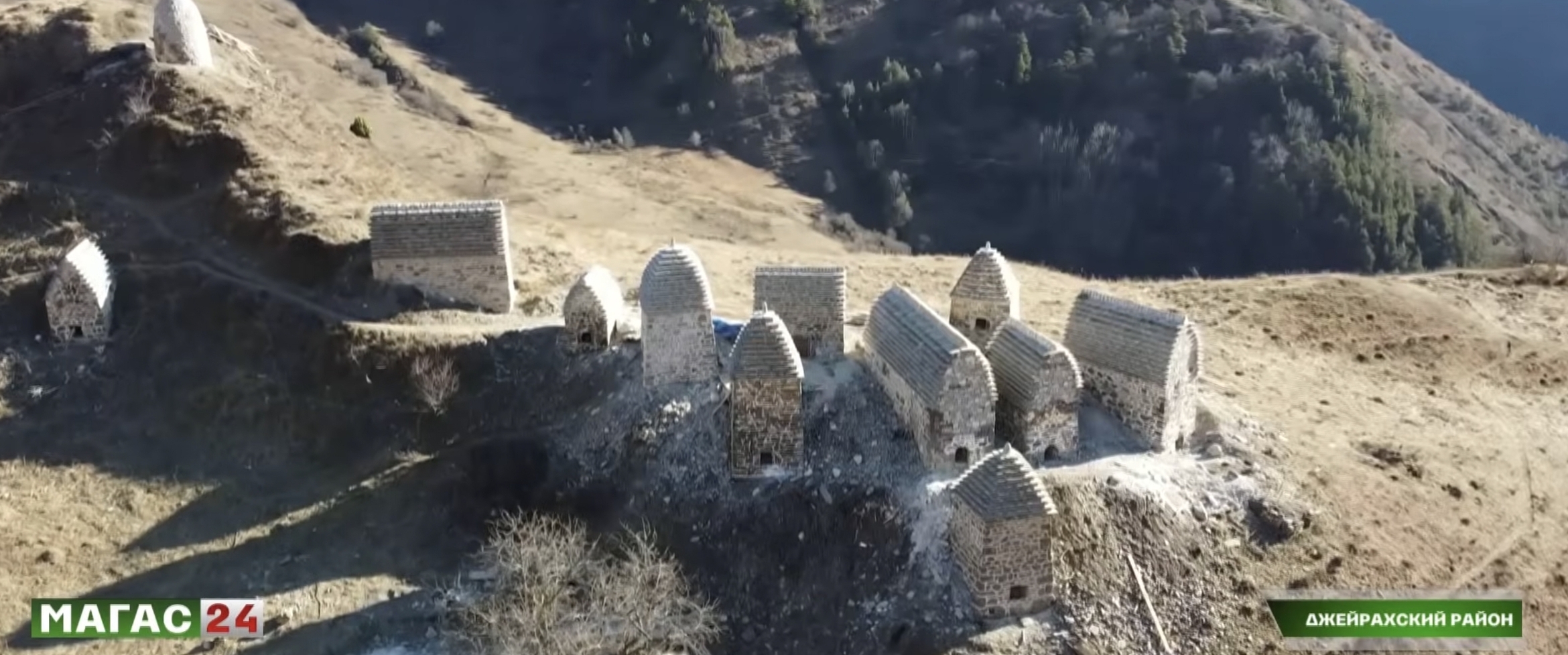
Officials and security forces convinced the Tumgoev and Kodzoev clans, who are disputing the ownership of the "Tumgi" tower complex, to start negotiations involving historians and genealogy specialists. Conflicts over ancestral towers in mountainous Ingushetia are linked to their tourism potential and are exacerbated by cadastral issues.
As reported by "Caucasian Knot", the restoration of the "Garakh" tower complex has been completed in the Ingush village of Lyazhgi. The head of the republic, after communicating with the elders of the Garakh clan, called on the Ingush clans to stop disputes over the ownership of ancestral towers.
In Ingushetia, disputes periodically arise between various clans over ancestral towers. In particular, on October 18, a statement was published in which the Council of Elders under the head of Ingushetia called on the Tumgoev and Kodzoev clans to peacefully resolve the dispute related to the tower complex. Social media users, discussing the dispute, expressed concerns that the conflict could escalate and criticized the authorities for inaction amid the disagreements between the clans.
The reconciliation commission under the head of Ingushetia managed to persuade the Tumgoev and Kodzoev clans to sit down at the negotiating table, a source familiar with the situation told "Caucasian Knot".
"The land-tower dispute in Ingushetia, after the intervention of the elders and the reconciliation commission, has been moved to the stage of closed consultations. Historical documents and genealogies are currently being studied in detail. Representatives of the clans, as well as external historians and specialists, are participating in the discussions," he reported.
According to the source, as soon as the parties reach a common denominator, there will be an official announcement regarding the resolution of the dispute.
The tourist appeal of the towers exacerbates conflicts over their ownership
Architect Igor Kirilov, who participated in the restoration of the Ingush ancestral towers, explained how transforming a monument into a tourist center influenced the escalation of the dispute over the adjacent lands.
"Restoration of such historical objects not only requires meticulous work with historical masonry but also raises many issues after their restoration. I don't want to name the tower complex where we worked, but after the completion of the work, the commercial potential of the location came to the forefront. Restoration work was carried out in 2024-2025, and the main task was to preserve the authentic appearance of medieval structures made of mountain stone. But as soon as the updated object was ceremonially opened, it became clear that the complex had ceased to be just ruins in a gorge. It turned into a ready-made magnet for tourists, which instantly changed the economic value of the entire adjacent territory. Disputes began over the question of who owns the roads leading to the towers. It seems to me that it all comes down to business interests. The tourism potential changes a lot; people understand that this can bring in a lot of money, and the attitude towards the territories is already changing," the architect told "Caucasian Knot".
In mountainous Ingushetia, there is a problem with the legal registration of land cadastre on ancestral territories, so any infrastructure project inevitably provokes conflicts over control of tourist flows and land.
"When a historical monument turns into a major tourist object, the question of infrastructure immediately arises – where to place guest houses, parking lots, cafes, who will service the routes. Historically, the borders between neighboring clans were established orally, and in the modern legal field, these lands are often not delineated at all. Restoration breathed new life into it, but along with the growth of prestige and investment attractiveness of the towers, the struggle for the right to be considered the owners of this land and to manage its future development has intensified," the specialist explained.
Ingush historian described the "Tumgi" tower complex, over which two clans are disputing. "The dispute is related to the "Tumgi" tower complex in the Dzheirakh district, which is located in the Tumgoi gorge. This complex has the highest historical-protective status, is a cultural heritage site of federal significance, and is located within the territory of the Dzheirakh-Assin Museum-Reserve. The ensemble includes structures from the 13th to 18th centuries: about two dozen residential towers, semi-combat and the main combat tower up to 24 meters high. The purely historical significance of "Tumgi" lies in the fact that in the Middle Ages it was a wealthy, populous, and strategically important center on trade and defensive routes, as confirmed by archaeological finds," the historian explained to "Caucasian Knot".
According to him, as of today, the towers are in good condition thanks to restoration work, but it is precisely the revival of the object that has intensified long-standing disputes over the ancestral ownership of the land.
"For a long time, the monument was semi-ruined, but a couple of years ago there was a large-scale restoration, and now the towers are in good condition. As for the dispute, in mountainous Ingushetia, neighboring auls and clans have lived in close proximity for centuries, jointly using pastures and roads. The borders were established by oral adat. The transformation of the complex into a noticeable tourist object has once again raised the question of who historically owns the surrounding territory," the expert pointed out.
Security forces had to intervene in the dispute over the towers
Security structures played a key role in preventing clashes between representatives of the two clans, claims an Ingush public figure.
"When the conflict flared up and the proposal was made to meet and resolve all issues in a format of 15 on 15, the security forces decided to take control of the situation because the tension between the clans was growing with each video address. They invited representatives of the Tumgoev and Kodzoev clans to their office and warned that the dispute over the towers could have consequences for them, especially if there was even one clash between the young representatives of the clans. After that, the video addresses ceased, and meetings began within the framework of the reconciliation commission," he reported anonymously.
Despite the tense situation, people were able to visit the towers without hindrance, noted the activist.
"No roads were blocked, as was said several times; everyone who wished could calmly go there and admire the towers. As the Council of Elders of Ingushetia rightly said, this is the heritage of the Ingush people, not of individual clans. Now everything is calm in the republic; they are looking for a solution to this issue. This is important because if a compromise is not found, then in five years, for example, the question of who is right and who is not will arise again," he explained.
Land and clan disputes in Ingushetia touch on issues of identity, so in the absence of timely intervention by authoritative mediators, they can easily go beyond verbal polemics and escalate into violent confrontation, pointed out the chairwoman of the "Civic Assistance" committee * Svetlana Gannushkina *.
"In Ingush society, the issue of ancestral towers and the territories adjacent to them is perceived very acutely, as it is directly related to the memory of ancestors, the status, and the honor of the entire clan, and so on. And this is no joke; the conflict can escalate quickly," she told "Caucasian Knot".
The danger, according to her, lies in the fact that in the absence of clear legal boundaries and with the involvement of youth, any incident can provoke an open confrontation. "To prevent a violent scenario and blood feud, the councils of clans, elders, and the muftiyat must immediately get involved in the resolution. As I understand it, in this situation, they reacted in a timely manner," added the human rights activist.
We have updated the applications on Android and IOS – now they work without VPN! We would appreciate criticism and ideas for development both in Google Play/App Store and on the pages of the Caucasian Knot in social networks. Without installing a VPN, you can read us on Telegram (in Dagestan, Chechnya, and Ingushetia – with VPN) or use the browser Ceno to bypass blocks. Through VPN, you can continue to read "Caucasian Knot" on the website, as usual, and on social networks Facebook**, Instagram**, "VKontakte", "Odnoklassniki" and X. You can watch videos from "Caucasian Knot" on YouTube. Send messages to WhatsApp** at +49 157 72317856, in Telegram – to the same number or write to @Caucasian_Knot.
* included in the register of foreign agents by the Ministry of Justice of Russia.
** the activities of the Meta company (which owns Facebook, Instagram, and WhatsApp) are banned in Russia.
Translated automatically via OpenAI from https://www.kavkaz-uzel.eu/articles/428290