

Protests over the school dress code in Azerbaijan
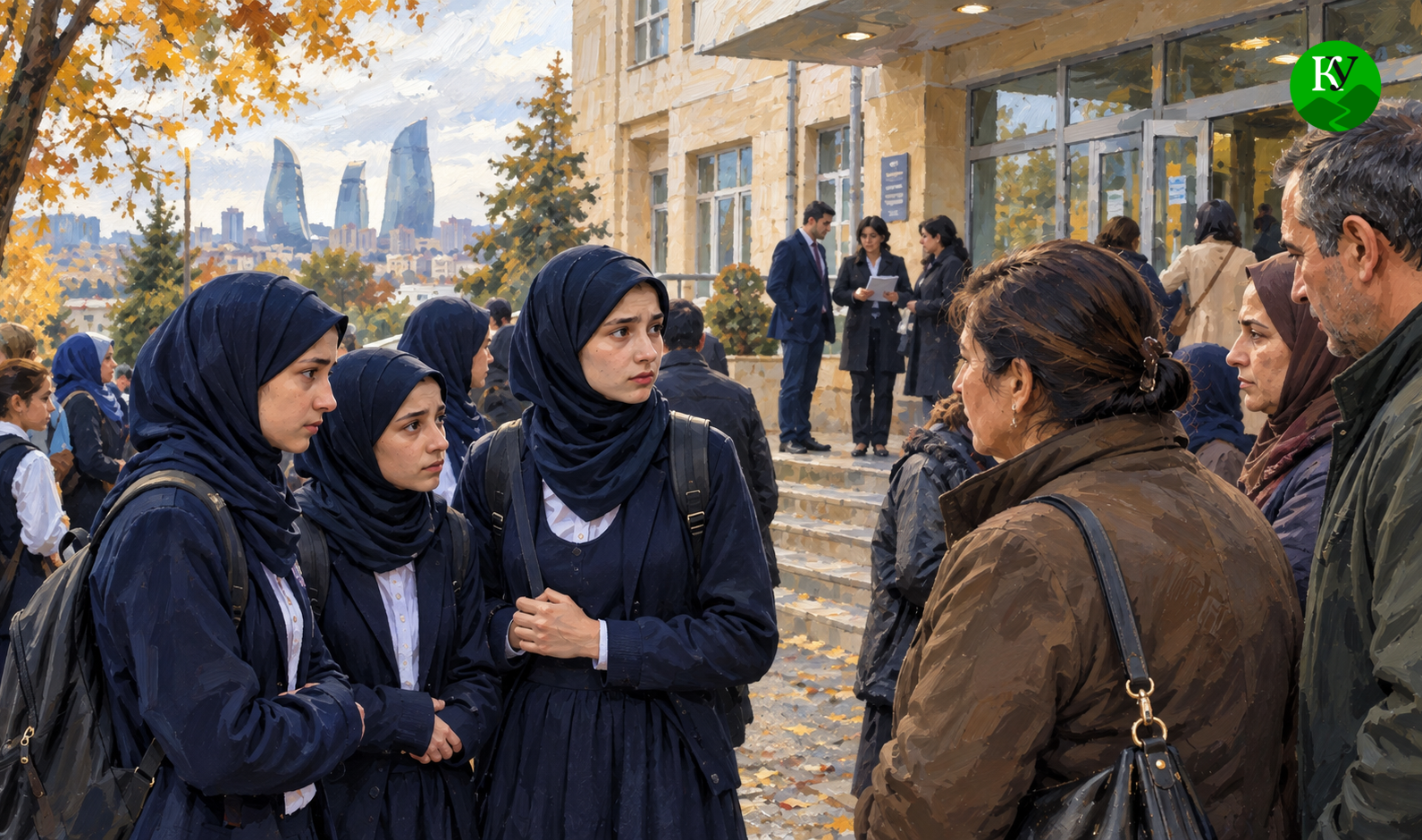
After the introduction of new school uniform rules in Azerbaijan, female students wearing headscarves were no longer allowed to attend classes. Believers and human rights activists consider this a restriction of freedom of religion and the right to education; their protests have become a continuation of a long-standing dispute over religious clothing in schools.
School Protest
On October 13, 2026, the Ministry of Internal Affairs of Azerbaijan reported the detention of 37 participants in protests against restrictions on wearing hijabs in schools. Activists claimed that more than 200 people were detained. On the same day, reports emerged of the arson of a school director's car in the Garadag district and four cars in the town of Masazir. Users also reported issues accessing Instagram* and TikTok, but the connection of these disruptions to the protests was not confirmed.
On the same day, it became known that a resident of Nakhchivan, Gudrat Abdullayev, was arrested for 25 days after posting a video criticizing the restrictions on wearing hijabs in schools, while a resident of the Absheron district, Rafael Huseynzadeh, received 30 days of arrest for writing a protest against the hijab ban on a school building.
On October 12, female teachers from several Baku schools held classes outside in protest against the exclusion of girls in hijabs from lessons. According to human rights activist Arzu Abdullayeva, such actions took place, in particular, near schools No. 90, 130, 182, and 284. Earlier, a similar action took place at school No. 69 in the village of Balakhany. A video also circulated on social media showing a teacher in a hijab conducting a lesson outside the school.
On October 9, reports emerged of a protest by students at school No. 69 in Balakhany. There were also reports that girls in hijabs were not allowed to attend classes in Jalilabad and other settlements in the country. The Baku Education Department announced inspections and reminded that adherence to school dress codes is the responsibility of educational institutions. According to the department's position, disputed issues should be addressed by pedagogical councils.
Parents reported that school administrations demanded that students remove their headscarves. Videos circulated on social media showing students crying after being denied entry to school 1.
On October 8, imprisoned journalist Polad Aslanov declared a hunger strike in protest against restrictions for female students and teachers wearing hijabs. He stated that constitutional rights were being violated and reminded of the freedom of conscience guaranteed by Article 48 of the Constitution of Azerbaijan. Earlier, Aslanov sent an open letter to the chairman of the Caucasian Muslims Office, Allahshukur Pashazadeh, but received no response.
On September 25, it became known about the 30-day arrest of Shia theologian Abgula Suleymanov. Before his detention, he criticized the restrictions on wearing hijabs in schools on social media. Relatives linked the arrest to his publications; reports on the case did not provide exact information about the legal basis for the detention.
What Changed in the School Uniform Rules
In July 2026, President Ilham Aliyev signed amendments to the legislation on general education, establishing requirements for the clothing of students and teachers in state schools 2, the requirements of which were detailed in official government acts.
On September 21, 2026, the Cabinet of Ministers of Azerbaijan adopted Resolution No. 309 3, which changed the rules of school uniforms in state educational institutions. It prohibits additional elements of clothing that violate the unified standard of uniforms or contradict the principle of secular education. The document does not contain a direct mention of the hijab, but after its adoption, reports emerged of girls in headscarves being denied entry to classes 4.
On October 6, the government approved separate requirements for the appearance of teachers — Resolution No. 325 5. It stipulates that the clothing of employees of state educational institutions must correspond to the secular nature of education.
The adopted regulatory acts emphasize the secular nature of the state education system. Authorities explain the unification of clothing as a necessity to maintain discipline and equality among students. Parliament member Jeyhun Mamedov stated that the reform aims to eliminate differences in the school environment related to religion and social status.
The resolution does not directly mention the word "hijab," but on social media and in Azerbaijani media, the adopted document has been interpreted as a ban on wearing the Muslim headscarf in school. Reports of girls being denied entry to lessons heightened believers' fears that the new norm would be applied in this way.
Human rights activists and parents also point out that the resolution on uniforms does not provide for separate punishment in the form of exclusion from classes for wearing a hijab, and the practice whereby a student must remove her headscarf to attend a lesson raises questions about the legality of restricting access to education.
Religious figures have taken a heterogeneous position. Theologian Tural Irfan told journalists that the resolution does not directly prohibit the hijab, and claims of such a ban are used to incite tension. He urged not to present the school uniform rules as a direct limitation of Islam 6.
Protests in Turkey
On September 22, 2026, Turkish President Recep Tayyip Erdogan, in a speech at the UN General Assembly, touched on the topic of Islamophobia and condemned the discrimination against Muslim women, including bans on wearing headscarves in educational institutions, but did not mention Azerbaijan 7.
Turkish media close to the ruling circles began to harshly criticize Azerbaijan's education reform and accuse the authorities of violating the rights of Muslims. At the same time, the media drew parallels between Baku's actions and the strict ban on hijabs in Turkey itself in the late 1990s 8.
On October 3, 2026, a protest took place in Istanbul outside the Azerbaijani consulate. Demonstrators demanded that Baku lift the restrictions and called on the Turkish leadership and personally President Recep Tayyip Erdogan to intervene in the situation and pressure the Azerbaijani authorities 9.
In response to this media and public campaign, President Ilham Aliyev stated at the congress of the ruling party "Yeni Azerbaijan" that no one should interfere in Azerbaijan's way of life and tell the country what to do 10.
On October 7, 2026, the official representative of the ruling Turkish party, Omer Celik, stated that the groups attacking Azerbaijan in Istanbul have no relation to either the party or the Turkish government 11.
Background of the Conflict
Disputes over religious clothing in schools arose long before the amendments to the school uniform rules.
In April 2026, JAMnews reported cases where female students in hijabs were not allowed to attend classes, particularly at school No. 15 in Sumgayit. At that time, as now, there was no direct ban on the hijab in the regulations, and the restrictions were linked to the interpretation of the requirements for school uniforms 12.
In December 2010, hundreds of residents of Baku held a rally outside the Ministry of Education, protesting against restrictions on wearing the Muslim headscarf. The immediate cause was a statement by the Minister of Education, Misir Mardanov, about the need to comply with school uniform rules, which in practice excluded the wearing of the Muslim headscarf.
Participants demanded the right for schoolgirls to attend classes in hijabs.
Subsequently, protests by believers took place in Ganja, in Masally in the south of the country, in the village of Nardaran. In the following years, protests continued. In May 2011, police dispersed a rally in Baku, and in October 2012, participants of a demonstration outside the Ministry of Education were again detained. The main demand remained the right for schoolgirls to wear religious headgear.
* The activities of Meta (owner of Facebook, Instagram, and WhatsApp) are banned in Russia.
Notes
- "Remove the hijab and enter the lesson": what is happening in schools in Azerbaijan? // JAMnews, 12.10.2026.
- Law of the Republic of Azerbaijan No. 434-VIIQD of July 7, 2026, "On Amendments to the Law on General Education" https://e-qanun.az/framework/62244
- https://nk.gov.az/uploads/doc/docs/6ab13643de711.pdf
- The Cabinet of Ministers approved changes to the school uniform // ARA, 21.09.2026.
- https://nk.gov.az/uploads/doc/docs/6ac5135c3a449.pdf
- The issue of wearing the headscarf is used for selfish purposes // Oxu24, 9.10.2026.
- https://gadebate.un.org/ru/81/turkiye
- The crisis over wearing headscarves in Azerbaijan! Footage reminiscent of the events of February 28 // turkiyegazetesi.com.tr, 29.09.2026.
- Reaction to the ban on wearing hijabs in Azerbaijan // indyturk.com, 03.10.2026.
- Ilham Aliyev: No one should interfere in our affairs // todaypress.tv, 02.10.2026.
- Turkey takes steps to resolve the dispute over wearing hijabs in Azerbaijan after criticism from Aliyev // middleeasteye.net, 09.10.2026.
- In Azerbaijan, the discussion about the hijab: constitutional rights versus restrictions in schools // JAMnews, 13.04.2026.
Translated automatically via OpenAI from https://www.kavkaz-uzel.eu/articles/427441


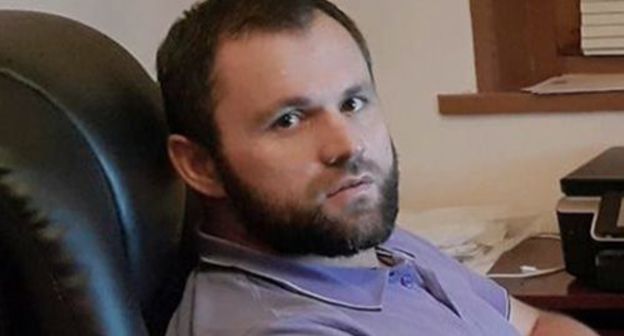
![Tumso Abdurakhmanov. Screenshot from video posted by Abu-Saddam Shishani [LIVE] http://www.youtube.com/watch?v=mIR3s7AB0Uw](/system/uploads/article_image/image/0001/18460/main_image_Tumso.jpg "Tumso Abdurakhmanov. Screenshot from video posted by Abu-Saddam Shishani [LIVE] http://www.youtube.com/watch?v=mIR3s7AB0Uw")