

Political scientists assessed the ability of parties to use protest potential in North Ossetia.
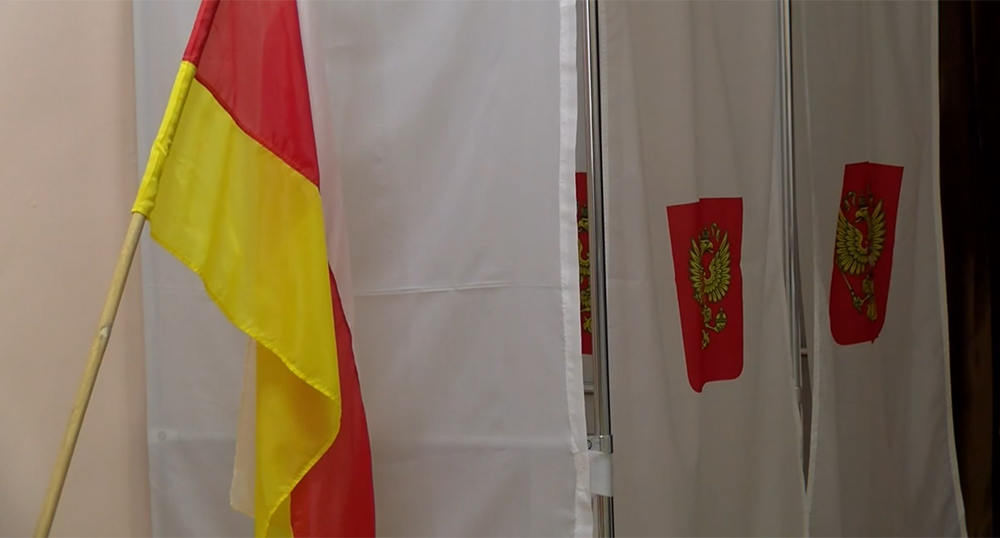
The lack of an acceptable political alternative for voters, the weakness of opposition forces, and distrust in the electoral process limit the ability of parties in North Ossetia to use protest potential to strengthen their positions in elections, political scientists interviewed by "Caucasian Knot" noted.
As reported by "Caucasian Knot", earlier some residents of North Ossetia stated that they intend to express protest by voting for the CPRF, while others noted that they see no real alternative to "United Russia" and refuse to participate in the elections, considering them meaningless.
The elections for deputies of the State Duma of the IX convocation will take place in North Ossetia on September 18, 19, and 20. The republic will form the North Ossetian single-member electoral district No. 30; voters will receive two ballots – one for voting for a candidate in the single-member district and one for the federal party list. Eight candidates are registered in the district. As of July 1, there were 511,206 voters in the republic, with 309 regular precinct electoral commissions formed for voting and another 19 commissions in places of temporary residence of citizens. On September 20, the deputies of the parliament of North Ossetia will also elect the head of the republic from three candidates proposed by Vladimir Putin: Sergey Menyaylo, Oleg Varnavin, and Chermen Dudati. In addition, municipal elections will be held in certain areas of the republic.
It is difficult to objectively assess the real protest potential among the voters of the republic, noted political scientist Arthur Byazrov.
"The volume of social support from the state has significantly increased, particularly support for young families. Of course, not all problems are solved, but since the volume of social support has increased, it is impossible to say that protest sentiments have grown," he told a correspondent of "Caucasian Knot".
Opposition parties can work with the discontent of residents, but it is unlikely that they will be able to radically change the situation, Byazrov believes. He explained this by saying that the ruling party has more resources to demonstrate already solved social problems and promises to address the remaining ones.
Another Ossetian political scientist also doubted that the protest potential in the republic would be realized through voting. In his assessment, some dissatisfied voters may not come to the polls, and the positions of several opposition parties remain weak.
"Most people simply will not come to these elections. The CPRF has very weak positions, people are disappointed in it, and budget workers and administrative resources will vote for "United Russia". Perhaps "Fair Russia" can show some result," he told a correspondent of "Caucasian Knot" on condition of anonymity.
A noticeable pre-election campaign is not observed in North Ossetia, the political scientist believes. In his assessment, "Fair Russia" is working more actively than others, partly due to the popularity of deputy Soslan Didarov, while the CPRF and LDPR remain less noticeable.
"More or less, "Fair Russia" is working. But again, how is it working? It has a bright representative in the republic, deputy Soslan Didarov, and they are betting on his charisma. The LDPR and CPRF are on the periphery of consciousness; no one pays much attention to them," the political scientist explained.
The opposition nature of "Fair Russia" and other parties in the conditions of North Ossetia is conditional, he believes. According to him, Soslan Didarov is known in the republic as a politician who expresses the sentiments of part of the residents, but this does not always coincide with what is understood as opposition at the federal level.
There is practically no one to express possible protest voting in the current elections, believes political scientist Ruslan Totrov. "I do not assess the protest potential at all. <...> There will be no one to express the will of protest voters; there is simply no one to vote for," he told a correspondent of "Caucasian Knot".
Totrov also believes that the official turnout in North Ossetia will not allow judging the scale of protest sentiments. He linked the high electoral indicators of the ruling party in the republic to both real support from part of the residents and the actions of regional authorities, which, in his opinion, seek to demonstrate high turnout and support to the federal center.
"The protest potential may manifest itself through a decrease in turnout, but not in North Ossetia. <...> How many will actually come to the polls, considering how information is currently filtered and how opaque the counting process is, no one can tell you," Totrov explained.
Small parliamentary parties will not work with protest sentiments, the analyst believes. In his assessment, the modern electoral process does not imply real competitive struggle.
"The modern electoral process in Russia, not only in North Ossetia but throughout the Russian Federation, cannot be called an electoral struggle. There is no struggle. It is a one-sided game, with a guaranteed victory," Totrov said.
Translated automatically via OpenAI from https://www.kavkaz-uzel.eu/articles/426687


![Tumso Abdurakhmanov. Screenshot from video posted by Abu-Saddam Shishani [LIVE] http://www.youtube.com/watch?v=mIR3s7AB0Uw](/system/uploads/article_image/image/0001/18460/main_image_Tumso.jpg "Tumso Abdurakhmanov. Screenshot from video posted by Abu-Saddam Shishani [LIVE] http://www.youtube.com/watch?v=mIR3s7AB0Uw")