

Analysts pointed to the political motives behind the discussion of the Circassian issue in Shusha.
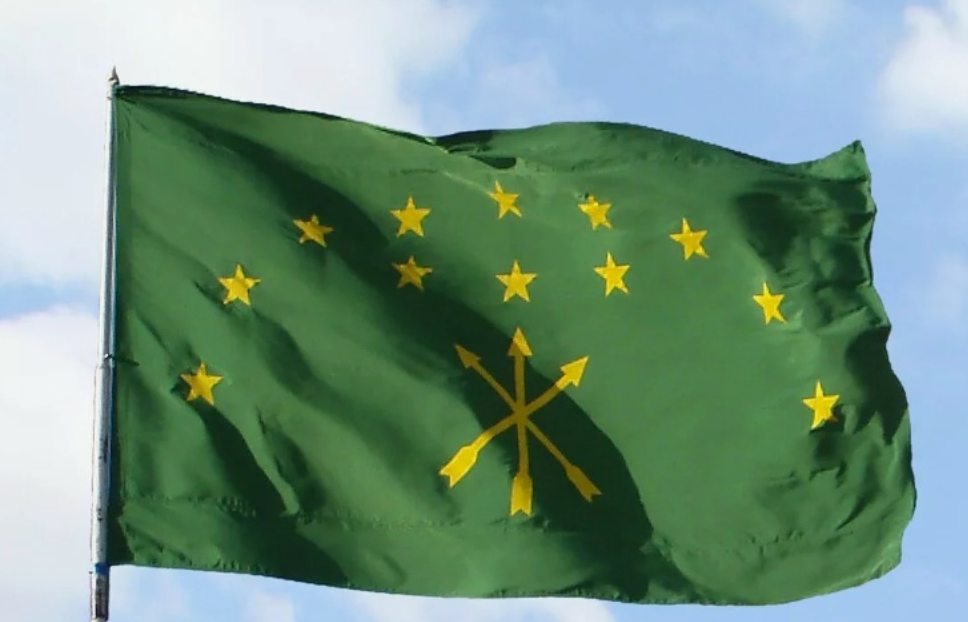
The conference in Shusha, whose participants called on Russia to recognize the genocide of the Circassians, showed Baku's irritation at the pressure on the Azerbaijani diaspora in Russia and the possibility of creating problems by supporting the national aspirations of the peoples of the Russian Federation, Azerbaijani analysts noted. Azerbaijan's interest in the Circassian issue could be part of the country's desire to reduce Russian influence, but the motivation of the conference organizers takes a back seat to the importance of the topic, Circassian activists believe.
As reported by "Caucasian Knot", the participants of the conference in Shusha called on Russia to recognize the genocide of the Circassians and stop forcing representatives of ethnic minorities to participate in military operations in Ukraine. It was organized by an organization created by the brother of two Azerbaijanis killed during a raid by security forces in Yekaterinburg.
Ethnic sweeps in Russia and retaliatory detentions of Russians in Azerbaijan followed the disaster of an AZAL airline plane in Kazakhstan. Baku accused the Russian authorities of extrajudicial reprisals against Azerbaijanis, and footage of the harsh detention of Russians in Baku appears to be a demonstrative response to Moscow's actions, according to a report by "Caucasian Knot" "Crisis in Azerbaijan-Russia Relations".
The conference in Shusha could not have taken place without the support of the Azerbaijani authorities
The conference in Shusha titled "Cultural and Ethnic Diversity: Lessons of History, Modern Challenges" undoubtedly had not only scientific and practical goals but also political content, said a member of the Azerbaijani National Public Committee for Eurointegration (ANOKEI) Togrul Juvarly to the correspondent of “Caucasian Knot”.
In particular, he drew attention to the questions raised at the conference concerning Russia. These include calls for the recognition of the genocide of the Circassians and the cessation of forced participation of representatives of ethnic minorities in military operations in Ukraine, the expert noted.
In the analyst's view, the conference reflected the policy of the Azerbaijani government to some extent and had several goals.
“Azerbaijan is a multinational country. Various religions are also represented here. The government actively promotes the ideas of multiculturalism to shape Azerbaijan's image as a tolerant country. In reality, there is a peaceful atmosphere in Azerbaijan in relations between representatives of different peoples and religions. However, individual representatives of ethnic minorities periodically report violations of their national rights in terms of limited opportunities for education in their native language and cultural realization. However, the authorities provide a certain minimum. On the other hand, the problem of human rights implementation concerns everyone, not just minorities. Activists are persecuted not only from among national minorities, particularly the Talysh, but also to a large extent from among the titular nation,” Juvarly continued.
He called it incorrect to draw parallels between the tragedy of the Circassians and any peoples of Azerbaijan, particularly the Talysh.
In his view, the Talysh, despite discrimination in the USSR, especially in the 1930s, were never subjected to resettlement, let alone mass killings.
On the other hand, he added, in recent years Azerbaijan has demonstrated its active role in the Turkic and Muslim world.
“Therefore, addressing issues of historical memory, the persecution of Circassians in the Russian Empire, and violations of the rights of Turkic and Muslim peoples in modern Russia undoubtedly reflects this policy. Finally, in this context, Azerbaijan considers its policy of protecting the rights of Azerbaijani migrants and representatives of the Azerbaijani diaspora in Russia,” Juvarly noted further.
Holding such conferences as in Shusha is a message from Baku to Moscow not to use the migrant card to pressure Azerbaijan
According to him, Baku is concerned about periodic raids by Russian law enforcement against Azerbaijanis - citizens and non-citizens of Russia, and pressure on leaders of Azerbaijani diaspora organizations.
“Firstly, this stirs the Azerbaijani society, which demands from the authorities "decisive measures" to protect compatriots. Secondly, harsh measures against Azerbaijanis may provoke a mass return of migrants, which will exacerbate social and economic tensions in the country. Therefore, holding such conferences as in Shusha is a message from Baku to Moscow not to use the migrant card to pressure Azerbaijan. Otherwise, Azerbaijan can also create problems for Russia by supporting the national aspirations of the peoples of the Russian Federation,” the analyst said.
He noted that the conference also reflected the unresolved crisis in relations between Baku and Moscow, caused by the destruction of the AZAL plane and exacerbated by mass raids by Russian security forces against representatives of the Azerbaijani diaspora in Yekaterinburg, which resulted in the deaths of two people and the arrests of about ten.
“It is symbolic that the conference was organized by the recently established public association "Center for Cultural and Ethnic Diversity", headed by Azerbaijani journalist Seifaddin Guseinli (Safarov). Two of his brothers died during the raid in Yekaterinburg in June 2025, another brother was arrested and, along with a group of other Azerbaijanis, remains in custody in Russia,” Juvarly noted.
Relations between Moscow and Baku have noticeably deteriorated after the crash of an Azerbaijan Airlines plane with 67 people on board in Kazakhstan on December 25, 2024, which was flying from Baku to Grozny. More details can be found in the report by "Caucasian Knot" "Aviation Disaster of Flight Baku-Grozny" and in the article "Geopolitical Confrontation: What the AZAL Plane Crash Led To".
According to him, without state support, Guseinli would not have been able to organize the conference. In general, he said, no public or scientific event can be organized in the territories of Karabakh without state support. Juvarly pointed out that even the entry of Azerbaijani citizens into these territories is possible only with prior notification through the state services portal, let alone foreigners.
Moreover, a conference with the participation of foreign guests requires significant financial resources, and its organization without state support is impossible.

Juvarly noted that the timing of the conference in Shusha practically coincided with the strikes by Russian military on the gas stations of the Azerbaijani state oil company in Ukraine and the harsh reaction of the Azerbaijani Foreign Ministry to this attack.
“All this indicates that serious disagreements remain in relations between Baku and Moscow even after the parties' statements about resolving the "airplane crisis". Azerbaijan does not accept dictation from Moscow and demands respectful treatment of itself and its sovereignty. Baku's position is that we are independent in our foreign policy and choice of partners. At the same time, Baku assures Moscow that there are no threats to Russia from its territory. Baku distances itself from deepened partnership with NATO. Azerbaijan's support for Ukraine is humanitarian and diplomatic in nature and fits within the norms of international law, the cornerstone of which is respect for the territorial integrity of states. Azerbaijan also independently conducts its energy strategy, which is based on free market principles. Azerbaijan is increasing gas exports to Europe, and it is not Baku's fault that Europeans are refusing Russian gas. Finally, Baku demands respectful treatment of Azerbaijanis in Russia, whether they are migrants or citizens of the Russian Federation, appealing to the fact that there is care for Russians in Azerbaijan, where there are over 300 schools with instruction in Russian, a Russian sector in universities, branches of the Sechenov Medical University and the Russian Orthodox Church operate freely,” Juvarly noted.
He also pointed out the absence of any obstacles for Russian business in Azerbaijan, the activities of such large structures as "Lukoil" and VTB Bank.
The issue of recognizing the genocide of the Circassians is not considered by the Azerbaijani authorities in a political context
Expert of the Turan analytical service Tapdyg Farhadoglu noted that the issue of historical memory regarding the mass killings of Circassians in Tsarist Russia has attracted the attention of not only pro-government NGOs but also opposition-minded activists.
Certain public groups in Azerbaijan consider it necessary to demonstrate solidarity with the Circassians.
According to him, two months ago, the "Platform for Supporting Ukraine for Democracy", created by Azerbaijani activists in 2022 after the start of the special military operation in Ukraine, called on the Azerbaijani people to commemorate May 21 together with the entire Circassian people as a Day of Remembrance and Hope. “The date of May 21 has special symbolic significance in the collective memory of the Circassians. It was on this day in 1864 that the Caucasian War officially ended, and many Circassian organizations commemorate this date as a national day of mourning. Certain public groups in Azerbaijan consider it necessary to demonstrate solidarity with the Circassians. It should also be noted that the descendants of Circassians who fled from Russia today play an important role in the socio-political and scientific life of Turkey, with which Azerbaijan already has close fraternal ties,” Farhadoglu said.
The Caucasian War, which lasted from 1763 to 1864, brought the Adyghe peoples to the brink of extinction. After the war and the mass deportation of the Adyghe to the Ottoman Empire, only a little over 50,000 people remained in their homeland. The Russian authorities have not yet made a decision on recognizing the genocide of the Circassians during the war, according to a report by "Caucasian Knot".
According to him, the topic of the Circassian tragedy of the 19th century also resonates with the mass repressions and forced resettlements of other Caucasian and Turkic peoples in the USSR.
“The fate of the Circassians was not the only case of forced resettlement in the North Caucasus. Later, in 1944, Chechens and Ingush were subjected to mass deportation, Balkars and Karachays were forcibly resettled, as well as Crimean Tatars and Meskhetian Turks. As a result of these events, hundreds of thousands of people were forcibly expelled from their lands. According to various estimates, the number of deported in the North Caucasus and Crimea was about 700,000–850,000 people, and the number of dead is estimated at 150,000–250,000 people. The policy of forced resettlement also affected Azerbaijanis. At least 50,000 Azerbaijanis were forcibly resettled from Armenia to Azerbaijan and settled in desolate territories. The reason for this was that Turkey became a NATO member, and Stalin feared that in the event of war, Azerbaijanis might be “disloyal.” Not to mention the expulsion of the remaining 200,000 Azerbaijanis from Armenia in 1988-89. Therefore, the pain of the peoples subjected to mass repressions and forced resettlements is understood by Azerbaijani society and evokes sympathy and solidarity. And if earlier this was discussed in academic circles in Azerbaijan, now voices in support of historical justice are also heard at the public level,” Farhadoglu noted.
The decision on which peoples to subject to repression depended directly on Stalin, historian and member of the Association of Researchers of Russian Society Boris Sokolov told "Caucasian Knot" in 2022.
In response to a question about the possibility of recognizing the genocide of the Circassians by the Azerbaijani parliament, as the parliaments of Georgia and Ukraine did, the analyst replied that for now, this topic is being discussed in a scientific context and at the public level in Azerbaijan. At the same time, he pointed out that in the international scientific and human rights community, many view this issue more as a problem of historical justice and collective memory rather than as an object of political agenda.
Circassian activists considered the political motives of Azerbaijan to be secondary
The head of the "Circassian Center in the USA" Mariana Sheru believes that the conference in Shusha became an important stage in the international discussion of the Circassian issue. According to her, among the participants were both well-known public and political figures and journalists and activists who have been dealing with the problems of the Circassian people for many years.
“I would like to express my gratitude to all the participants and organizers who were able to come and take part in shedding light on the truth about our people. I especially want to highlight Azerbaijani journalist Aida Eyvazly Goyturk, who was one of the first to take an interest in the Circassian issue, as well as Ibrahim Yaganov*, who actively participated in organizing the conference,” Sheru told the correspondent of “Caucasian Knot”.
She named Yaganov* as one of the most prominent representatives of the Circassian national movement. “He is one of our main political figures who has long defended the rights and freedoms of the Circassians,” Sheru explained.
Among the well-known participants she also named Professor Merab Chukhua, who, according to her, consistently supports the Circassian movement, public figure Rodin Nalgabets, residing in Israel, Fatimat Kardanova-Yannone, and Anjelika Tokhtamysheva.
“Fatimat Kardanova-Yannone and Anjelika Tokhtamysheva have long been involved in public and political activities related to the Circassian issue. I am very proud to live at the same time as these people and that our generation can change something,” she stated.
According to Sheru, Rodin Nalgabets offers “important and effective ideas that are gradually being implemented in Circassian political life.” She also noted the work of journalist Fatima Tlis, calling her one of the people who laid the foundation for modern information and human rights work on Circassian issues in the early 2000s.
Fatima Tlis is an independent journalist and a former fellow at the Carr Center for Human Rights at Harvard University. She has covered the human rights situation in the North Caucasus, collaborated with the Associated Press, “Novaya Gazeta”, BBC, worked for many years as a journalist for “Voice of America”*, and has also been a laureate of international journalism awards, Sheru reported.
Rustam Khuaev was characterized by Sheru as a Circassian public and political figure who continued his work in emigration after leaving Russia. He participated in the activities of several international Circassian organizations, as well as in preparing a conference in the Seimas of Lithuania on the recognition of the genocide of the Circassians. Khuaev is one of the founders and a board member of the World Circassian Agency.
This is part of a certain program of Azerbaijan, which is trying to take an independent position and get rid of pro-Russian influence
Sheru does not believe that the conference should be viewed solely as a tool of political pressure from Baku on Moscow. In her opinion, Azerbaijan's interest in the Circassian issue may be “part of the country's desire to strengthen its independent foreign policy position and reduce Russian influence,” however, the main reason for holding the event was “the necessity of open discussion of the Circassian issue.”
“I think this is part of a certain program of Azerbaijan, which is trying to take an independent position and get rid of pro-Russian influence. But I do not think the conference was held to anger anyone or create a scandal,” she said.
According to Sheru, “the time has simply come to address this issue.” “Azerbaijan has the opportunity to support such a discussion, and the Circassian movement has the need to bring it to the international level,” she said.
Holding the conference specifically in Shusha she called symbolic. “The Azerbaijani people understand from their own experience what it means to fight for their territory and their rights. I think the choice of Shusha was meant to demonstrate an understanding of the Circassian issue through their own historical experience,” Sheru stated.
The plenipotentiary representative of the United Circassian Council in the USA, the chairman of the public-political movement “Circassian Congress of the Karachay-Cherkess Republic” Kase Kik positively assessed the composition of the participants in the conference in Shusha and its significance for the international discussion of the Circassian issue.
“I know most of the people who participated in the conference, I support and have a positive attitude towards the goals and results of this event. Any step towards addressing the Circassian issue I evaluate positively,” Kik told the correspondent of “Caucasian Knot”.
One of the most well-known participants he named was Georgian Professor Merab Chukhua. “He is widely known in Circassian circles, he is an authoritative and respected person. As a professor, specialist, and politician, he is well-versed in both the internal processes of the Circassian movement and the Caucasian politics in general, so his opinion was of interest to the conference participants,” Kik explained.
Fatimat Kardanova-Yannone he introduced as an ethnic Circassian living in Lithuania who actively participated in organizing the conference on Circassian issues held in Vilnius in December 2025.
Anjelika Tokhtamysheva Kik called an activist of the Circassian movement living in Istanbul. “I know her personally. She is an active, honest, and decent person with clear convictions. We are like-minded people,” he noted.
Rustam Khuaev Kik called his former comrade in public-political work. According to him, Khuaev is currently cooperating with the World Circassian Agency and is engaged in protecting the rights and interests of Circassians at the international level.
“He represents Circassian interests and conducts analytical and organizational work in his direction. His activities are related to bringing the Circassian issue to international platforms,” Kik said.
Ibrahim Yaganov* he characterized as one of the veterans of the Circassian national movement. “For decades he has represented the Circassian issue — first at a broad political level within the Russian Federation, and now in Europe and the world. He works with European structures and has been elected chairman of the World Circassian Agency registered in Lithuania,” Kik stated.
Fatima Tlis he called one of the most significant representatives of Circassian journalism and human rights activities. “She is our teacher. She laid the foundation and core of this work back in the early 2000s,” he noted.
In Kik's assessment, the conference in Shusha will contribute to the growing interest in Circassian issues. “One of our main tasks is to attract as much attention as possible to the Circassian issue. For these purposes, activists were invited to the conference to represent the interests of the Circassian people,” he explained.
Kik did not evaluate whether the event was a tool of pressure from Azerbaijan on Russia. According to him, for the Circassian movement, the primary importance is the very fact that other states are willing to discuss this topic.
“Whatever political circumstances provoked this interest, we are always happy to work with countries ready to extend a helping hand, listen to us, and assist in solving our problems,” he stated.
Among such problems, Kik named the restoration of the rights of the Circassian people, the possibility of repatriation, and international support for the demands of the Circassian movement. “Whatever political circumstances provoked this interest, we are happy about it and ready for joint work,” he concluded.
We have updated the applications on Android and IOS! We would appreciate your feedback, ideas for development both in Google Play/App Store and on the pages of the Caucasian Knot in social networks. Without installing a VPN, you can read us on Telegram (in Dagestan, Chechnya, and Ingushetia – with a VPN). Through a VPN, you can continue to read "Caucasian Knot" on the website, as usual, and on social networks Facebook**, Instagram**, "VKontakte", "Odnoklassniki" and X. You can watch videos of the "Caucasian Knot" on YouTube.
* included in the register of foreign agents.
** the activities of the Meta company (owner of Facebook, Instagram, and WhatsApp) are banned in Russia.
Translated automatically via OpenAI from https://www.kavkaz-uzel.eu/articles/424880


![Tumso Abdurakhmanov. Screenshot from video posted by Abu-Saddam Shishani [LIVE] http://www.youtube.com/watch?v=mIR3s7AB0Uw](/system/uploads/article_image/image/0001/18460/main_image_Tumso.jpg "Tumso Abdurakhmanov. Screenshot from video posted by Abu-Saddam Shishani [LIVE] http://www.youtube.com/watch?v=mIR3s7AB0Uw")