

The prospects for displaced persons in Karabakh have interested social media users.
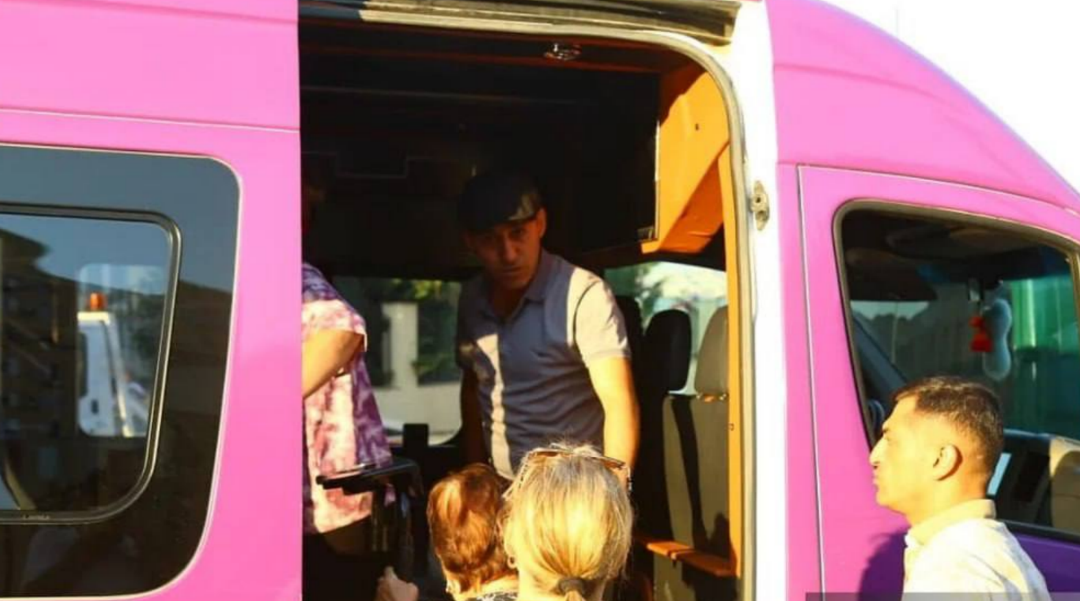
Authorities are building houses, roads, and schools, but the issue of employment in Azerbaijani villages in Karabakh, where displaced persons are returning, has interested social media users. The plots of new houses are small, and analysts indicated that a land reform is necessary for the development of private farms and the settlements themselves.
As reported by "Caucasian Knot", on July 6, 223 members of Azerbaijani families (a total of 46 families) returned to the village of Shyukurbeyli in the Jebrail district, having left the Jebrail district during the Karabakh conflict. Prior to this, on June 20, another 20 families (89 people) of former internally displaced persons returned to the village of Shyukurbeyli (Shukurbeili).
The Jebrail district came under the control of Azerbaijan following the 44-day Karabakh war of 2020. President Ilham Aliyev announced that Azerbaijani troops had taken the city of Jebrail (Armenian name - Jraghank) on October 4, 2020.
A publication on the "Caucasian Knot" Facebook page about the return of 46 families to the Jebrail district garnered 529 comments by 01:18 MSK. Users discussed both the issues of restoring the territory and debated the ownership of Karabakh and the right to live on these lands. Special attention was paid to the prospects for the development of the region.
The return of residents to the Jebrail district has received positive assessments from commentators from Azerbaijan
Some users view the return of families as a continuation of the process of restoring settlements.
"The return of another 46 families to the village of Shukurbeili indicates the consistent continuation of the program "Great Return." The return of life to the native lands is one of the most important indicators of restoration, construction, and sustainable development," believes Sabukhi Pashaev.
"The residents of Jebrail will settle in and live happily on their native lands!" wrote Dilara Kuliyeva.
We hope that all the infrastructure is there: shops, markets, schools, kindergartens, gas, electricity, roads.
Commentators discuss how ready the settlements are to accept residents. They express hope that everything necessary for life in these places is available.
"This is great!! We hope that all the infrastructure is there: shops, markets, schools, kindergartens, gas, electricity, roads. After all, winter is just around the corner!" noted Inaz Bakili.
"Developed infrastructure and a safe living environment accelerate the revival of Karabakh," believes Sabukhi Pashaev.

"The Azerbaijani state has been restoring the territories for six years now. People are gradually returning to their lands and settling there," noted Elxan Zergerli.
"It is good when all the residents of Karabakh return to their homes," added Namiq Babayev.
Commentators reflect on the further development of the district.
"Micro and macro stadiums should be created for the young generation of Karabakh," believes Raiis Gassanly.
"Work and study," wrote Farhad Mamedov, answering the question of what the residents will do.
"I wish these people well and happiness on their land; finally, they have returned to their homeland," wrote Olga Kempf.
"Patience, everything will be fine," believes Rasim Mahmudov.
The history and ownership of the lands have sparked a dispute
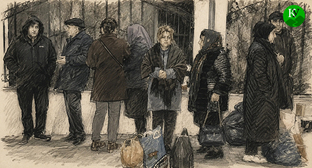
Users with Armenian surnames pointed out the need for the return of the Armenian population to Karabakh
"Justice will be ensured when Armenians can return safely and with dignity," wrote, in particular, Ruzan Azgaldyan.
"The Jebrail district was not part of the then NKAO," objected Elxan Zergerli, noting that Nagorno-Karabakh took control of it in 1993.
Land reform could become a new stage in the restoration of Karabakh
Despite large-scale restoration programs and tax benefits, the return of the population to Karabakh and Eastern Zangezur faces a key problem — the lack of a sustainable economic model for the residents of the region. Analysts believe that without access to land in private ownership and the ability to manage their farms independently, people risk remaining mere hired workers in large agricultural projects, which reduces incentives for long-term return.
To stimulate the development of the agricultural sector in the territories returned under Azerbaijan's control in Karabakh, an important condition is the provision of agricultural lands to the returning population in private ownership, believes a member of the Azerbaijani National Public Committee for Eurointegration (ANOKEI), analyst Togrul Juvarly.
"Azerbaijan was one of the first in the post-Soviet space to radically carry out land reform, distributing plots to villagers in private ownership. Arable and pasture lands of former collective and state farms were distributed equally among all residents of the village. Depending on the total area of the settlement, each resident of the village received about 0.1 to 1.2 hectares of land. On average, during the agrarian reform, each rural family received about 1-1.5 hectares in private ownership," he told a correspondent of "Caucasian Knot".
Each house in the rebuilt villages comes with only 12 hundredths of a plot. This is very little.
In the territories that were under the control of the authorities of Nagorno-Karabakh at that time, land reform was not carried out, as there was no access to them.
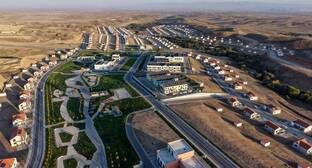
"Now, finally, conditions have been created for carrying out land reform. But the government is not in a hurry yet. Currently, each house in the rebuilt villages comes with only 12 hundredths of a plot. This is very little. Some are creating fruit orchards, some vegetable gardens, some are establishing small livestock and poultry farms. In some places, the territories around the villages are being given to the villagers for use. But, mainly, large agricultural enterprises are being created in these territories, and local residents are offered to work for them as laborers. When land is in private ownership, the farmer is more motivated, as all income remains with him. When he works as a hired worker, the efficiency of his labor is, of course, significantly lower," emphasized Juvarly.
The existing benefits for displaced persons do not negate the need for land allotments
Expert of the analytical service Turan Tapdyg Farhadoglu told a correspondent of "Caucasian Knot" that the state provides returning residents with a package of tax benefits and subsidies.
Thus, until January 1, 2033, former internally displaced persons and other individuals working in the Karabakh and Eastern Zangezur economic regions are exempt from income tax.
The state also pays contributions for this category of citizens to mandatory state social insurance (Pension Fund), provides housing and apartments free of charge, and in villages, a plot of land. For internally displaced persons who received free housing, social benefits are maintained for three years, including state payment for education in higher educational institutions, emphasized Farhadoglu.
All enterprises created in the liberated territories until January 1, 2033, are exempt from taxes, including profit tax, property tax, land use and rental tax, and simplified tax (paid by small and micro businesses). In addition, industrial and agricultural enterprises are completely exempt from VAT and customs duties when importing equipment, technological installations, and raw materials for production.
Alongside this, the expert continued, the state provides guarantees for 90% of the amount of business loans up to 5 million manats (about 3 million USD) and subsidizes 10 percentage points of the annual interest rate for 36 months.
The analyst believes that while these measures are a "solid support" for citizens re-establishing their lives, their effectiveness would be much higher if citizens were provided with land plots in private ownership.
In his view, first of all, it is necessary to ensure the distribution of land allotments in private ownership, as was done in other regions.
"People should first receive their plots. They will then decide what to do with the plots. Perhaps several families will unite and create larger farms for effective production. It will be easier for people to solve issues of production, sales, purchasing fertilizers, agricultural machinery together. Some may not want to engage in agriculture and will sell their plots to their fellow villagers or others. In any case, suitable lands for agricultural production will come into economic circulation," said Farhadoglu.
In November 2023, the Azerbaijani authorities announced plans to return 34,500 families (140,000 people) to the former zone of the Karabakh conflict by the end of 2026. The pace of resettlement is hindered by mine danger, lack of jobs, and unresolved land use issues.
On September 19-20, 2023, Azerbaijan conducted large-scale military operations and took control of the territory of Karabakh, after which a mass exodus of the Armenian population began. By October 7, 2023, 100,632 internally displaced persons from Karabakh had arrived in Armenia, and by September 2024, only 14 Armenians remained in the region. "Caucasian Knot" has prepared a reference "The Beginning and End of the Unrecognized Republic of Artsakh".
Translated automatically via OpenAI from https://www.kavkaz-uzel.eu/articles/424781
![Tumso Abdurakhmanov. Screenshot from video posted by Abu-Saddam Shishani [LIVE] http://www.youtube.com/watch?v=mIR3s7AB0Uw](/system/uploads/article_image/image/0001/18460/main_image_Tumso.jpg "Tumso Abdurakhmanov. Screenshot from video posted by Abu-Saddam Shishani [LIVE] http://www.youtube.com/watch?v=mIR3s7AB0Uw")