

An ecologist spoke about the consequences of oil rains for Kuban.
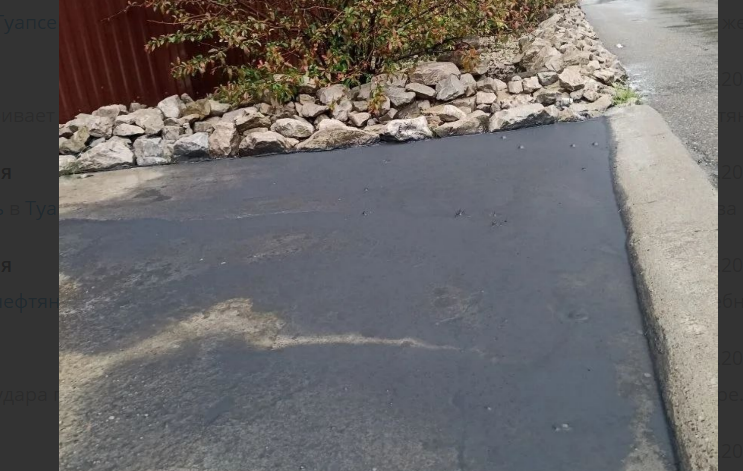
The "black rain" following the drone attack in Tuapse has jeopardized the health of residents, the safety of crops, and the development of fish fry, an ecologist noted.
As "Caucasian Knot" reported, the scale of pollution on beaches in Tuapse is significant, and authorities are not taking sufficient action, despite planning a full resort season. Volunteers at only a few beaches receive government support, while some beaches lack both cleanup and equipment, ecologist Evgeny Vitishko noted in May. As of mid-June, most of the coastline outside the beaches in the Tuapse District remains contaminated with oil products. Some volunteers said they are waiting for permission to carry out their work.
On May 1, a fire broke out at the Tuapse sea terminal following a drone attack. It was extinguished on May 2. This fire was the fourth in Tuapse since April 16. Earlier, on April 24, after booms broke due to rising water levels in the Tuapse River, an oil spill occurred into the Black Sea. On May 27, another attack on the seaport was reported. A series of attacks on Tuapse's oil infrastructure has led to environmental consequences, according to the "Caucasian Knot" report "Fires and "Oil Rain": Key Facts about the Ecological Disaster in Tuapse".
"Black rain" can fall within 20-60 km of the fire, according to ecologist Igor Shkradyuk.
The danger of "oil rain" depends on what exactly burned—oil, fuel oil, diesel fuel, or gasoline—as well as the chemical composition of the raindrops. However, Rospotrebnadzor does not publish the results of chemical fallout analyses, so it is impossible to determine the exact damage caused, noted ecologist Igor Shkradyuk.
"The most dangerous part of oil rain is polyaromatic and aromatic hydrocarbons. They are called aromatic because they have a strong odor. Simply put, the stronger the smell of oil rain, the more harmful it is," he was quoted as saying by "Gorizontalnaya Rossiya 7X7" (listed as a foreign agent). Oil vapors and soot released into the air due to fires at fuel facilities penetrate the lungs and bloodstream. The ecologist believes that Russians who have had poor COVID-19 symptoms, as well as people with chronic illnesses and pregnant women, are at risk.
Along with the rain, chemicals also entered the soil. Ecologist Igor Shkradyuk said that the soil absorbed the most oil product residues in In the Krasnodar region, residents reported the ground was covered with an "oil film and black balls." Even where the film didn't form, but "black rain" fell, harvests from open gardens—strawberries, fruits, and greens grown under the rain—may be unusable.
According to the ecologist, the fish in reservoirs suffered the most from the chemical fallout. They hatched from their eggs during the attacks, and the oil products that fell with the rain into rivers and lakes hindered their development. Cats, dogs, and birds are also suffering from the "oil rain."
The ecologist explained that nature itself can handle the damage from the rainfall in areas where precipitation fell but didn't form an "oil film"—microbes will destroy the remaining oil products.
All beaches, except for the city beaches, have been cleared of oil products, and work on them continues, according to the Tuapse administration. reporting on the final preparations for the resort season. The opening of 69 beaches, including 11 public ones, was announced. On June 9, the head of the district clarified that 66 beaches, including 15 public ones, will welcome vacationers in Tuapse this summer.
Materials on the consequences of the fuel oil spill have been collected by the "Caucasian Knot" on the page "Eco-disaster in Kuban".
Translated automatically via OpenAI from https://www.kavkaz-uzel.eu/articles/424377



![Tumso Abdurakhmanov. Screenshot from video posted by Abu-Saddam Shishani [LIVE] http://www.youtube.com/watch?v=mIR3s7AB0Uw](/system/uploads/article_image/image/0001/18460/main_image_Tumso.jpg "Tumso Abdurakhmanov. Screenshot from video posted by Abu-Saddam Shishani [LIVE] http://www.youtube.com/watch?v=mIR3s7AB0Uw")