

In court, Abilov called his persecution part of systemic discrimination against the Talysh people.
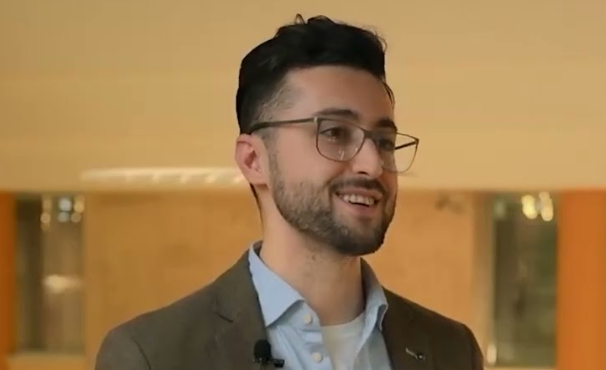
The Supreme Court of Azerbaijan upheld the sentence of Talysh culture researcher Igbal Abilov. Abilov called the court's refusal to provide a Talysh interpreter, as well as the persecution itself, discrimination against the Talysh people. The defense intends to file a complaint with the European Court of Human Rights.
As reported by "Caucasian Knot," 35-year-old Azerbaijani citizen Igbal Abilov, who lived in Belarus since childhood, came to Azerbaijan in 2024 for his cousin's wedding and was detained on charges of collaborating with Armenian intelligence services. The case is being investigated under articles of treason and incitement to ethnic hatred, and the scholar faces up to life imprisonment. The trial is being held behind closed doors. On April 4, in his testimony before the court, Abilov denied the charges and stated that he was engaged solely in scientific research. On May 2, the prosecutor proposed a 19-year prison sentence for Abilov. On May 20, the court sentenced Abilov to 18 years in prison; the appeals court upheld the sentence. Abilov's relatives believe his research on Talysh culture is the real reason for the persecution. The treason charge appears unconvincing and is yet another episode in the persecution of activists from Azerbaijan's national minorities, human rights activists stated. The "Caucasian Knot" has prepared a report entitled "How is Igbal Abilov's arrest connected to the persecution of Talysh activists".
On June 11, the Supreme Court of Azerbaijan heard Abilov's cassation appeal.
According to a statement from the public "Committee for the Protection of Igbal Abilov's Rights," the young scholar appeared at the court hearing wearing a T-shirt with a Talysh translation of a poem by renowned Turkish poet Nazim Hikmet: "'If you don't burn, if I don't burn, if we don't burn, who will dispel the darkness?'" Abilov expressed a desire to speak in Talysh and requested an interpreter. However, the court denied the motion.
After this, the release continued, he made a brief statement in Talysh, Azerbaijani, English, and Russian.
"I want to reiterate that I believe in the equality of all people, ethnic groups, and languages. Your decision not to invite a Talysh interpreter shows that you and the system you represent do not believe in the equality of the country's citizens and peoples. Like the criminal case brought against me, this decision is part of the systemic discrimination against the Talysh people that exists in the country. I protest this. Therefore, I will not make any further statements," Abilov said.
For his part, the state prosecutor stated that "discrimination does not exist" in Azerbaijan. Presiding Judge Ilkin Radjabov noted that "if there were discrimination, a judge of Talysh descent would not be able to preside over this trial," thus emphasizing that he himself is ethnically Talysh.
However, according to Abilov, "the judge's Talysh origin in itself does not mean the absence of ethnic discrimination in the country."
Following the judges' deliberations, it was announced that Abilov's appeal would be dismissed and the Shirvan Court of Appeal's decision would remain in force.
Abilov's lawyer, Fariz Namazly, confirmed the court's decision.
Now, following the Supreme Court's decision, Abilov has exhausted domestic appeal mechanisms and has acquired the right to appeal to the ECHR, and he will take advantage of this, the lawyer told a "Caucasian Knot" correspondent.
Regarding the petition Regarding Abilov's request to allow him to testify in Talysh, Namazly said that Azerbaijani law requires that the accused be provided with an interpreter if they do not speak the state language, Azerbaijani.
He also noted that in the court of first instance (the Lankaran Court of Grave Crimes) and the Shirvan Court of Appeal, Abilov was able to testify in Talysh and was provided with interpreters. However, the presiding judge of the Supreme Court acted differently, the lawyer added.
Translated automatically via OpenAI from https://www.kavkaz-uzel.eu/articles/424031


![Tumso Abdurakhmanov. Screenshot from video posted by Abu-Saddam Shishani [LIVE] http://www.youtube.com/watch?v=mIR3s7AB0Uw](/system/uploads/article_image/image/0001/18460/main_image_Tumso.jpg "Tumso Abdurakhmanov. Screenshot from video posted by Abu-Saddam Shishani [LIVE] http://www.youtube.com/watch?v=mIR3s7AB0Uw")