

Political scientists have called the elections in Armenia a vote for the country's course.
The high turnout in Armenia's parliamentary elections was a result of public mobilization and the perception of voting as a choice for the country's future, according to political scientists interviewed by the "Caucasian Knot." They assessed that the main themes of the campaign were relations with Russia, the EU, Azerbaijan, and Turkey, and Moscow's actions sparked debate about the admissibility of external influence on the elections.
As "Caucasian Knot reported, voting in the parliamentary elections took place in Armenia today. Observers previously reported violations—including the filling out of a ballot by a voter's relative and violations of voting secrecy. Members of the ruling Civil Contract party are committing widespread violations at polling stations, while the Central Election Commission and the Ministry of Internal Affairs of Armenia are inactive, claiming they are unable to control what is happening, the opposition reported. Observers reported video recording at polling stations, attempts to influence the vote, and deceased individuals on the voter lists. Difficulties were also created in allowing unregistered voters to participate in the vote. Before the polling stations closed, the Ministry of Internal Affairs reported 29 violations, including attempts at repeat voting, and the Ombudsman received 59 complaints.
The elections will effectively become a referendum on the future of the current government and Armenia's foreign policy, according to the "Caucasian Knot" report "2026 Elections to the National Assembly (Parliament) of Armenia".
"People voted against the war"
The high turnout in the elections was one of the main results of the vote, according to Russian journalist and expert on the post-Soviet space Kirill Krivosheev*.
According to him, it is difficult to unequivocally assess whether Is the high voter turnout related to the use of administrative resources? Before the elections, there was noticeable political fatigue and disappointment in Armenian society. Many citizens stated they did not want to vote for any political party, and sociologists encountered refusals to answer questions.
"Nevertheless, people came to the polls. Many probably decided that this was a truly important moment for the country and that much depended on their choice," Krivosheev* told a "Caucasian Knot" correspondent.
He admits that administrative resources could have been used, but believes that the results in some regions are primarily explained by the mood of the voters themselves. In particular, the expert attributes the high support for Nikol Pashinyan in the Syunik region to residents of border areas' fears of a possible resumption of war.
"People in border villages live close to Azerbaijani positions and are well aware of the cost of a new escalation. "Therefore, many vote primarily for maintaining peace," he said.
Ahead of the elections, the "Caucasian Knot" surveyed residents of the border town of Goris on one of the key topics – relations with Azerbaijan. Armenia needs a lasting peace with Azerbaijan; only against this backdrop is further development of economic relations with the neighboring country possible, they noted, expressing hope that the parliamentary elections will not lead to an escalation of the situation in the region.
Speaking about the role of external factors, Krivosheev* noted that relations with Azerbaijan and Turkey were indeed an important part of the election agenda. Moreover, in his opinion, for most voters, the determining factor was not the potential economic benefits of opening borders and regional communications, but the hope of avoiding a new armed conflict.
The expert also believes that Russia's actions during the pre-election period played a rather negative role for pro-Russian forces. According to him, open signals about whom Moscow considered the preferred participants in the political process had the opposite effect and contributed to the consolidation of part of the electorate around the current government.
"When people from outside begin openly suggesting who to vote for, this often leads to internal consolidation and a reaction of rejection," Krivosheev* noted.
Commenting on claims of mass participation in the vote by Armenian citizens arriving from Russia, the expert urged against exaggerating the significance of this topic. In his opinion, the scale of the phenomenon was significantly smaller than claimed during the election campaign.
"The noise around this issue was much greater than its actual impact on the election results. I don’t consider this a significant factor in the vote, and I certainly don’t see it as a real threat. "Rather, this topic was used as an element of political mobilization of the government's supporters," he concluded.
According to surveys conducted before election day, the ruling Civil Contract party retains its lead, but the overall rating of the opposition forces is higher, according to the Caucasian Knot report "Pre-election ratings of Armenian parties".
Expert links Russian pressure to weakening its influence in Armenia
Voting in the parliamentary elections in Armenia took place without the large-scale use of administrative resources characteristic of many post-Soviet countries, according to political scientist Artem Khan.
According to his assessment, certain elements of administrative influence were present, but overall the authorities relied not on coercion, but on political mobilization and struggle for supporting voters through the election agenda.
"There was some use of administrative resources, but compared to practices common in the region, it seemed quite moderate. The authorities were more likely trying to win through political mobilization," he told a "Caucasian Knot" correspondent.
Khan also considers concerns about the influence of Armenian citizens from Russia on the voting results to be exaggerated. According to him, this group does not represent a unified electorate and is guided by various political motives.
"Some of these voters are voting based on the Armenian domestic agenda, not any signals from Moscow." "Viewing them as a manageable political resource would be a gross oversimplification," he said.

Armenian citizens arriving from Russia to vote in the parliamentary elections are being served summonses by the military police at the airport to participate in 25-day military training.. The same applies to people arriving from other countries. Authorities threatened criminal prosecution for those who refused to participate in the training camp. On June 1, an investigation was published showing how Moscow, with the help of pro-Russian blogger Mika Badalyan, organized flights for Russians with Armenian passports to Armenia on the eve of the elections. The Anti-Corruption Committee suspected Badalyan of distributing election bribes.
Speaking about the role of external factors, the political scientist noted that the balance of power in the South Caucasus has changed significantly over the past decade. While Russia was previously virtually the only significant external player in the region, today Azerbaijan has become an independent political, military, and energy hub.
According to the expert, if relations between Yerevan and Baku further normalize, Armenia will be able to reduce its dependence on Russian energy resources and more actively integrate into regional economic and infrastructure projects.
"Historically and geographically, it is much more natural for Armenia to integrate into the South Caucasus infrastructure than to exist as a Russian outpost," Khan believes.
This was an attempt to influence citizens' choices through political pressure and economic threats. Moreover, it is open and demonstrative.

Commenting on Moscow's actions during the pre-election period, the political scientist called them direct interference in Armenia's internal affairs. He recalled statements by Russian authorities and discussions about the possible consequences of the republic's European integration, as well as warnings regarding economic relations between the two countries.
"This was an attempt to influence citizens' choices through political pressure and economic threats." Moreover, it is open and demonstrative,” the expert stated.
According to Khan, such a straightforward policy by Moscow indicates a reduction in its previous influence in Armenia.
“When real leverage becomes less, threats come into play,” the political scientist concluded.
Foreign policy became the main topic of the elections
The high turnout in the parliamentary elections indicates an unprecedented mobilization and polarization of Armenian society, according to political scientist Salman Niyazi.
By 2:00 PM (1:00 PM Moscow time), about 33.8% of voters had cast their ballots, compared to 26.8% in the previous elections in 2021, and by 5:00 PM (4:00 PM Moscow time), turnout reached 48.92%. "Society perceives these elections as a referendum on the country's future," he told a "Caucasian Knot" correspondent.
At the same time, Niyazi believes that administrative resources remain one of the problems in the Armenian elections. According to him, opposition forces accuse the ruling Civil Contract party of pressuring civil servants and public sector employees and using administrative mechanisms to mobilize supporters, while the authorities deny these accusations and point to violations by their opponents.
"This doesn't make the elections completely 'dirty,' but it does reduce the trust of some voters and further inflame the atmosphere," the political scientist said.
Voters arriving from Russia received special attention during the campaign. Niyazi called this issue one of the main topics of the election campaign.
"The Armenian diaspora in Russia has traditionally been critical of Pashinyan following the events of 2020-2023. There were reports of plans to organize the transportation of voters from Russia to vote against the ruling party. Even if we're not talking about a scale capable of radically changing the outcome, the factor itself was noticeable – it increased turnout, polarization, and mutual accusations between political camps," he noted.
The campaign has effectively become a geopolitical referendum: Russia or Europe, normalization of relations with neighbors or confrontation.
The political scientist believes that the foreign agenda has become the main focus of the current election campaign.
"The campaign has effectively become a geopolitical referendum: Russia or Europe, normalization of relations with neighbors or confrontation. "The main campaign was built around these issues," Niyazi stated.
According to him, Moscow exerted unprecedented pressure on Yerevan through economic leverage, information campaigns, and public statements by Russian politicians and experts.
"It even went so far as to warn that Armenia could become 'the next Ukraine,' and that Pashinyan was turning the country into an anti-Russian center," the expert noted.
At the same time, he said, Armenia's Western partners were providing support to the current authorities.
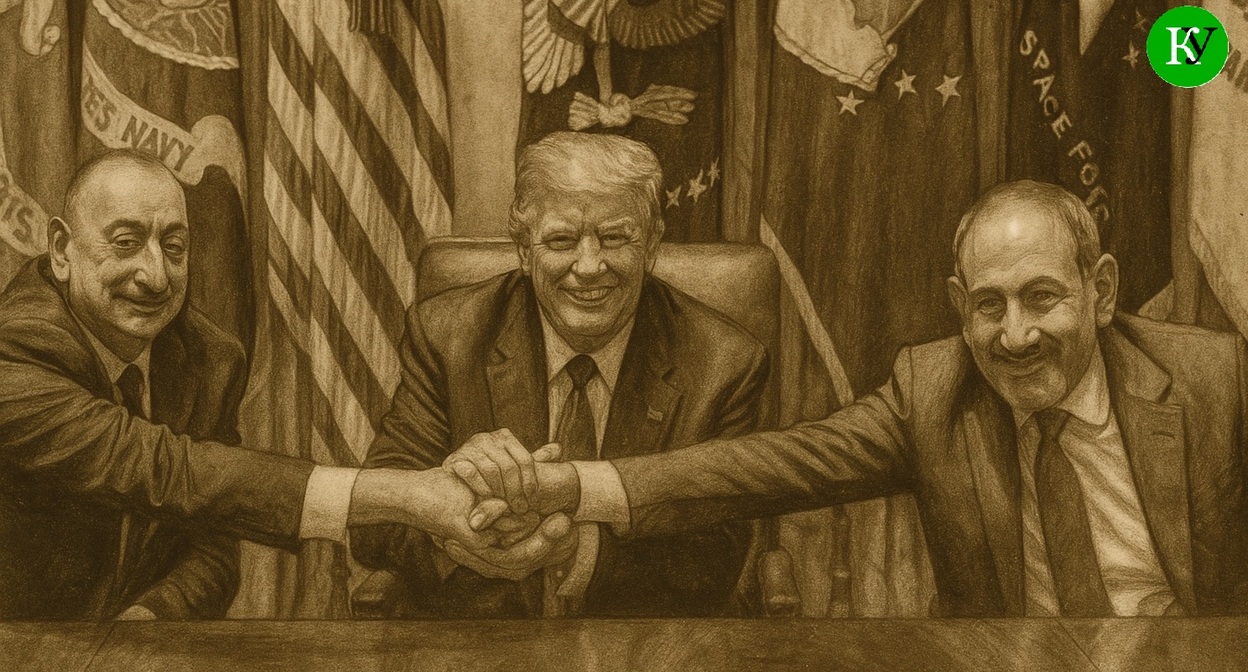
"The European Union openly supported the course toward integration with Europe, and the framework peace agreement with Azerbaijan, brokered by Donald Trump, became a serious foreign policy argument for the authorities," Niyazi said.

On August 8, 2025, US President Donald Trump hosted Armenian Prime Minister Nikol Pashinyan and Azerbaijani President Ilham Aliyev in Washington. The parties signed a joint declaration, which recorded their intention to normalize relations between Armenia and Azerbaijan.
Relations with Azerbaijan and Turkey, in his opinion, also became the central topic of the elections. "Pashinyan is promoting the idea of normalizing and opening borders, while the opposition accuses him of making concessions. Therefore, the vote became not only a partisan struggle but also a choice regarding the country's future development," the political scientist believes.
Niyazi described Russia's actions during the campaign as open interference in Armenia's internal affairs.
"Russia employed virtually its entire range of hybrid instruments—from information pressure and economic threats to support for certain political forces." "This was a deliberate attempt to prevent the consolidation of Armenia's pro-Western course," he said.
According to the expert, such actions do not promote political competition, but only exacerbate the rift in society.
"This increases polarization and undermines the trust of part of society in the electoral process," Niyazi concluded.
According to analysts, the parties of Samvel Karapetyan, Prime Minister Nikol Pashinyan, and former President Robert Kocharyan will be key competitors in the June 7 elections. Samvel Karapetyan's "Strong Armenia," along with Robert Kocharyan's "Armenia" bloc and Gagik Tsarukyan's "Prosperous Armenia" party, is one of the most pro-Russian parties in the elections.
We have updated the apps on Android and IOS! We would be grateful for criticism and ideas for development both in Google Play/App Store and on KU pages in social networks. Without installing a VPN, you can read us on Telegram (in Dagestan, Chechnya and Ingushetia - with VPN). Using a VPN, you can continue reading "Caucasian Knot" on the website as usual, and on social networks: Facebook*, Instagram*, "VKontakte", "Odnoklassniki" and X. You can watch the "Caucasian Knot" video on YouTube. Send messages to +49 157 72317856 on WhatsApp*, to the same number on Telegram, or write to @Caucasian_Knot. * Added to the Russian Ministry of Justice's register of foreign agents. ** Meta (owner of Facebook, Instagram, and WhatsApp) is banned in Russia.
Translated automatically via OpenAI from https://www.kavkaz-uzel.eu/articles/423911


![Tumso Abdurakhmanov. Screenshot from video posted by Abu-Saddam Shishani [LIVE] http://www.youtube.com/watch?v=mIR3s7AB0Uw](/system/uploads/article_image/image/0001/18460/main_image_Tumso.jpg "Tumso Abdurakhmanov. Screenshot from video posted by Abu-Saddam Shishani [LIVE] http://www.youtube.com/watch?v=mIR3s7AB0Uw")