

Participants in Baimuradova's funeral intend to erect a monument at her grave.
Activists who sought the burial of Chechen native Ayshat Baimuradova in Yerevan now face bureaucratic formalities involving the installation of a monument or tombstone at her grave. Baimuradova's death has changed the approach of Armenian security forces to refugees, a human rights activist noted.
As reported by the "Caucasian Knot," murdered Chechen native Ayshat Baimuradova was buried in Yerevan on March 27, more than five months after her murder. Investigative authorities took charge of the funeral arrangements, and about 30 people attended Ayshat's funeral in Yerevan was attended primarily by migrants from Russia, but several local residents were also among the mourners. Some of those who attended the ceremony didn't know the girl personally. Baimuradova's funeral was very quiet and laconic, one of the participants, Oleg, a migrant from Russia, told the Caucasian Knot.
"No one spoke, no one made any statements. Everything was very calm and quiet. It was raining, it was cold, and the weather didn't add any energy. There was a heavy atmosphere, some people were crying, you could hear it. This funeral was the most laconic of any funeral I've ever attended; everything was quite silent," he said.
Oleg didn't know Aishat personally, but he couldn't remain indifferent when he read the news of her death. "I heard about her from the news, but I couldn't stay away. I felt it necessary to attend the funeral and say goodbye. No one from Chechnya or the Chechen diaspora was there, and I didn't see anyone from the local authorities either," he added.
Maria also didn't know Aishat, but she couldn't remain indifferent. "My friend and I decided to say goodbye to her, to show that she wasn't alone. It's very difficult to talk about this; it was very difficult to watch this whole process. None of her relatives were there; her relatives didn't need her. We had to be there," she told the "Caucasian Knot."
Neither Islamic rites nor Chechen funeral traditions were observed at Aishat's burial, the commentator noted. "They simply placed the body in a coffin, took it to the cemetery, and buried it. There's not even a tombstone. A sad fate befell Baimuradova. Killed and buried far from her homeland, without her family or loved ones," noted a reader of the "Caucasian Knot" with the nickname leda_hansen.
Aishat is buried in a separate grave with a simple official plaque. Maria expressed hope that officials will allow a monument to be erected on her grave. "A black plaque with white lettering reading 'Aishat Alikhanova,' her maiden name. This section is slightly off from the main part of the cemetery; all the graves in this section have similar plaques. Apparently, this is a special place where people are buried in such cases. There are no monuments nearby. But with a view of the fortress town of Erebuni, the place is, one might say, picturesque," she noted.
The funeral took place very quickly, reported Alexandra Miroshnikova, press secretary for the SK SOS* crisis group. "We learned about them a day before the funeral itself, so we had no time to help with the organization. Many thanks to our colleagues from Armenia and the Armenian media, who managed to take Ayshat's portrait and bring flowers. Initially, it was announced that the funeral would take place near the morgue, but ultimately, the body was immediately sent to the cemetery, and the funeral was moved there. We would, of course, have liked to have known from the start where to call people and where to come, so they wouldn't have to travel back and forth. There were no Armenian human rights activists at the funeral, but there were representatives of the public and media, who, among other things, helped push for the funeral," she told the Caucasian Knot. She recalled that the group had been trying to secure the transfer of Ayshat's body to her friends and human rights activists for the burial, but ultimately, the Investigative Committee of Armenia handled the arrangements. "We would prefer to organize the funeral ourselves, organize a dignified farewell, rent a hall where people could come and say goodbye to Aishat. She had many friends in Armenia; she was important to many," Alexandra noted.
There are plans to erect a monument on Aishat's grave, but the formalities of the process have not been resolved, Miroshnikova added. "We don't yet understand the mechanism by which we can place a monument or a gravestone there, since it is unclear who the official owner of the grave is. Most likely, the city, but how the monument installation procedure is coordinated with the city is also unclear, and we would like to know that. Given the communication with the Armenian investigation and with the Armenian side in general, there are, of course, certain issues. We, for our part, are ready to pay for everything. If the funeral turns out this way, we would at least like to be allowed to erect a gravestone or a monument within a reasonable timeframe," she said.
The human rights activist added that there has been no progress in the investigation into Aishat's murder. "It's possible that Armenia has already exhausted its mechanisms, as the killer has fled to Russia, and Russia isn't responding to Armenia's requests. Armenia sent a request for assistance in the investigation and received no response. Armenia's only option is to submit a request through Interpol, so there's at least some chance that these two people will be detained upon entry anywhere, even to countries loyal to Russia," Alexandra Miroshnikova concluded.
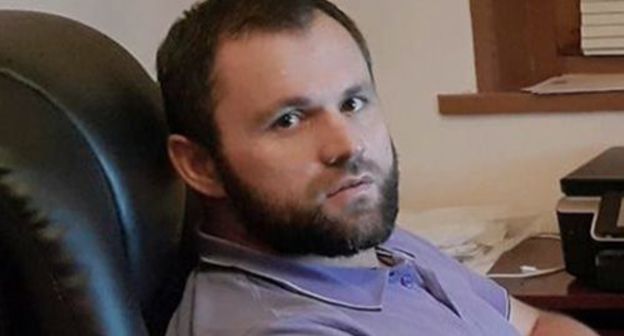
Karina Iminova, whom Aishat had met with before her death, and 30-year-old Chechen native Said-Khamzat Baysarov were seen near the house where Baimuradova's body was found. According to human rights activists, Karina Iminova lied to acquaintances about her past and deliberately met people who had left Chechnya; she herself is not a native of Chechnya, but had visited the republic. Iminova and Baysarov left Armenia for Russia immediately after Baymuradova's murder.
Aishat's case has become a lesson for Armenian law enforcement, believes human rights activist Artur Sakunts. "I haven't researched whether this terrible tragedy attracted the attention of the Armenian public, but this story was definitely the center of attention among those relocated. I want to point out one important detail: her case changed the Armenian law enforcement system's approach to people who fled Russia and found refuge in Armenia. Previously, there wasn't enough attention or care for such people, but now the situation has changed. It's a great shame that it took until after Aishat's death," he told the "Caucasian Knot."
23-year-old Chechen native Aishat Baymuradova was found dead on October 19, 2025, in a rented apartment in Yerevan. She fled to Armenia to escape domestic violence, but at the same time publicly criticized Kadyrov’s government. Baimuradova told human rights activists that she fled “from beatings.” According to the girl, she had to leave her home because of violence from her husband, and she could not return to her parents’ house because she was afraid of facing violence from her father. After leaving Russia, she came to Armenia.
Aishat Baimuradova’s relatives live in the Gudermes region, and many of them, like the murdered woman’s ex-husband, are connected to the security forces, wrote on January 30 in a comment a reader of the “Caucasian Knot” with the nickname nerissa. “One of the reasons for the murder, as some observers believe, could have been the fact that the girl did not not only did she lead a lifestyle that was “wrong” from the point of view of her relatives, but she also [...] dared to threaten her father by making some facts of his [behavior] public and openly criticized the Chechen authorities. "Thus, among other things, her murder can also be seen as a demonstration of the loyalty of her loved ones to the republic's leadership," the reader pointed out.
We have updated the apps on Android and IOS! We would appreciate criticism and development ideas for both Google Play and App Store, and on KU pages in social networks. Without installing a VPN, you can read us on Telegram (with a VPN in Dagestan, Chechnya, and Ingushetia). Using a VPN, you can continue reading the Caucasian Knot on the website as usual and on Facebook, Instagram, and VKontakte. rel="noopener">Odnoklassniki and X. Watch "Caucasian Knot" videos on YouTube. Send messages on WhatsApp** to +49 157 72317856, on Telegram to the same number, or write to @Caucasian_Knot.
* are included in the register of foreign agents.
** The activities of Meta (owner of Facebook, Instagram, and WhatsApp) are banned in Russia.
Translated automatically via OpenAI from https://www.kavkaz-uzel.eu/articles/421964


![Tumso Abdurakhmanov. Screenshot from video posted by Abu-Saddam Shishani [LIVE] http://www.youtube.com/watch?v=mIR3s7AB0Uw](/system/uploads/article_image/image/0001/18460/main_image_Tumso.jpg "Tumso Abdurakhmanov. Screenshot from video posted by Abu-Saddam Shishani [LIVE] http://www.youtube.com/watch?v=mIR3s7AB0Uw")