


Analysts consider Baku's position on the conflict in Iran pragmatic.
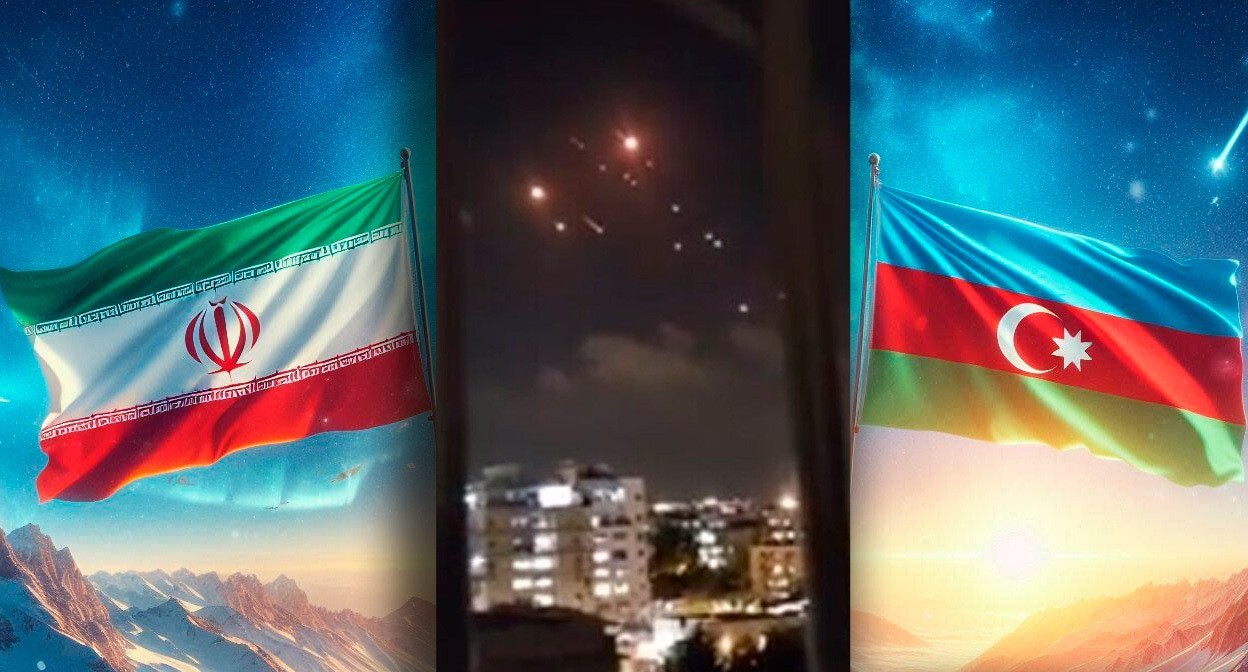
Azerbaijan is distancing itself from the parties to the conflict in the Middle East, ensuring stable oil flows through its territory, and expecting to profit from rising global prices for this raw material.
As "Caucasian Knot" reported earlier, amid worsening relations between Iran and the United States, Baku announced its refusal to allow its territory to be used for a strike on the neighboring country, and Azerbaijani President Ilham Aliyev expressed its readiness to help reduce tensions.
On March 2, Ilham Aliyev expressed condolences to his Iranian counterpart Masoud Pezeshkian in connection with the death of Supreme Leader Ali Khamenei in the first hours of the military operation, according to the head of state's official website.
Azerbaijan has taken a neutral position regarding the military escalation in the Middle East, and this is in the country's security interests, according to columnist Tapdig Farhadoglu.
"A potential war near the country's southern borders carries certain risks for Azerbaijan. Therefore, the republic is seeking to protect itself as much as possible. In this regard, official Baku is distancing itself from the conflict and emphatically does not support either side in the confrontation," he told a "Caucasian Knot" correspondent.
In his opinion, Aliyev's condolences to the Iranian side in connection with the death of the country's leader demonstrated Baku's commitment to a diplomatic settlement of the conflict and made it clear that Azerbaijan does not support military solutions. "On the one hand, this is in line with international law. On the other hand, Azerbaijan is geographically squeezed between Iran and Russia, and its possible entry into a military camp against them is fraught with catastrophic consequences. "Furthermore, Azerbaijan has become one of the few safe corridors through which third-country nationals leave Iran," Farhadoglu noted.
nothing more than a formal politeness
Aliyev's condolences are "no more than a formal politeness," according to Shahin Hajiyev, an analyst at Turan's analytical service. "Aliyev's message reflects Azerbaijan's neutral position. Otherwise, the republic could have been subjected to military strikes from Iran, as happened to the oil-rich monarchies of the Persian Gulf. This neutrality suits the West. Amid inevitable disruptions in oil supplies to the global market due to threats to tanker traffic in the Strait of Hormuz and strikes on oil facilities on the Arabian Peninsula, oil pumping from Azerbaijan continues as usual and may be increased. "If Azerbaijani oil supplies were seriously disrupted, global prices could rise even higher," the analyst believes.
"Iran would like Azerbaijan to support it. However, in the current reality, when only a few countries have expressed support to Tehran—and even then, mostly moral—Iran must be content with the fact that Baku has not made its territory available for strikes against Iran," Hajiyev noted.
"I express my gratitude to the state and people of Azerbaijan for the solidarity shown during this difficult period and the condolences sent. "President Ilham Aliyev's message to President Masoud Pezeshkian was widely known," APA quoted Iranian Ambassador to Azerbaijan Mujtaba Demircilu as saying.
Azerbaijani residents are following developments closely, noted a human rights activist, who wished to remain anonymous.
"Society can be roughly divided into three groups. The largest group takes a neutral stance and supports the government's course, rejoicing that the war has not affected the country. This narrative is actively promoted by pro-government media. There are those who desire the swift fall of the Iranian regime and the declaration of independence for Southern Azerbaijan. There are also supporters of the ayatollah regime, but these are predominantly religious Shiites who are hesitant to engage in public action. "In recent years, the authorities have carried out repression against Shiite religious activists, accusing them of ties to Iran," the source said.
"A weakened Iran will not be able to exert pressure on Baku"
A weakened Iran as a result of US and Israeli strikes is in Azerbaijan's interests, according to Tapdig Farhadoglu. "From the very beginning, Iran was wary of the existence of an independent Azerbaijan, seeing it as a magnet for Iran's ethnic Azerbaijanis. In 1992, Tehran assumed mediation in the Karabakh conflict, but this mission ended with the loss of the city of Shusha for Azerbaijan. Iran created obstacles to Azerbaijan's development of oil and gas fields in the Caspian Sea. Tehran still does not recognize the principle of sectoral division of the Caspian Seabed, although other littoral states have accepted it. "A weakened Iran will no longer be able to exert the same pressure on Baku," the expert noted.
The Azerbaijani authorities are interested in weakening the regime in Tehran, but they fear the spread of the mass protests that began in Iran in late 2025 to the country. At the same time, the situation of Iranian Azerbaijanis will not significantly improve either with the current government remaining in power or in the event of regime change, previously analysts have noted.
Azerbaijanis in Iran are adopting a wait-and-see attitude.
In his opinion, Iranian Azerbaijanis may support the new government if it consolidates around current President Masoud Pezeshkian. "It's not just a matter of his ethnic origin. He is considered one of the most liberal-minded politicians in the Iranian elite and advocates for change. Currently, Azerbaijanis in Iran are taking a wait-and-see approach. During the January protests, the son of Iran's last Shah declared himself the leader of the resistance. However, it was the Pahlavi dynasty that strengthened Persian nationalism and attempted to revise history, minimizing Azerbaijani cultural and political heritage," Farhadoglu said. Under Pezeshkian, relations between Baku and Tehran improved, the expert noted. "Pezeshkian, unlike a number of other Iranian politicians, did not oppose the Zangezur Corridor project. "Now Iran is unlikely to be able to actively impede the implementation of this route," he believes.
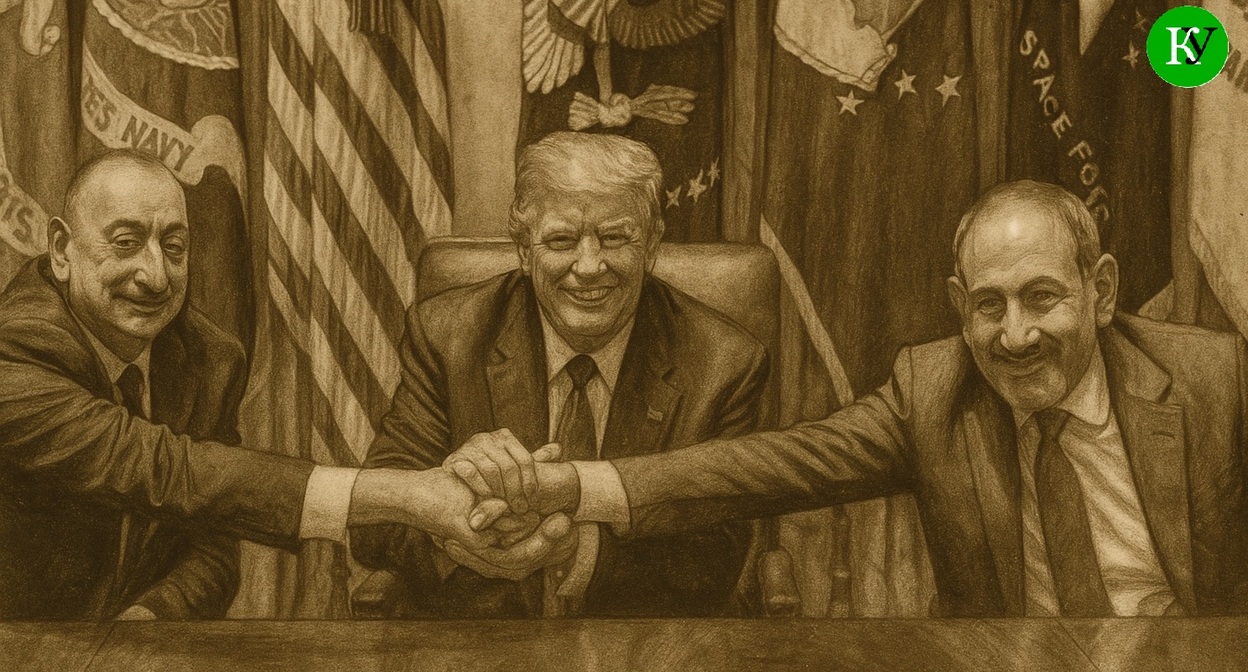
In August 2025, US President Donald Trump announced that the key issue that had been preventing the signing of a peace agreement between Armenia and Azerbaijan had been resolved: the Zangezur Corridor. The "Caucasian Knot" has prepared a report on the "Trump Route" (TRIPP): a transport corridor through Armenia..
The military escalation has not yet directly affected the residents of Azerbaijan.
"The most recent strikes are targeting military facilities in the Tabriz region—at least 300 kilometers from the Azerbaijani border. Furthermore, the land border between Azerbaijan and Iran has been closed for six years, and there are no active cross-border contacts between residents," the expert noted.
Azerbaijan's land borders with neighboring states remain closed due to the quarantine regime, which was introduced in 2020 due to the pandemic. COVID-19, and border crossing is permitted in special cases with the permission of the country's authorities.
Due to military action, bus routes between Baku and the Nakhchivan Autonomous Republic have been suspended. However, air travel remains open; additional flights, subsidized by the state and relatively affordable, are introduced if necessary.
High oil prices will not last long
According to Ilham Shaban, head of the Caspian Barrel Oil Research Center, the military escalation in the Middle East has led to an increase in global oil prices, which is in the interests of Azerbaijan.
"However, this effect may be short-lived. Azerbaijan's state budget indicators are calculated based on a price of $65 per barrel "Any higher price is beneficial to the country. At the same time, Azerbaijan exports about 550,000 barrels of oil per day, which is relatively low. Furthermore, the conflict is unlikely to last long, so high oil prices won't last long," Shaban said.
Translated automatically via OpenAI from https://www.kavkaz-uzel.eu/articles/421261
![Tumso Abdurakhmanov. Screenshot from video posted by Abu-Saddam Shishani [LIVE] http://www.youtube.com/watch?v=mIR3s7AB0Uw](/system/uploads/article_image/image/0001/18460/main_image_Tumso.jpg "Tumso Abdurakhmanov. Screenshot from video posted by Abu-Saddam Shishani [LIVE] http://www.youtube.com/watch?v=mIR3s7AB0Uw")