

Journalist Ulviya Ali reported threats in pretrial detention.
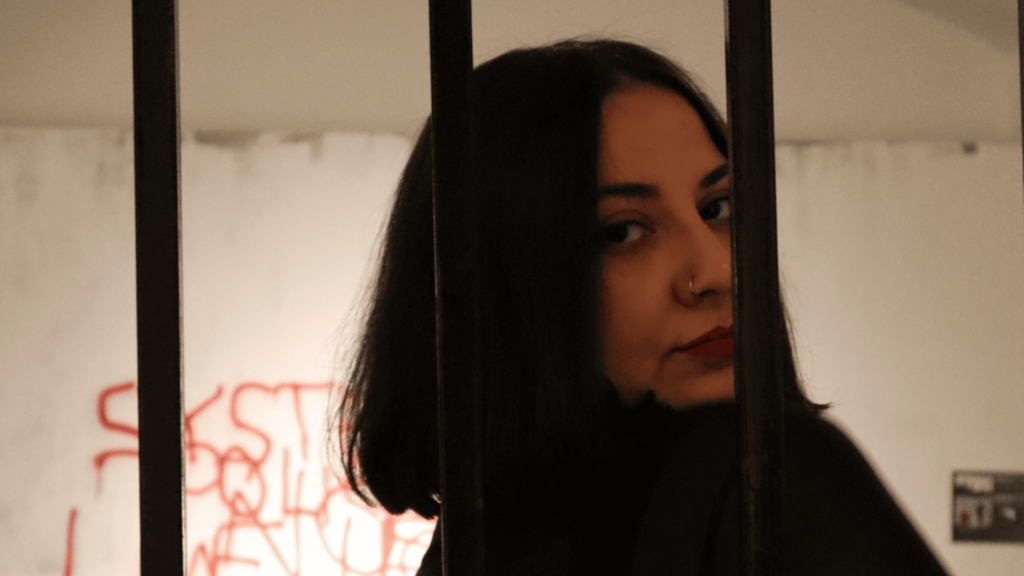
Ulviya Ali, a journalist arrested in the Meydan TV case, faced threats against her family in Baku Pre-trial Detention Center No. 1 after audio recordings of pressure on her in the pre-trial detention center and during her trial, generated by artificial intelligence, were distributed on social media.
As reported by the Caucasian Knot, the international organization Free Press Unlimited awarded the Free Press Award in the category of "Most Resilient Journalist" to Ulviya Ali, a journalist arrested in Baku.
Ulviya Ali faced threats from the management of Baku Pre-trial Detention Center No. 1 after audio recordings of her generated by artificial intelligence were distributed on social media, her loved ones.
"One of the resources created in support of Ulviyya distributed audio recordings generated by artificial intelligence. Specifically, Ulviyya's voice spoke about previous instances of pressure against her in pretrial detention, her speeches, and her petitions in court. A few days ago, Ulviyya was summoned by her supervisor and demanded an explanation. Ulviyya said she had nothing to do with it, and that her phone conversations were being monitored. Then the supervisor said he knew it was generated by artificial intelligence, but not everyone understood that. "He asked if Ulviyya's fiancé was distributing the posts, and she responded that she wasn't naive enough to entrust the administration of accounts to someone in Azerbaijan," a colleague of the journalist's told a Caucasian Knot correspondent on condition of anonymity.
However, the next day, the boss summoned Ulviyya Ali again.
"He demanded that Ulviyya delete the posts and demanded that her fiancé do the same, otherwise he would be brought in and threatened with arrest. "Ulviya viewed this as a direct threat to someone close to her," the source said.
The Penitentiary Service was unable to comment.
"With the development of the latest digital technologies and AI, the repressive apparatus is facing challenges. Now, even from prison, people can express their protests, critical statements, publications, and publicize violations of their rights. While in pretrial detention, Ulviya Ali managed to prepare and publish interviews with other political prisoners in the media. This is difficult for prison officials to handle. Apparently, the media now wants to intimidate recalcitrant advocates of free speech with the arrest of their loved ones, relatives, and family members. "But such blackmail is unlikely to work," one Baku activist told a Caucasian Knot correspondent on condition of anonymity.
Even in pretrial detention, Ulviya Ali continues to work as a journalist, Elshan Hasanov, head of the Center for Monitoring Political Prisoners, confirmed to Caucasian Knot in January. "She sends notes on violations of prisoners' rights and manages to prepare interviews with other political prisoners. In particular, her interviews with the young researcher Bahruz Samedov and the socio-political figure Akif Gurbanov were published," he said.

As a reminder, Ulviya Ali was questioned as a witness in the Meydan TV case in January 2025, after which she was banned from leaving Azerbaijan. In May, she was detained and arrested as a defendant in the Meydan TV case. She denied the smuggling charge and reiterated that she does not collaborate with the outlet.
The Meydan TV case was opened in December 2024, when six journalists were detained and later arrested on charges of currency smuggling. They linked the criminal case to their professional activities. By August 2025, 11 people had been arrested in the Meydan TV case. At the end of August, it was announced that the investigation had been completed, and a 12th suspect, photojournalist Ahmed Mukhtar, had appeared in the case. Meanwhile, the arrested journalists were charged with seven more criminal offenses. .
Those arrested in the Meydan TV case were persecuted at the direction of the Azerbaijani leadership for their journalistic activities, one of the defendants, Shamshad Agha, previously stated. "You have neither the authority nor the courage to make arbitrary decisions in any process controlled by [the country's President] Ilham Aliyev. In these processes, the investigator, the prosecutor, and the judge are all Ilham Aliyev," he told the court.
Journalists from other media outlets, including Abzas Media, Toplum TV, and Kanal-13, have also been persecuted in Azerbaijan. On June 20, journalists and employees of Abzas Media were sentenced to prison terms ranging from 7.5 to 9 years. They denied the charges in court, emphasizing that they were being persecuted for their professional activities and for investigating corruption.
The number of political prisoners in Azerbaijan reached its highest level in 2024 since the country's 23-year membership in the Council of Europe, and this number continues to grow, according to the "Caucasian Knot" report "Key Points on the Record Number of Political Prisoners in Azerbaijan." At the same time, the Azerbaijani authorities deny the presence of political prisoners in the country.
We have updated the apps for Android and IOS! We welcome criticism and development ideas both on Google Play/App Store and on KU's social media pages. You can follow us on Telegram without a VPN (with a VPN in Dagestan, Chechnya, and Ingushetia). Using a VPN, you can continue reading "Caucasian Knot" on the website as usual, and on social networks: Facebook*, Instagram*, "VKontakte", "Odnoklassniki" and X. You can watch the "Caucasian Knot" video on YouTube. Send messages to +49 157 72317856 on WhatsApp*, to the same number on Telegram, or write to @Caucasian_Knot.
* Meta (owner of Facebook, Instagram, and WhatsApp) is banned in Russia.
Translated automatically via OpenAI from https://www.kavkaz-uzel.eu/articles/421170
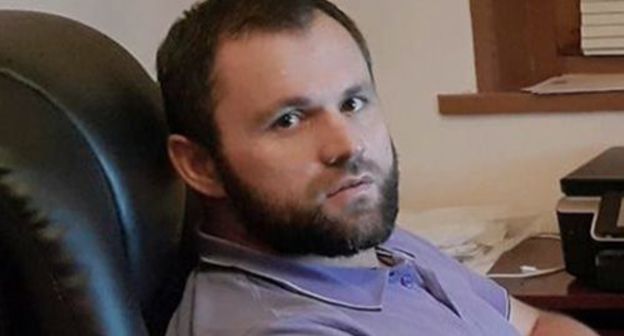
![Tumso Abdurakhmanov. Screenshot from video posted by Abu-Saddam Shishani [LIVE] http://www.youtube.com/watch?v=mIR3s7AB0Uw](/system/uploads/article_image/image/0001/18460/main_image_Tumso.jpg "Tumso Abdurakhmanov. Screenshot from video posted by Abu-Saddam Shishani [LIVE] http://www.youtube.com/watch?v=mIR3s7AB0Uw")