


The decision to install underground garbage containers has raised questions for Kaspiysk authorities.
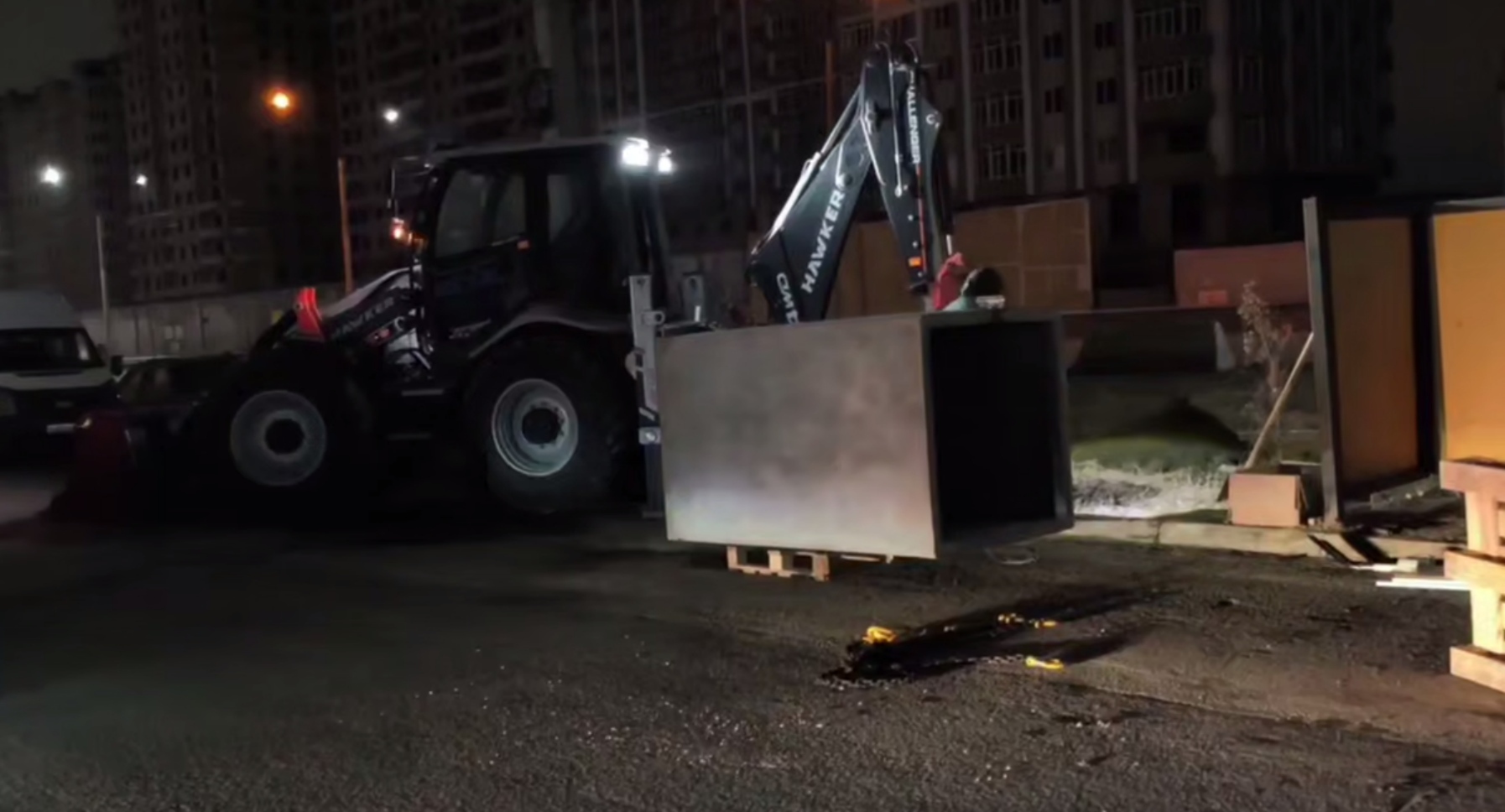
The Kaspiysk mayor's office announced the installation of underground waste collection areas where additional regular containers cannot be placed. Telegram users were skeptical of the innovation, suggesting that the problem lies not in the number of containers, but in the delay in waste collection.
As reported by "Kavkazsky Uzel," in January, responding to complaints from Kaspiysk residents about waste collection failures, a mayor's office representative attributed the delays in solid municipal waste collection to the condition of the landfill and road. Social media users stated that the road was already in poor condition, demanding that authorities organize waste collection.
Dagestan is among the regions receiving subsidies for the construction and reconstruction of municipal waste processing facilities. According to a government order dated November 1, 2025, the republic has been allocated 1.522 billion rubles.
The Kaspiysk administration is "implementing innovations in the field of solid municipal waste management," the mayor's office reported on February 24 in its Telegram channel (10,300 subscribers).
"At the direction of the mayor, Boris Gontsov, a pilot project has been launched in Kaspiysk to install underground container sites for collecting solid municipal waste. The first sites will be located in the area of buildings 16-20 on Omarova Street," the publication states.
Unfortunately, the installation of additional conventional containers is not possible.
This decision is "due to an acute shortage" of container sites in this microdistrict, the authorities explained. "Unfortunately, the installation of additional regular containers is impossible due to the lack of suitable locations that meet sanitary rules and regulations," the statement noted.

Underground containers will solve the waste problem, improve the sanitary condition of courtyards, and enhance the comfort of residents, officials assured.
"If the pilot project is successfully implemented, this practice will be expanded to other problem areas in Kaspiysk. Currently, the city's Housing and Utilities Department is overseeing the work," the publication stated.
As of 10:18 a.m. Moscow time, eight comments had been posted under the post, made at 8:46 p.m. Moscow time.
"How do you understand 'underground'? Explain to the people what it is," Ali wrote. "Come to the location of this container site to see for yourself how this process is carried out," M. replied. "If I had time, I would come," Ali countered.
Why can't the trash be picked up on time?
"Why can't the trash be picked up on time? If we don't pay every month, they immediately charge us a penalty. Why isn't the company penalized for late trash pickup?" - asked another commenter.
"Underground container sites for municipal solid waste are underground storage systems for municipal solid waste with automated mechanisms for lifting the containers. [...] The containers can be buried, for example, in the form of a sealed "cup" with a lid, which is installed deep into the ground. A thick bag for collecting waste is placed inside such a container," explained Romario.
"When it's full, what should I do? How do I clean it, and who will clean it?" asked another user. "Magomedzhanova Street is awaiting the relocation of the container site," wrote Saika.
Representatives of the city administration, as of 10:18 a.m. Moscow time, had not participated in the discussion.
Residents of Kaspiysk have previously repeatedly complained about problems related to garbage collection. On December 31, 2020, the regional operator, Lider LLC, announced it would cease waste collection in Makhachkala and Kaspiysk. Municipal enterprises took over waste collection, but due to a lack of specialized equipment, the work was too slow. In Kaspiysk, Ecopolis, the company that had been responsible for waste collection and removal, ceased operations in March 2021, citing actions by the mayor's office. The city administration, in turn, blamed the garbage situation on the Dagestan authorities.

Remember, residents of Dagestan also regularly complain of extended power outages, heating, and water supply problems. Thus, on January 21, many residents of Makhachkala were left without power due to another breakdown, and on January 25, a pipeline burst in Makhachkala, leaving residents without water for almost two days.
Unresolved problems in the housing and utilities sector are a factor in the growth of protest activity in Dagestan, Sergei Bachurin, head of the North Caucasus Federal District Ministry of Internal Affairs, stated on January 19. Makhachkala residents agreed with his opinion. "Problems with water, electricity, heating, and tariffs are not just household inconveniences, but a trigger for increased social tension, which leads to increased protest activity," noted Rasul Asad, the author of the Telegram channel "Ask Rasul."
In August 2025, residents of the Reduktorny settlement in Makhachkala staged a spontaneous protest due to the lack of power in their homes. The city administration subsequently reported that power had been restored to most homes. Residents of other areas of the city also complained of similar problems. However, officials focused on the proliferation of calls for mass protests against power outages on social media and threatened Makhachkala residents with liability for unauthorized protests. Dagestan Head Sergei Melikov, during a direct line on November 27, 2025, ignored pressing issues and provided only vague answers to questions raised. Residents of the republic were waiting for Melikov to explain the constant power and water outages, burning landfills, and rising utility and transportation costs.
Translated automatically via OpenAI from https://www.kavkaz-uzel.eu/articles/421104



![Tumso Abdurakhmanov. Screenshot from video posted by Abu-Saddam Shishani [LIVE] http://www.youtube.com/watch?v=mIR3s7AB0Uw](/system/uploads/article_image/image/0001/18460/main_image_Tumso.jpg "Tumso Abdurakhmanov. Screenshot from video posted by Abu-Saddam Shishani [LIVE] http://www.youtube.com/watch?v=mIR3s7AB0Uw")