


Bakhruz Samedov began a hunger strike in protest against the tightening of the regime
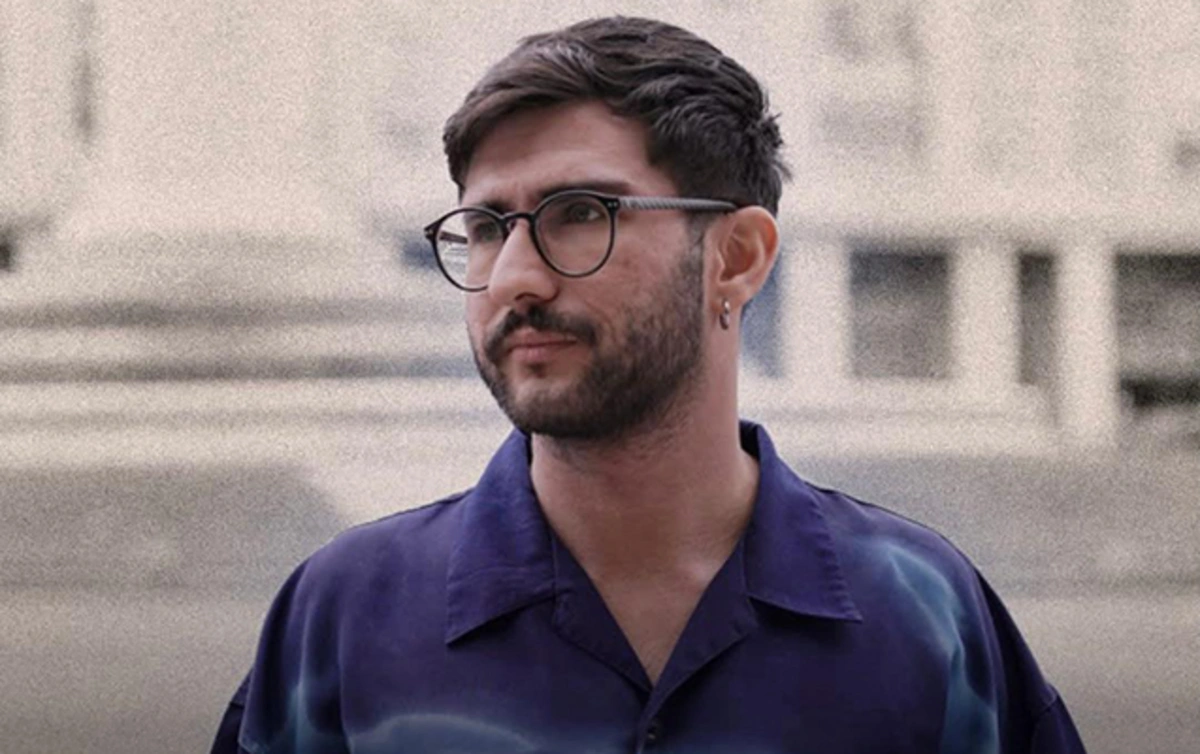
On February 5, the Baku Court of Appeals upheld a decision to toughen the sentence of researcher Bahruz Samedov and transfer him to the closed section of the Umbaki Penitentiary Complex. Samedov declared an indefinite hunger strike in protest.
As reported by the Caucasian Knot, in mid-November, the administration of Correctional Facility No. 11 filed a complaint to toughen Bahruz's sentence and transfer him to the closed section of the Umbaki Penitentiary Complex. On December 1, the Binagadi District Court upheld the request of the penitentiary administration.
29-year-old political scientist and doctoral student at Charles University in the Czech Republic, Bahruz Samedov, was sentenced by a Baku court to 15 years in prison on charges of treason. An appeals court upheld the sentence. Samedov was detained on August 21, 2024, when he arrived in Azerbaijan for vacation. According to investigators, he wrote and translated articles commissioned by Armenian representatives. The charges were based on correspondence between Bahruz Samedov and three women from Armenia. Samedov categorically denied the treason charge. He is known for his criticism of the Azerbaijani authorities, which he has expressed in foreign publications. The defense believes that his "anti-war views" were the reason for his arrest.
On February 5, the Baku Court of Appeal heard an appeal against the harsher punishment regime for Samedov, activist Amrakh Takhmazov told a "Caucasian Knot" correspondent.
He noted that on December 1, the Binagadi District Court granted the request of the Penitentiary No. 11 administration to transfer Samedov to the closed section of the Umbaki Penitentiary Complex. Samedov considered the court's decision unfounded and appealed.
According to Takhmazov, Samedov pointed out that he was being treated with bias during the appeal hearing. In particular, he noted that almost immediately after being sent to Penal Colony No. 11, he was isolated and confined to a punishment cell.
"Bakhruz filed a number of motions. He demanded that the ombudsman be summoned to court, that journalists be allowed into the trial, and that they be allowed to film. Samedov also stated that he suffers from eczema and is contraindicated for confinement. "And Bakhruz's lawyer petitioned for a medical examination," Takhmazov said.
However, according to him, the appellate court rejected the petitions, and then the complaint itself.
Now the decision comes into force, and Samedov will be sent to Umbaki.
According to Takhmazov, after the court's decision was announced, Samedov announced that he was starting an indefinite hunger strike.
Samadov's lawyer, Zibeyda Sadygova, pointed out the lack of grounds for toughening the researcher's sentence.
An employee of the Baku Court of Appeals confirmed to a "Caucasian Knot" correspondent the information about the rejection of Samedov's appeal.
Head of the Center for Monitoring Political Prisoners, Elshan Gasanov explained that confinement in a closed prison entails harsh conditions.
"In a closed prison, prisoners are maximally isolated, kept in a single cell or a double cell. They are allowed only one hour of exercise per day. Visits and phone calls are less frequent than in a penal colony, and thus they are maximally isolated from the outside world. A prisoner in a closed prison spends almost the entire day in his cell, while in a penal colony, he can move around the facility during the day," he told a "Caucasian Knot" correspondent.
The Penitentiary Service was unable to comment.
Translated automatically via OpenAI from https://www.kavkaz-uzel.eu/articles/420549


![Tumso Abdurakhmanov. Screenshot from video posted by Abu-Saddam Shishani [LIVE] http://www.youtube.com/watch?v=mIR3s7AB0Uw](/system/uploads/article_image/image/0001/18460/main_image_Tumso.jpg "Tumso Abdurakhmanov. Screenshot from video posted by Abu-Saddam Shishani [LIVE] http://www.youtube.com/watch?v=mIR3s7AB0Uw")