

The investigation found the prolonged lack of water in Gukovo residents' homes to be the result of negligence.
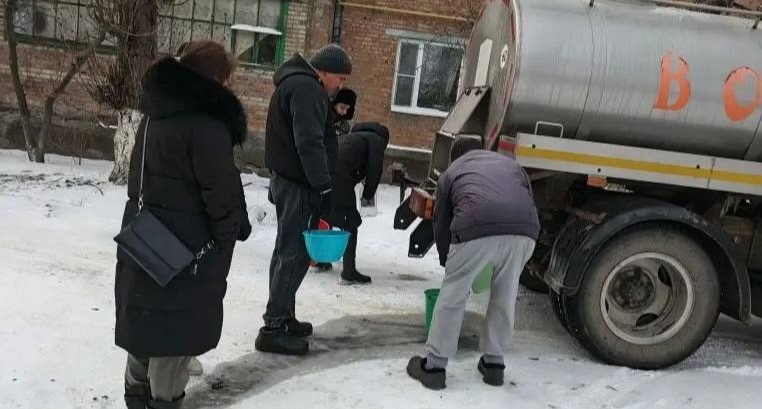
Two criminal cases have been opened in connection with the prolonged water outage in homes of residents of Gukovo, Zverevo, and several villages in the Rostov Region. Investigators stated that officials failed to promptly resolve the emergency and committed violations in water delivery.
As reported by "Kavkazsky Uzel," on January 22, the prosecutor's office reported on an investigation into complaints from residents of Gukovo, Zverevo, and villages in the Kamensky and Krasnosulinsky districts regarding the prolonged water outage. The head of Gukovo received a notice "regarding the unsatisfactory organization of water delivery to residents," and the investigation materials have been sent to investigators to determine whether to initiate a criminal case, the department stated.
Residents of Gukovo and Zverevo complained on January 21 that their homes had been without water since January 16. Residents said they were forced to melt snow and buy water. Authorities, reporting on the progress of the emergency response, stated that water supply had been restored, but the water did not reach the upper floors of buildings.
In the Rostov Region, a criminal investigation has been launched under Part 1 of Article 293 of the Criminal Code of the Russian Federation (negligence) and Part 1 of Article 238 of the Criminal Code of the Russian Federation (provision of services that do not meet the requirements for the safety of life or health of consumers), the regional Investigative Committee of the Russian Federation reported today on its website.
"According to the investigation, on January 16, 2026, a pipe burst, supplying water to the towns of Gukovo, Zverevo, and settlements in the Krasnosulinsky and Kamensky districts, resulting in a critical situation with uninterrupted water supply. Despite the fact that the emergency condition of the water main was known, proper measures for timely repairs were not taken," the publication states.
In addition Furthermore, following the accident, "water supply to the population was organized with significant violations," the report noted. "Currently, searches have been conducted in connection with the criminal case, technical documentation has been seized, a construction and technical assessment has been ordered, and other necessary investigative actions are being carried out aimed at identifying specific individuals involved in the crimes," the Investigative Committee reported.
Part 1 of Article 293 of the Russian Criminal Code provides for a fine of up to 120,000 rubles, or up to 360 hours of community service, or up to a year of correctional labor, or up to three months of arrest. Part 1 of Article 238 of the Russian Criminal Code provides for up to two years' imprisonment.
As a reminder, unresolved problems in the housing and utilities sector in Dagestan are a factor in the growth of protest activity, Sergei Bachurin, head of the North Caucasus Federal District Ministry of Internal Affairs, acknowledged on January 19. Makhachkala residents agreed with his opinion. "Problems with water, electricity, heating, and tariffs are not just household inconveniences, but a trigger for increased social tension, which leads to an increase in protest activity," blogger Rasul Asad noted, in particular.
In August 2025, residents of the Reduktorny settlement in Makhachkala staged a spontaneous protest due to the lack of power in their homes. The city administration subsequently reported that power had been restored to most homes.
Residents of other areas of Makhachkala complained of similar problems. However, officials focused on the fact that calls for mass protests against power outages were spreading on social media and threatened liability for unauthorized protests.
Translated automatically via OpenAI from https://www.kavkaz-uzel.eu/articles/420310
![Tumso Abdurakhmanov. Screenshot from video posted by Abu-Saddam Shishani [LIVE] http://www.youtube.com/watch?v=mIR3s7AB0Uw](/system/uploads/article_image/image/0001/18460/main_image_Tumso.jpg "Tumso Abdurakhmanov. Screenshot from video posted by Abu-Saddam Shishani [LIVE] http://www.youtube.com/watch?v=mIR3s7AB0Uw")