

Anastasia Zinovkina's detention regime has been tightened.
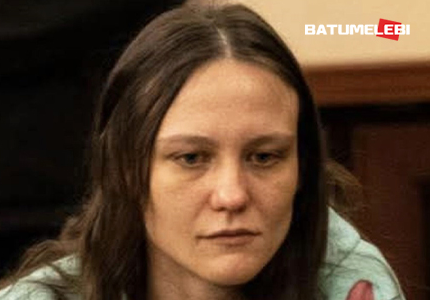
Anastasia Zinovkina, a convicted protester in Georgia, has been transferred to a closed prison, with restricted phone calls and visitation rights. Her defense has appealed the decision.
As reported by the "Caucasian Knot", Russian citizens Artem Gribul and Anastasia Zinovkina, who participated in protests in Tbilisi, were arrested in December 2024 on drug trafficking charges. They claim evidence was planted against them, and security forces resorted to threats. On September 12, 2025, a Tbilisi court sentenced both to 8.5 years in prison. Anton Chechin, a protester, received the same sentence on a similar charge. Zinovkina said that on October 29, 2025, she received no help from prison staff for eight hours, although she could not move because of back pain, and the doctor could only offer her "a stronger painkiller that the psychiatrist has." Zinovkina is provided with medical care in prison and does not require inpatient treatment, the Georgian Penitentiary Service stated in response to activists' demands for medical care. In November, the Court of Appeal began considering the complaints of the Russians. During the attacks, Anastasia Zinovkina, convicted in Georgia, cannot get out of bed, the fingers of her right hand and toe have become numb, her fiancé Artem Gribul said.
Anastasia Zinovkina has been transferred to a closed-type prison, limiting her right to phone calls and visits, Zinovkina's lawyer, Daria Samodurova, wrote today on her Facebook page*.
"Since September 12, 2025, Anastasia has been held in a semi-open prison. The order of January 15, 2026, is based on the minutes of a secret meeting. Accordingly, we do not know why Anastasia Zinovkina's type of prison was changed. Due to the change in the type of prison, Anastasia Zinovkina now has limited rights to phone calls and visits," Samodurova wrote.
The lawyer noted that until January 15 of this year, Zinovkina had the right to make an unlimited number of phone calls, but now Anastasia will be able to make phone calls three times a month.
Samodurova also emphasized that Anastasia is being held separately from other prisoners, meaning she is in solitary confinement and was previously able to communicate with people through daily phone calls. Her socialization is currently limited. The order placing Anastasia in solitary confinement, separate from other prisoners, has already been appealed in court, as the penitentiary department rejected the complaint, and the order of January 15, 2026, will be appealed in the near future.
Last week, Zinovkina was visited by Zurab Tsetskhladze, the father of one of the prisoners of conscience, Zviad Tsetskhladze. He stated that "due to illness and the unbearable conditions in prison, she has become like a 60-year-old woman."
"She is extremely weak, practically emaciated, and it cannot be ruled out that her ruined health will not withstand prison conditions and her imprisonment will end fatally. This uncompromising, fearless, and selfless young woman urgently needs the help and support of society. We must at least be able to buy her an orthopedic mattress and pillow in the penitentiary," Zurab Tsetskhladze wrote on his Facebook page*.
If anything happens to Anastasia Zinovkina in prison, Georgia and Georgian society "will not be able to wash away this sin and shame for centuries," he noted. "I call on the active community participating in the protest to organize a rally at the special penitentiary facility and urgently help this struggling, unyielding, and devoted girl. Freedom for the regime's prisoners!!!" added the prisoner of conscience's father.
Caucasian Knot is posting materials about the recent municipal elections and opposition supporter protests on the topic page "Georgia: Elections Amid Protests".
Translated automatically via OpenAI from https://www.kavkaz-uzel.eu/articles/420096
![Tumso Abdurakhmanov. Screenshot from video posted by Abu-Saddam Shishani [LIVE] http://www.youtube.com/watch?v=mIR3s7AB0Uw](/system/uploads/article_image/image/0001/18460/main_image_Tumso.jpg "Tumso Abdurakhmanov. Screenshot from video posted by Abu-Saddam Shishani [LIVE] http://www.youtube.com/watch?v=mIR3s7AB0Uw")