


The police general's comments on the situation in Dagestan have found support among Makhachkala residents.
Unresolved problems with housing and utilities services are causing discontent among residents of Dagestan and provoking an increase in protest activity, stated the head of the Ministry of Internal Affairs for the North Caucasus. Residents of Makhachkala agreed with his opinion.
As reported by "Caucasian Knot," in August 2025, residents of the Reduktorny settlement in Makhachkala staged a spontaneous protest due to the lack of power in their homes. The city administration subsequently reported that power had been restored to most homes. Residents of other areas of the city also complained of similar problems.
Blogger Rasul Asad drew attention to the Colonel General's statement. He noted that Bachurin pointed out what local activists have been writing and talking about for a long time. These aren't just everyday inconveniences, but a trigger for increased social tension. "Problems with water, electricity, heating, and tariffs aren't just everyday inconveniences, but a trigger for increased social tension, which leads to increased protest activity. My colleagues and I are trying to convey a simple message to decision-makers: ignoring citizens' basic needs inevitably leads to protest sentiments, and that the problem is real and not something invented by Telegram channels. Today, these conclusions have already been voiced at the official level," Asad wrote in his Telegram channel "Ask Rasul." The police general's public statement was also supported by ordinary residents of Makhachkala. "The statement by the Interior Ministry general is very accurate. People in Dagestan are tired of regular power, water, and heating outages. Residents previously blocked roads and held protests. Now they are simply afraid of the consequences of such actions, as they could face criminal prosecution," Makhachkala resident Murad told a "Caucasian Knot" correspondent. People's patience is not limitless, and Bachurin was right in warning the authorities. "In the Reduktorny settlement, we used to block roads, and the power would immediately come back on. Now, if they do, it's only women, as men are immediately taken into police custody. But people's patience is not limitless, and Bachurin was right in warning the Dagestani authorities that the consequences could be unpredictable," a local resident told a "Caucasian Knot" correspondent. Nabiulla. As a reminder, on January 8th, residents of Kaspiysk complained that there had been no water in their homes for about a week, and numerous appeals to Gorvodokanal and the city administration remain unanswered. On January 15th, it became known that the water supply to Kaspiysk districts, which had not been restored to normal operation since the end of December, had been interrupted due to a new water main failure. Two days earlier, on January 13, investigators opened a criminal case due to the prolonged water outage in Kaspiysk. During a direct line on November 27, 2025, the head of Dagestan Sergey Melikov ignored pressing issues and gave only vague answers to questions raised. Residents of the republic were waiting for Melikov to explain the constant power and water outages, burning landfills, and rising utility and transportation prices. In July 2025, residents of Makhachkala complained to the "Caucasian Knot" about regular power outages. According to them, the power outages sometimes last from several hours to several days. A Dagenergo employee reported back then that sometimes tens of thousands of people in the city are without power at the same time. "There aren't enough people to quickly fix the problems, so crews are sent from one location to another. The dilapidated networks can't handle the load," he explained.
In the summer of 2025, Sergei Melikov acknowledged that the republic's power supply system was "operating at its limit," and the networks were "not ready for such loads." At the same time, the official noted the government's inefficiency and sluggishness. "I have repeatedly raised the issue of our energy complex at the federal level, including proposing to begin implementing a comprehensive program for developing the region's energy system. All these decisions are being made, but not as quickly as we would all like. And although it's difficult to see the results of the enormous work being done, they are there," he said.

Translated automatically via OpenAI from https://www.kavkaz-uzel.eu/articles/420087


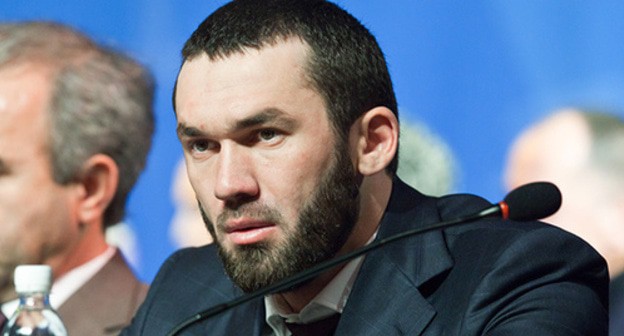
![Tumso Abdurakhmanov. Screenshot from video posted by Abu-Saddam Shishani [LIVE] http://www.youtube.com/watch?v=mIR3s7AB0Uw](/system/uploads/article_image/image/0001/18460/main_image_Tumso.jpg "Tumso Abdurakhmanov. Screenshot from video posted by Abu-Saddam Shishani [LIVE] http://www.youtube.com/watch?v=mIR3s7AB0Uw")