


Dagestanis complain about a toxic waste plant in a water protection zone.
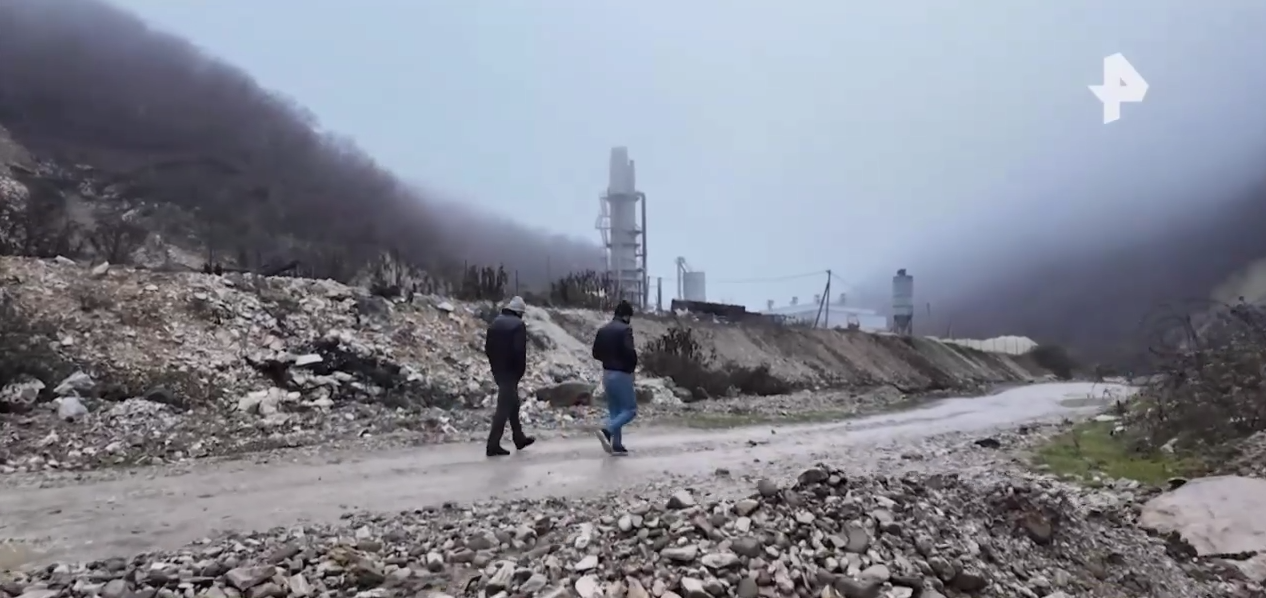
Villagers in the Dagestani village of Gulli claim that the water in their rivers has become dirty and a white coating has appeared on the trees due to a plant. The district administration confirmed that the permit for the plant's construction was legally issued.
As reported by the "Caucasian Knot," the head of the Russian Investigative Committee, Alexander Bastrykin, is monitoring information about a plant built near the Artuzen River in Dagestan, which is polluting the air and water.
In the village of Gulli in the Kaitag District of Dagestan, local residents say a real environmental disaster is unfolding. Fish are dying en masse, trees are covered in a white coating, and the water in rivers and springs has become dirty. Izvestia journalist Murad Magomedov published a report on the plant's situation on his Telegram channel, which has over a thousand subscribers. The post has garnered over 400 views.
Residents of five villages, a total of over 10,000 people, are unhappy with the plant's presence near their homes. Toxic waste from the plant is already lying outside the facility's perimeter, and no one is reacting, as if this were normal.
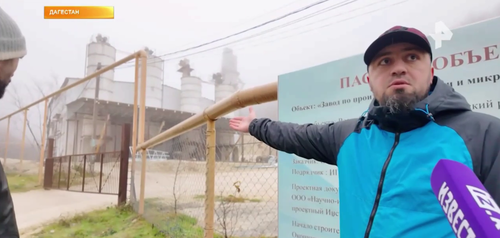
The first thing people noticed was the mass death of fish in the river. Locals attribute this to discharges from the plant. People also complain about the air quality. "The plant constantly produces dust. Look, the hawthorn is covered with a thick layer of lime," residents pointed out.
The plant hasn't yet launched, but commissioning work is underway daily. "The plant's territory is higher up, and they dump their waste right here, outside their property," complained local resident Sharip Zaipulaev.
The main threat is drinking water contamination. Several villages get their water from a spring located near the river. People said that once the water in this river was turned white, children began getting sick much more often.
"While we used to have one, two, or three cases of pneumonia in children a year, after this plant there are 32 cases of pneumonia in children," explained Khumar Jalilova, a resident of the village of Gulli.
Also, during drilling and blasting operations at the plant, strong vibrations were felt in the village. Cracks appeared in 15 houses. People are worried that the next tremors could completely destroy their homes. Supervisory authorities have already conducted several inspections and even identified violations.
"By violating the open-pit mines with this legal requirement, they converted this forest fund into industrial land," said Marat Kerimov, a resident of the village.
The district administration confirmed that they legally issued the permit for the construction of the plant. "All their construction documents comply with the project and that's it," asserts Magomed Gereyev, Deputy Head of the Kaitag District Administration.
Local residents said they don't understand this. "If it's legally in place, if it's operational, they have all the documentation, why aren't they greeting us with the doors open? Here's a clear example: see, the lock is on the gate. No one's there, everyone's hiding, even though the equipment is there," added Magomed Kerimov, a resident of the Kaitag District.
According to the reporter, the municipality issued the permit illegally, as reported by the interregional environmental prosecutor's office. It conducted its own inspection and discovered a raft of violations. Specifically, the facility is located in the Artuzen River water protection zone. It was discovered that there was no license to operate explosive, fire, or chemically hazardous facilities.
Regional authorities are trying to find a compromise: to keep the plant operating without people complaining. No matter how hard they try, it won't work, the lawyer is quoted as saying in the report. "First, building a chemical plant near a river is essentially impossible. Second, without public consultation with the population. And, of course, on forest lands," explained lawyer Muslim Dzhamalutdinov.
Local residents said they don't intend to give up. They say this isn't a dispute, but a fight for the right to live comfortably on their land. They intend to seek the closure of the plant through the courts.
"Kavkazsky Uzel" also reported that last April, residents of the village of Gulli in the Kaytag District complained about the operation of the quicklime plant. According to them, production waste flows into the Artuzen River and pollutes the drinking water source that supplies not only Gulli but also neighboring villages.
Translated automatically via OpenAI from https://www.kavkaz-uzel.eu/articles/420073





![Tumso Abdurakhmanov. Screenshot from video posted by Abu-Saddam Shishani [LIVE] http://www.youtube.com/watch?v=mIR3s7AB0Uw](/system/uploads/article_image/image/0001/18460/main_image_Tumso.jpg "Tumso Abdurakhmanov. Screenshot from video posted by Abu-Saddam Shishani [LIVE] http://www.youtube.com/watch?v=mIR3s7AB0Uw")