


Police have dismissed the complaint about Roman Murdiev's harsh escort as unfounded.
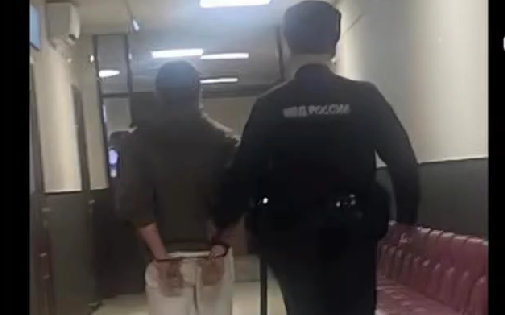
The mother of Chechen teenager Roman Murdiev complained to the Moscow prosecutor's office about the use of handcuffs behind his back and his joining with another defendant during the delivery of her son to court. The Main Directorate of the Ministry of Internal Affairs for Moscow found no violations. The proportionality of the convoy's actions must be justified, the lawyer pointed out.
As reported by "Caucasian Knot", on September 29, a Moscow court sentenced ninth-grader Roman (Muslim) Murdiev to one year and 11 months in prison. Murdiev was charged with disturbing public order and using violence (Article 213 of the Criminal Code of the Russian Federation) after a fight in which the teenager, according to him, stood up for a 12-year-old boy he knew. The defense insists on Murdiev's innocence. On November 25, the First Appellate Court of General Jurisdiction in Moscow considered an appeal in the case of Chechen teenager Muslim Murdiyev without notifying his mother and his primary lawyers.
The family and defense of 14-year-old Muslim Murdiyev claim systemic violations in his detention and escort. Following investigations, Russian law enforcement agencies assert that no violations were found and that the actions of the Ministry of Internal Affairs officers were lawful, according to the Ministry of Internal Affairs' response to Murdiyev's mother's complaint, dated December 18 (a copy is in the possession of the "Caucasian Knot").
On November 20, the teenager's mother, Mata Murdiyev, visited the Savelovsky District Court to accompany her son as he reviewed the case materials. The family and eyewitnesses claim that upon arrival, the teenager was handcuffed behind his back, and his hands were cuffed to those of another defendant.
Such measures are excessive and unreasonable in relation to the child.
According to the mother, such measures are a "flagrant violation of the rights of a minor and a humiliation of human dignity." In her complaint to the Moscow Prosecutor's Office, she stated that "Federal Law No. 103-FZ permits handcuffing only in cases of a real threat of escape or violence, while the Russian Criminal Procedure Code and federal legislation require the use of mitigated measures for minors."
"Joining an arrested person with another defendant violates the instructions of the Ministry of Internal Affairs and the Federal Penitentiary Service, which require the individual use of handcuffs and prohibit the coupling of prisoners with each other. Such measures are excessive and unjustified in relation to a child," Murdiev's mother stated in her complaint.
She demanded an investigation, prosecution of those responsible, and enforcement of the law in future actions.
On December 18, the Main Directorate of the Ministry of Internal Affairs for Moscow sent a response to the complainant. The document (a copy is in the possession of the "Caucasian Knot") states that an investigation was conducted into the facts set out in the complaint and found that "the restraints used during the escort of Roman Ruslanbekovich Murdiev... were used in accordance with the requirements of Federal Law No. 103-FZ 'On the Detention of Suspects and Accused Persons' and other regulatory acts."
"The facts stated in the complaint have not been objectively confirmed," the agency's response states.
The complainant was informed of her right to appeal the response administratively or in court; no sanctions will be imposed on the escort staff.
The authors of the "Freedom to Muslim" Telegram channel responded skeptically to the Ministry of Internal Affairs' response, emphasizing that the official document effectively denies eyewitness accounts and the fact that the teenager himself felt discomfort from having his hands tied behind his back. "What our eyes see, what Muslim's hands feel—none of this happened," the channel's authors write, quoting a phrase from the Ministry of Internal Affairs' response.
The lawyer pointed out the one-sided nature of the Ministry of Internal Affairs' investigation
Commenting on the complaint of the mother of minor Roman (Muslim) Murdiev regarding the conditions of his escort and the Ministry of Internal Affairs' response, lawyer Mickey Arapiev of the Moscow Bar Association told a "Caucasian Knot" correspondent that, from the point of view of criminal procedure law, unresolved legal issues remain in this situation.
If the investigation materials do not indicate an attempt to escape, aggression, or resistance on the part of the minor, the use of handcuffs behind the back in itself raises doubts about proportionality.
According to him, federal law permits the use handcuffs are only used if there are specific grounds, and for minors, a higher standard of protection and the requirement to use the minimum necessary coercive measures apply. Additional restrictions, including handcuffing another defendant, require separate and reasoned justification, he noted.
"If the investigation materials contain no indication of an attempt to escape, aggression, or resistance on the part of the minor, the use of handcuffs behind the back in itself raises doubts about proportionality. And handcuffing a teenager to another defendant is an independent restriction that cannot be considered a technical detail and requires a clear legal explanation," Arapiev noted.
The lawyer also drew attention to the nature of the investigation itself. In his opinion, the Ministry of Internal Affairs' wording that "the facts were not objectively confirmed" indicates the internal nature of the complaint's consideration.
"Judging by the response, the investigation was based on official documents and explanations from the escort officers. Moreover, the position of the applicant and the minor himself was not actually examined. In such a situation, we are talking about a one-sided investigation, when the agency's version is confirmed by the agency itself." "documentation," he said.
According to Arapiev, such a response cannot be considered a final legal assessment of the convoy's actions. "This is not a court finding or an independent expert opinion, but the position of the body against whose actions the complaint was filed. Therefore, the mother's complaint has not been legally refuted on the merits, and the legal conflict between the family's version and the official position of the law enforcement agencies remains unresolved," the lawyer emphasized.
Murdiyev's case has attracted the attention of human rights activists and politicians. In December 2024, Chechen leader Ramzan Kadyrov criticized the leadership of the Ministry of Internal Affairs and the Investigative Committee for initiating a case against the teenager, and the Chechen human rights ombudsman demanded protection for Murdiyev's family from threats against relatives.
The defense insists that the legal norms concerning juvenile defendants were The rules have been violated repeatedly, both in the criminal procedure itself and in the execution of preventive measures and escort. The family is also appealing procedural actions, including the extension of the preventive measure and the conditions for participation in court.
As a reminder, the defense and relatives insist that Muslim Murdiyev did not initiate the conflict and stood up for the younger teenager. According to them, the case was fraught with violations of procedural guarantees from the very beginning, with denials of defense motions and ignoring evidence presented by the lawyers.
Previously, Murdiyev's lawyers alleged pressure on the teenager, restrictions on his right to defense, and the disproportionate nature of the preventive measure. The defense also pointed out that, under similar circumstances, other defendants in the case, not related to people from the North Caucasus, were removed from the charges and were used as witnesses in the case.
Murdiyev's case previously caused a wide public outcry, and Human rights activists and relatives regarded the trial as a show trial and pointed out possible ethnic bias.
Translated automatically via OpenAI from https://www.kavkaz-uzel.eu/articles/419264

![Tumso Abdurakhmanov. Screenshot from video posted by Abu-Saddam Shishani [LIVE] http://www.youtube.com/watch?v=mIR3s7AB0Uw](/system/uploads/article_image/image/0001/18460/main_image_Tumso.jpg "Tumso Abdurakhmanov. Screenshot from video posted by Abu-Saddam Shishani [LIVE] http://www.youtube.com/watch?v=mIR3s7AB0Uw")