

A teacher shortage in Chechnya has raised questions about the quality of education
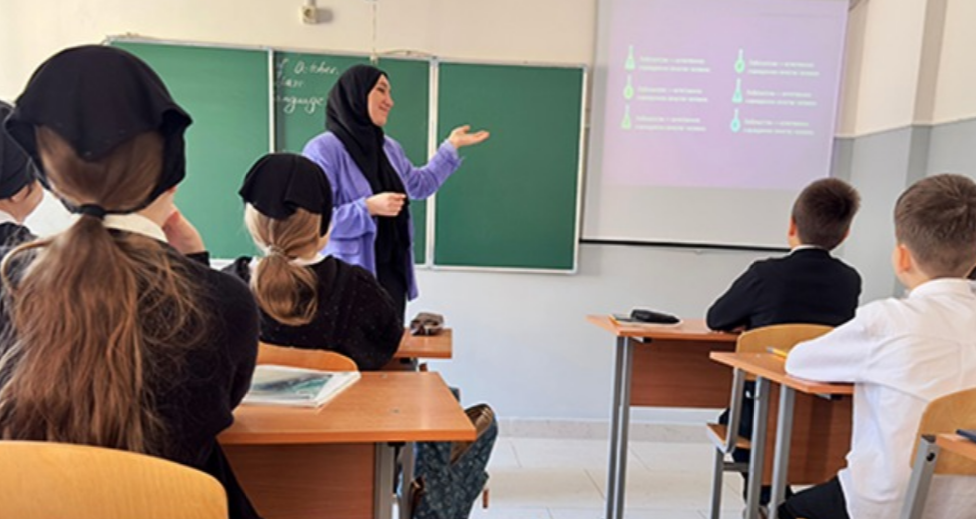
Chechen schools are short of primary school teachers and Chechen language teachers, and rural areas also face problems with subject teachers. School vacancies number in the hundreds. Parents are concerned about the quality of education their students are receiving.
Pensioner Tumisha's grandson started first grade at a school in Grozny this year. She reported a shortage of primary school teachers. "School No. 35 has four classes of first-graders, but as of September 1st, there are only two primary education teachers. I have 40 years of teaching experience, and in recent years I worked at the district education department. It's been a roller coaster, but even after the first war, there wasn't such a shortage of teachers as there is now," she told a "Caucasian Knot" correspondent.
Said-Selim has over half a century of teaching experience, having served as the principal of a school in a mountain village in the Vedensky District. "Then I was invited to the Ministry of Education. Mukhari Umarov ( Minister of Education of the Chechen-Ingush ASSR from 1963 to 1980 – Caucasian Knot note ) was the minister at the time. I became his deputy, and my responsibilities included working with visiting teachers. There were many of them back then. I had to travel all over Checheno-Ingushetia. These trips, meetings with colleagues, students, and their parents, helped us resolve any school issues that arose on the spot," Said-Selim recalls.
"In recent years, the republic has seen the construction of new, spacious buildings to replace old huts. After the second war, in 2000, there were 239 schools in the republic, attended by 97,000 children. Currently, there are 622 schools in Chechnya, including 64 in Grozny, attended by 382,000 children," he emphasized.
Said-Selim recounted that rural schools used to have many teachers from out of town. "During one of my assignments, I met Larisa Lebedeva, a math teacher from Moscow. When she arrived, she asked to be assigned to a mountain village. That's how she ended up in Itum-Kale in the Shatoi District. Her math lessons, especially for boys, became her favorite. And for her, Larisa confessed to me, it was a revelation that children from a remote mountain village loved poetry and could listen for hours without interrupting to poems by Lermontov, Pushkin, Simonov, Yulia Drunina, and Rasul Gamzatov. A film, "A Line from a Biography," was made about her life in Itum-Kale," Said-Selim recalls, adding bitterly that before the start of the school year, the Itum-Kale school had no math, chemistry, history, or social studies teachers.
The shortage of teachers in Chechnya has become a problem, especially in rural areas.
According to Taus , an employee of the Nozhai-Yurt district administration, there are currently five vacancies for English teachers in the district's schools. The school in the village of Osi-Yurt has no chemistry, history, or biology teachers, and the school in the village of Tsa Gardali has been without physics and chemistry teachers for several years.
As of September 1, there were 30 vacancies in the Urus-Martan district, Said-Selim noted. "School principals are in despair: there's a severe shortage of math teachers. Three schools in the district don't have physics or chemistry teachers, and there's no one to teach children their native language or introduce them to the works of Chechen writers. And the situation is similar in virtually all schools in the republic: in Achkhoy-Martan, there are 66 vacancies, but as far as I know, another 10 teachers left Achkhoy's educational institutions in the first half of the year. There are 33 vacancies in schools in the Naursky district. Schools have been experiencing a shortage of math, physics, and biology teachers for several years now. In the Shelkovsky district, there are 54 vacancies, and almost every school lacks either a Chechen language and literature teacher, an English teacher, or a Russian language and literature teacher. And there's also no one to teach physics or chemistry," Said-Selim said, listing the number of subject teacher vacancies in schools in the Shelkovsky district.
According to him, it was not possible to find a school in any district that began the new academic year with a full complement of subject teachers. "The picture that emerged in the first days of the 2025-2026 school year in the Chechen Republic can be judged by Grozny. A very telling fact: the principals of five schools in Grozny couldn't find teachers for elementary grades. 150 first-graders didn't know who they would give bouquets of flowers to on Knowledge Day if the school didn't have the person they would later call their first teacher. The new school year in Grozny began with a negative sign: a severe shortage of teachers in mathematics, physics, chemistry, biology, Russian language and literature, and English. Clearly, this is where the most impressive number of vacancies is – 146. In total, for the educational process in Chechnya's schools to proceed without disruption, the republic needs 527 teachers. Just imagine the amount of knowledge our children will miss out on," Said-Selim concluded.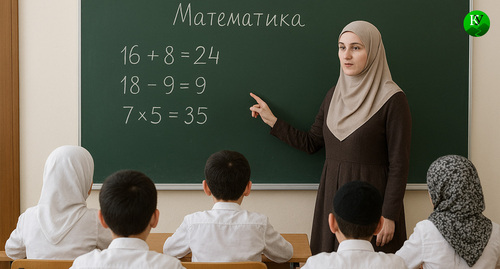
Parents are concerned about their children's level of education
"There are no teachers, but we were given textbooks for these subjects. We received textbooks for all subjects, but it's a shame they didn't send us teachers for physics and chemistry," says Ayshat , a resident of this village whose son started seventh grade this year.
And this year our children will not know what Ohm's law is and will not learn what wonders are hidden under the word "chemistry"
She believes it's not necessary for physics and chemistry teachers to live in our village. "There are teachers for these subjects in Gudermes; they could come to us from Gudermes. Buses run regularly, and the road is paved. It's a 30-minute drive from our school to Gudermes, even in inclement weather. That's our dream, but we don't know what those in the Ministry of Education think about it. We only know that this year, our children won't learn Ohm's law or the wonders hidden in the word 'chemistry,'" Aishat sadly states.
Saida , a mother of four school-aged children, said her eldest son, a tenth-grader, has had two different math teachers. The one who had taught the subject full-time went on maternity leave and was replaced by a teacher who had been retired for about 10 years. "She's a strong math teacher—my husband studied with her—but age is taking its toll. She suffers from hypertension, and whenever the weather changed or the children were noisy or distracted, her blood pressure would spike. The last time, she became ill in the middle of class. It's unclear whether she's on sick leave or will no longer work. The younger children's Chechen language lessons are a mess—either the teacher arrived and there was a lesson, or the children were playing tag in the gym instead of Chechen. Yesterday, I came to pick up the younger children again, and my daughter was happily running towards me—we didn't have Chechen!" Saida recounts.
According to her, the children have a poor knowledge of their native language. "The eldest understands everything when people talk to him, but he can't construct a clear speech on his own. The problem is that we don't have a single Chechen language textbook or reader in our house. This year, the Ministry of Education, or I don't know, maybe some other agency, gave us textbooks on all subjects. Free of charge! I was even surprised. But they didn't give us textbooks on our native language or a reader. By the way, I was asking - they didn't give Chechen language textbooks to anyone. It's all clear: Moscow sent textbooks on history, physics, mathematics, chemistry and all the other subjects, and textbooks on our native language, apparently, were supposed to be printed with money from the local budget. I tried to buy a textbook on our native language, but I couldn't find it anywhere. The leadership of our Chechen Republic and members of the government, apparently, came to the conclusion that our children are so smart and enterprising that they can learn the Chechen language, if they carefully “listening to the speeches of our leadership and members of the Chechen parliament,” Saida is indignant.
After the Chechens returned from deportation, the shortage of teachers was filled by teachers from various cities of the USSR
When the Chechens returned from exile, teachers in the rural schools came from a variety of cities and republics of the Soviet Union, Said-Selim explained. "For example, the Yasievich family came from Belarus. They began working in the village of Makhkety in the Vedensky District. They thought it would be for three years, but it turned out to be forever. Their son graduated from the university, from the philology department, and from the national studies department. After graduating, he returned to his now-home village and taught Chechen language and literature," Said-Selim recounts.
In those days, the teaching profession was considered prestigious, and teachers, especially in villages, were respected. That's not the case now.
According to him, after returning from deportation, Chechen youth had a strong desire to learn and teach others. "In places of exile, 13- and 14-year-olds dropped out not because they didn't want to learn. As adults, they went to work, especially if their families were left without a breadwinner. And upon returning home, many graduated from high school as external students, with the help of Russian teachers, and enrolled in correspondence courses. Most often, they enrolled in a teacher training college or an oil institute. After their second or third year, correspondence students began their teaching careers, usually in their village. In those years, the teaching profession was considered prestigious, and teachers, especially in villages, were respected. That's not the case now," Said-Selim noted regretfully.
On February 23, 1944, Operation Lentil began, during which nearly 500,000 Chechens and Ingush were deported en masse from the Chechen-Ingush Autonomous Soviet Socialist Republic to Kazakhstan and Central Asia. More information about these events and their consequences can be found in the Caucasian Knot report " Deportation of Chechens and Ingush ."
Zamid Ayubov, a resident of the village of Rogun Kazha in the Nozhai-Yurt district, is certain that it was only thanks to his teacher, Lyubov Vasilyevna Dudurich, that some of his classmates became teachers. Four of them entered the philology department. "Her literature lessons were more like theatrical productions, into which she knew how to involve even the most desperate hooligans. In the villages of our district, almost all the subject teachers were from out of town. For example, Veronika Stepanova taught history. She then went to work at the pedagogical institute in Grozny. Local teachers began coming to schools after three or four years as teachers of history, geography, mathematics, and biology. Some enrolled in correspondence courses, and after their third year, they were already eligible to teach in schools," Zamid told a "Caucasian Knot" correspondent.
According to him, everyone who studied at the pedagogical institute and pedagogical college returned to their villages and districts. "Vakhasolt Detsiyev, Shakhakhmed Edmurzayev, and Gelani Khazhimatov were among the first teachers from our district. Vakhasolt was awarded the title of Honored Teacher of Russia and served as the head of the district school for a long time. There were no problems with teaching staff in our district's schools until 1991," Zamid Ayubov asserted.
Zura Valieva's family returned from Kazakhstan to their ancestral village of Goyty when she finished second grade. "My father brought me to school, showed me where my classroom was, and then left. I stood by the classroom door, hesitant to enter. Someone grabbed my hand and said, 'Are you Zura? Come, help me. I need to sort the pencils into boxes and distribute them to the children.' That's how I met my classmates and Galina Timofeevna Gerasimova, my first and most important teacher in my life," Zura told a "Caucasian Knot" correspondent.
She recalls that before the fall break, her father came home from a parent-teacher meeting and said the teacher had asked the parents of ten girls, including me, to allow their daughters to go with her to Grozny for a visit. "You'll be staying with the teacher. Behave well," her father instructed. Galina Timofeevna lived in a communal apartment with her elderly mother near the train station. "One room, a large bed, a table, an armchair, and a few chairs. How we all fit in there, I can't imagine. I remember five of us sleeping side by side on the bed, my grandmother on a fold-out bed, and the rest on the floor. And Galina Timofeevna nestled in a chair," Zura recalls.
We children, especially those in the younger grades, felt love and care from our teachers. Perhaps because they knew about our life during the deportation and felt sorry for us.
According to her, Galina Timofeevna took them to the city's historical sites, attended a puppet theater, and a children's play at the theater. They took long walks around the city and rode the swings in the park. "In the morning, grandma fed us: pancakes, fritters, she made scrambled eggs in a huge frying pan, and she also baked delicious potato pies," Zura recalls those days with pleasure. She believes that the teachers' attitude toward children back then was fundamentally different from how they treat children today. "Back then, we, especially the younger children, felt love and care from the teachers. Perhaps because they knew about our life during deportation and felt sorry for us?" Zura speculates. The attitude of the experienced teachers toward their young Chechen colleagues, who came to work at the school after graduating from the teacher training institute, was just as warm and caring as they were toward the younger students, she added.
As a reminder, the reasons cited for the deportation were mass desertion and preparations for an armed uprising in the Soviet rear, even though the territory of the Chechen-Ingush Autonomous Soviet Socialist Republic was practically unoccupied, and by February 1944, the Wehrmacht had already been pushed hundreds of kilometers away from the Caucasus. According to historians, mass arrests, deportations, and executions based on ethnicity were widespread under Stalin, a practice supported by numerous documentary evidence, as documented in the "Caucasian Knot" report " 10 Myths about Stalin's Role in the Great Patriotic War ."
According to Zura, their school had teachers for every subject. "Both then and later, when I did my internship as a philology student, the teaching staff situation remained the same. Now, the lack of subject teachers in many schools is, unfortunately, commonplace. Even first-graders are left without primary school teachers on September 1st—this has never happened before," Zura asserts.
"There were no vacancies back then. They appeared later, when new schools opened," Said-Selim confirmed Zura's words. He added that from 1957, when Checheno-Ingushetia was restored, until the late 1980s, all schools in the republic were staffed with teachers in all subjects.
We teachers are being pushed away from our students not only at school but also at home, overwhelmed with pointless work like creating programs, schedules, and writing reports. A day isn't enough!
Tamara, a longtime pensioner, worked and still works as a Russian language and literature teacher. She began her career immediately after graduating, working as a camp counselor at her alma mater.
"I'm the eldest in my family; my parents' health deteriorated after returning from exile. So I went to work and a year later enrolled in the correspondence department of the Chechen-Ingush Institute. I loved and still love my profession, and I try to pass on my knowledge to my students. I want them to inherit my admiration for words and to appreciate the music of the poetry of Anna Akhmatova and my fellow countrywoman, Raisa Akhmatova," she said, noting that some of her students have become philologists and teach Russian language and literature in Moscow, Voronezh, Yaroslavl, and Rostov-on-Don.
According to her, strange changes are currently taking place in the teaching of subjects at school. "This applies not only to the humanities but also to technical subjects. We, teachers, are being alienated from the students not only at school but also at home, overwhelmed with pointless work like creating programs, schedules, and writing reports. A day isn't enough! Teachers are ceasing to be educators. A new structure has appeared within our ministry's system—the Chechen Institute for Advanced Training of Education Workers—which also overwhelms us with unnecessary paperwork, while rewarding our work with microscopically low salaries," she told a "Caucasian Knot" correspondent.
A human rights activist linked problems in education to the cultural level of the republic's authorities.
Svetlana Gannushkina, chair of the Civic Assistance Committee* , believes that pressure on education is inherent in any totalitarian regime, which seeks to replace professional teaching with indoctrination of children and young people with certain ideas called patriotism, although they have nothing to do with patriotism. "As Saltykov-Shchedrin wrote, 'You shouldn't confuse your fatherland with your excellency,'" the human rights activist emphasized.
Teachers are not prepared to be agents of the authorities' interests, people are leaving, there are not enough teachers, and those who remain are paid pennies because their work is not appreciated.
"It's perfectly clear that the low level of culture and education among those in power leads to a devaluation of education and a decline in its standard. Teachers are unwilling to serve the interests of the authorities, people are leaving, there's a shortage of teachers, and those who remain are paid peanuts because their work isn't properly valued. Cultural standards decline and aren't restored in the next generation. This is a dangerous, destructive process for the nation's development," warns Svetlana Gannushkina*.
She recalled that her longtime friend, a Chechen lawyer, told her that his father reiterated to him the value of education because it cannot be taken away, no matter the persecution or repression. "My friend's father was a wise man," Svetlana Gannushkina* noted.
"Once upon a time ( in the early 2000s, after the second Chechen campaign. - Caucasian Knot supplement from 11:47 Moscow time, 12/19/2025 ) we held seminars for teachers working in schools in mountain villages. We ended the seminar by bringing visual aids and books for libraries to twenty schools. I will remember that trip to the remote mountain villages of Chechnya, where we visited rural schools, for a long time. Well, how can you forget the director of the elementary school, who fed his 15 students, boys and girls, delicious lunches every day. True, there was only one dish on the menu - milk porridge. But the milk came from the cow Vesta, who lived in the school director's barn, and the director also cooked porridge for the children. Then, in some villages, schools were still small wattle and daub buildings with stove heating, where each classroom had kerosene lamps in case the electricity was cut off, because That this happened often in the mountains. I met some amazing people on that trip—village teachers. Not all of them were natives of the area; some came from Grozny and other cities in the then Soviet Union. I was very pleased with the high level of professionalism of the teachers and the students' solid knowledge. Although in those days, there weren't such sophisticated gadgets, and the main sources of information were television and the piles of newspapers and magazines that teachers subscribed to. The children received all their knowledge and news from their teachers. It would be a shame if this were lost. Restoring culture, in the broad sense of the word, won't happen quickly. It must be protected and supported. And this is the government's responsibility," Svetlana Gannushkina* is convinced.
We've updated our Android and iOS apps ! We welcome your feedback and development ideas, both on Google Play/App Store and on KU's social media pages. You can read us on Telegram without a VPN (with a VPN in Dagestan, Chechnya, and Ingushetia). Using a VPN, you can continue reading "Caucasian Knot" on the website as usual and on social media: Facebook **, Instagram **, VKontakte , Odnoklassniki , and X. You can watch "Caucasian Knot" videos on YouTube . Send messages to +49 157 72317856 on WhatsApp**, to the same number on Telegram, or write to @Caucasian_Knot.
* listed as a foreign agent.
** Meta (which owns Facebook, Instagram, and WhatsApp) is banned in Russia.
Source: https://www.kavkaz-uzel.eu/articles/419201


![Tumso Abdurakhmanov. Screenshot from video posted by Abu-Saddam Shishani [LIVE] http://www.youtube.com/watch?v=mIR3s7AB0Uw](/system/uploads/article_image/image/0001/18460/main_image_Tumso.jpg "Tumso Abdurakhmanov. Screenshot from video posted by Abu-Saddam Shishani [LIVE] http://www.youtube.com/watch?v=mIR3s7AB0Uw")