

Volgograd activists condemned Georgia's decision to deport Nikolai Belikov.
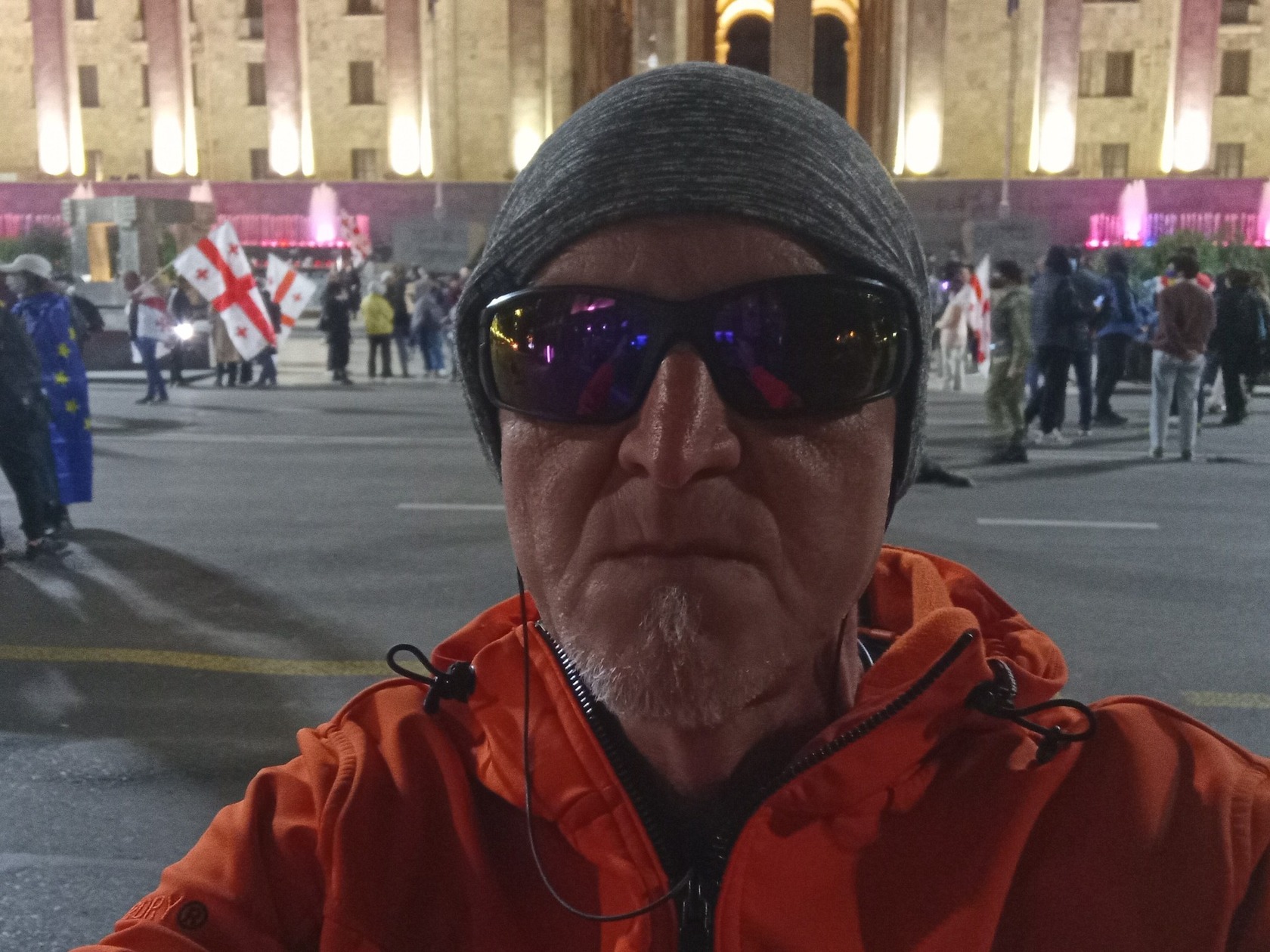
Georgia's decision to deport protester Nikolai Belikov to Russia is inhumane. The Volgograd opposition figure faces a real risk of persecution and imprisonment in his home country, his acquaintances say.
As reported by the "Caucasian Knot," on October 23, a Tbilisi court sentenced Russian citizen Nikolai Belikov, detained during protests on Rustaveli Avenue, to 14 days of administrative arrest. After serving his sentence, Belikov is to be deported to his country of citizenship and will also be banned from re-entering Georgia for two years.
Nikolay Belikov lived in Volgograd before leaving Russia. He was a member of the Yabloko party and an activist in the Volgograd branch of the For Fair Elections movement. The Caucasian Knot reported on Belikov's detentions during protests in Volgograd. In 2017, he organized the "opposition walk" and participated in a rally demanding that those who ordered the murder of Boris Nemtsov be found. The activist left Russia in 2017 and has been a frequent participant in protests in Tbilisi in recent years.
Nikolay Belikov was transferred to a prison in Poti on October 24. A support group is trying to help him – activists are looking for a lawyer and trying to contact his relatives, Georgian activist Daro Pataraia told a "Caucasian Knot" correspondent.
"Nikolay actively participated in the protests as an individual, not belonging to any group. I know he lived alone in Georgia. He worked, was self-employed – I don't know in what capacity," Daro said.
The Georgian activist condemned the court's decision to deport Nikolay Belikov. She believes that the authorities are deliberately sending Russian refugees who supported the protest in Georgia back to their homeland, thus "shifting the responsibility for punishment to another state."
On October 24, Nikolai Belikov's lawyer, Mariam Chkheidze, announced that she was preparing a complaint to the European Court of Human Rights (ECHR) due to the high risk of deportation and the threat to the activist in his home country, according to Paper Kartuli.
Volgograd journalist Vyacheslav Lemkus knew Nikolai Belikov as an activist. He is convinced that if deported to Russia, Belikov faces imprisonment.
"He seemed to belong to the Yabloko party at one point. He was an idealist, believed in democracy, and demanded that the authorities respect constitutional rights and obligations. He was genuinely upset that the Constitution wasn't working in Russia. Before he fled the country, the police began to harshly pressure him. Although activists weren't being jailed at the time, and the Volgograd police weren't as ruthless as, say, those in Moscow, there were all the signs that he would be jailed. If he's deported from Georgia to Russia, he'll go to jail—that's my prediction. The Georgian authorities are simply washing their hands of the situation, handing Belikov over to Russia for slaughter," he told a "Caucasian Knot" correspondent.
Lemkus noted that Nikolai Belikov became a refugee in Georgia in 2017 after actively participating in one of Navalny's protests. According to the journalist, they "simply didn't have time" to open a criminal case against him. "He spoke out very sharply against the current political regime in the country. His sense of self-preservation was nonexistent. He shouldn't have chosen Georgia as a refuge; he should have fled to Europe," lamented Vyacheslav Lemkus.
Before leaving for Georgia, Belikov spent some time abroad, then returned to Russia and "completely failed to understand the scale of the authoritarian drift," said a member of the Volgograd regional branch of the Yabloko party, who wished to remain anonymous.
"Kolya participated in the 2011-2012 'wave' and was one of the organizers of rallies. Then he left for India for a few years, I think. He returned from there to another country after 2014," he said of Belikov.
According to the activist, after his return, Belikov participated in several street protests, served several days of administrative arrest in a police detention center, and then left the country. "A good man, an activist with a big soul, but living in a world of illusions. An adult, apparently, but an elf. Alas, completely unwilling to accept reality," a member of the Yabloko party described Belikov.
Natalya Dorozhnova, a participant in many protests in Volgograd, was outraged to learn that Belikov was facing deportation from Georgia to Russia, although she had not maintained contact with him since his departure. "There was such a guy, I remember, cheerful, sociable, talkative. He took part in the rallies that we organized, often spoke at them. Everyone knew him as an active guy who advocated for democratic values," Dorozhnova told a "Caucasian Knot" correspondent.
Another regular participant in the Volgograd protests, Tamara Grodnikova, noted that Belikov had sharply criticized the Putin regime. She also condemned the Georgian authorities' decision to deport him. Grodnikova also believes it is likely that "upon arrival, a case will be opened against him, with the possibility of actual imprisonment."
"I'd like to think that Georgia simply doesn't know the real situation, otherwise it looks like complicity in human rights violations. This, first and foremost, discredits the state itself, which made such a decision. Russia actively uses various serious criminal offenses, such as extremism and terrorism, against dissent," Grodnikova told a "Caucasian Knot" correspondent.
Based on her experience of solo picketing in previous, "herbivorous" years, Tamara Grodnikova experienced "unreasonable vigilance from law enforcement." In 2022, Grodnikova was taken to the police 12 times after holding pickets, although at that time, a linguistic examination found no violations in the content of her posters. Back then, police in Volgograd only regularly copied down the activists' passport information and photographed them in front of their posters.
"The most unpleasant thing was being taken to the police station for three hours or overnight. However, when I, as a witness against a local activist, was summoned for questioning by the Investigative Committee, the officers there demonstrated their knowledge of all my pickets over a long period of time. That is, they were apparently kept in folders," the activist noted.
She suggested that the investigative authorities likely also have a "dossier" on Nikolai Belikov. The decision to deport him from Georgia appears, at the very least, to be a deliberate delegation by the country's authorities of further punishment for his right to express his opinion.
"This will even look like an anti-democratic conspiracy and will greatly tarnish Georgia's reputation. I would assess deportation as sophisticated torture, an attempt to break a person's character, to force a person to renounce their moral values. After deportation, the only chance to retain even the illusion of freedom will be to remain silent. This is a personal breakdown, condemning a person to severe psychological and emotional suffering. Such a decision is disgusting," concluded Tamara Grodnikova.
Translated automatically via OpenAI from https://www.kavkaz-uzel.eu/articles/416633

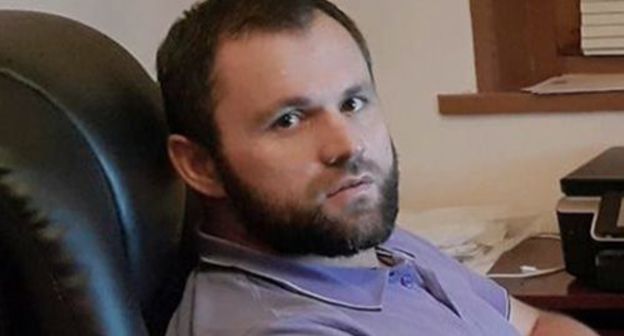
![Tumso Abdurakhmanov. Screenshot from video posted by Abu-Saddam Shishani [LIVE] http://www.youtube.com/watch?v=mIR3s7AB0Uw](/system/uploads/article_image/image/0001/18460/main_image_Tumso.jpg "Tumso Abdurakhmanov. Screenshot from video posted by Abu-Saddam Shishani [LIVE] http://www.youtube.com/watch?v=mIR3s7AB0Uw")