


Normalization of relations between Baku and Yerevan became the topic of a pilot meeting of NGO representatives from the two countries.
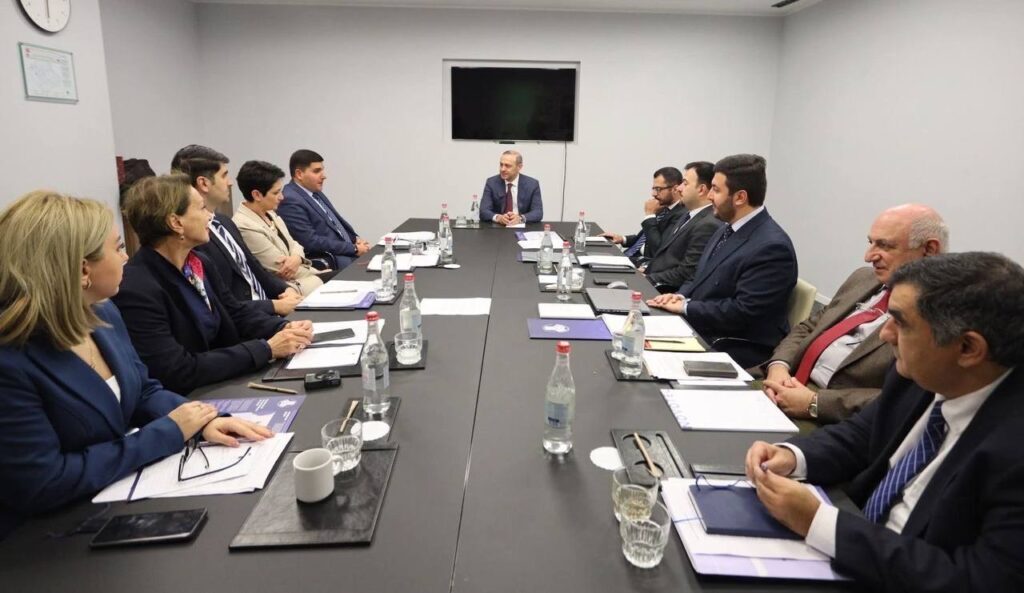
The bilateral roundtable of civil society representatives from Armenia and Azerbaijan was the first such event held not in a third country, but on the territory of one of the parties to the conflict.
As "Caucasian Knot" reported, the President of Azerbaijan previously announced the lifting of all restrictions on cargo transit to Armenia. Armenian authorities considered this an important step in opening regional communications.
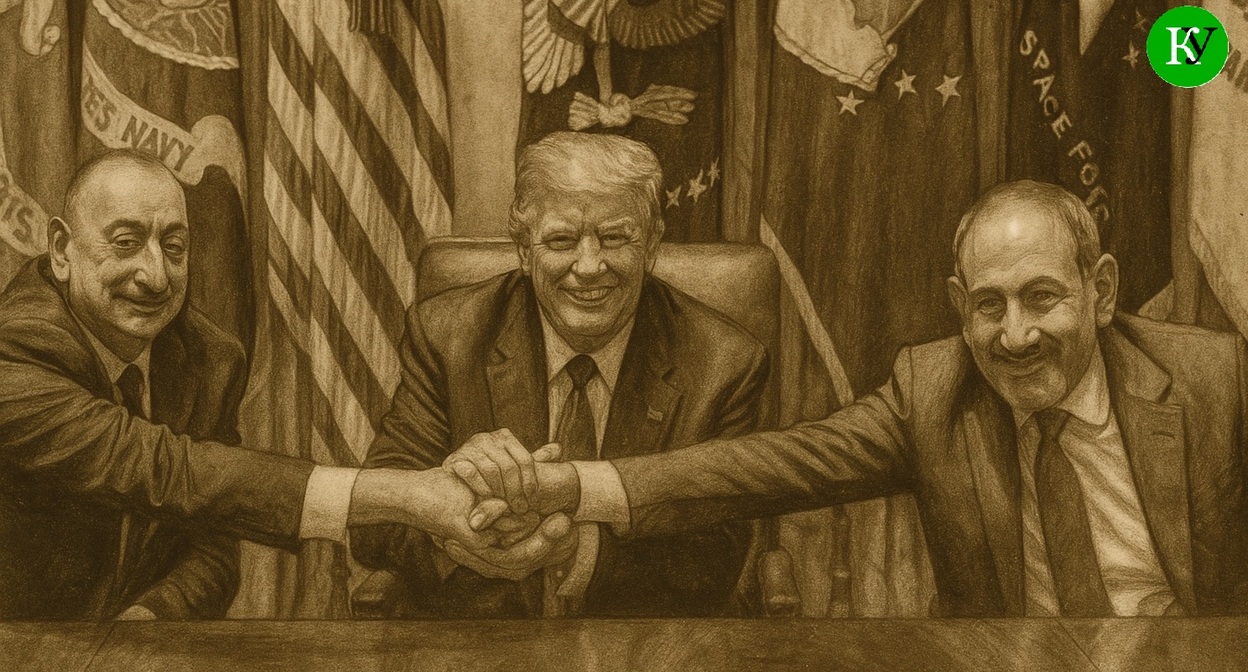
On August 8, Azerbaijani President Ilham Aliyev and Armenian Prime Minister Nikol Pashinyan signed a declaration on the cessation of hostilities at a meeting in Washington. However, Aliyev and Pashinyan did not sign the peace agreement, but only initialed it, and most of the declaration's provisions contained vague wording, analysts noted.
Prospects for the peace process between Armenia and Azerbaijan, humanitarian issues, and economic and logistical opportunities were discussed on October 21-22 at the joint initiative of representatives of the expert communities of Armenia and Azerbaijan at the Yerevan Policy Research Center. "The initiative was aimed at advancing a peace agenda in the spirit of the Joint Declaration adopted on August 8 in Washington and marked the first meeting of civil society representatives from Armenia and Azerbaijan in this format," the center's website stated.
Representing the Armenian side, the bilateral roundtable was attended by Boris Navasardyan, Honorary Chairman of the Yerevan Press Club; Naira Sultanyan, Director of the Democracy Development Foundation; Areg Kochinyan, President of the Security Research Center; Narek Minasyan, Expert at the Orbeli Center for Analytical Studies; and Samvel Meliksetyan, Expert at the Center for Politics and Security. The Azerbaijani side was represented by historian and political scientist Farhad Mammadov; Rusif Huseynov, Director of the Baku Analytical Center; Ramil Iskenderli, Chairman of the Board of the National NGO Forum; Kamala Mammadova, Editor-in-Chief of 1news.az; and Dilara Efendiyeva, Head of the Center for the Protection of Women's Rights of the Azerbaijani Society. It should be noted that the event participants met with the Secretary of the Security Council of Armenia, Armen Grigoryan.

"It is quite possible that the discussion (was) about the connection between the signing of the peace treaty and amendments to the Armenian constitution. This is a precondition that Baku is putting forward for signing the peace treaty," JAMnews quotes political scientist Robert Ghevondyan. He emphasized that this is the first attempt to organize a meeting of experts not in a third country, but in Armenia or Azerbaijan.
Ghevondyan does not share the opinion that all Azerbaijani experts advocating for peace are in prison. "There are people in Azerbaijan who closely cooperate with the authorities, but at the same time talk about peace and developing relations with Armenia. We assume these people have this opportunity, or the authorities allow them to talk about it. And we can discuss issues with them that will allow us to further advise our authorities on the progress of Armenian-Azerbaijani processes, and they will advise them," the political scientist noted. "Something unprecedented happened yesterday: wheat supplies to Armenia through Azerbaijan were announced," Gevondyan said. He believes further progress is possible in unblocking infrastructure, border delimitation and demarcation, and economic cooperation between the two countries. Azerbaijani analysts noted in September that Azerbaijan is geographically located along transport corridors that China and India are interested in, assessing Baku's prospects for cooperation with BRICS. "Against the backdrop of declining oil production and the prospect of a reduction in fossil fuel consumption in Europe, Azerbaijan urgently needs alternative sources of income. An excellent opportunity for this is the use of transit opportunities, given the passage of global transport corridors through Azerbaijan... Attracting large countries such as Russia, China, and India to transport goods through Azerbaijan along the North-South and East-West routes will turn the country into a major transport hub," said Togrul Juvarli, a member of the Azerbaijan National Public Committee on European Integration.
Translated automatically via OpenAI from https://www.kavkaz-uzel.eu/articles/416561


![Tumso Abdurakhmanov. Screenshot from video posted by Abu-Saddam Shishani [LIVE] http://www.youtube.com/watch?v=mIR3s7AB0Uw](/system/uploads/article_image/image/0001/18460/main_image_Tumso.jpg "Tumso Abdurakhmanov. Screenshot from video posted by Abu-Saddam Shishani [LIVE] http://www.youtube.com/watch?v=mIR3s7AB0Uw")