


A believer from a Kuban village was convicted of extremism.
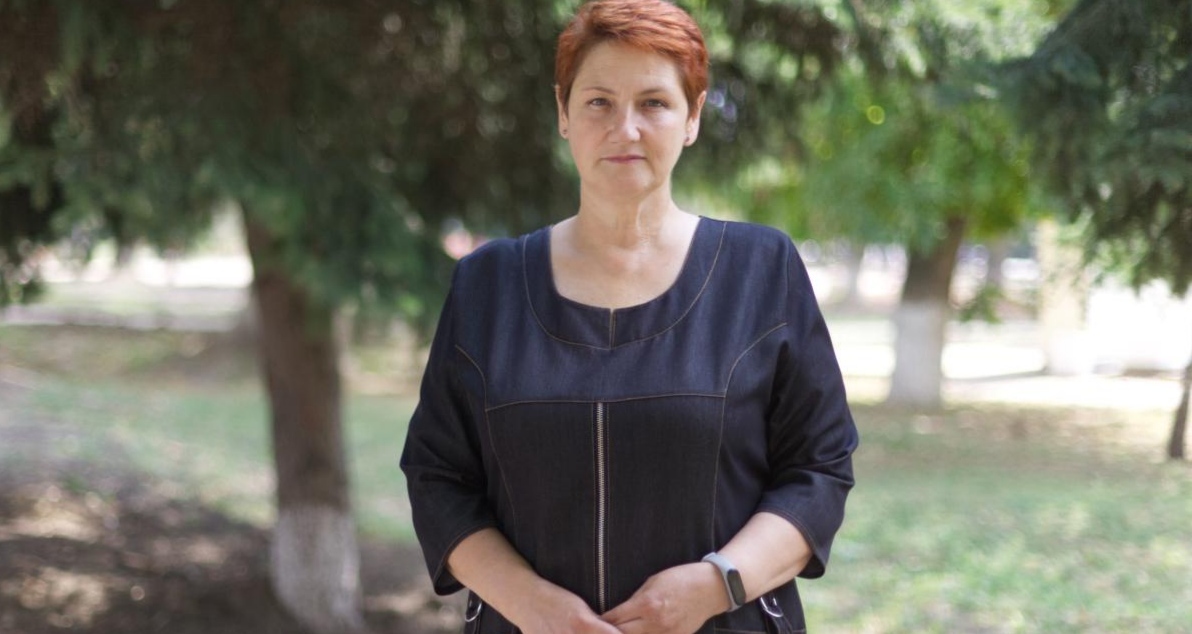
The court sentenced Elena Rumyantseva, a resident of the village of Vyselki, to a suspended sentence, despite the defense's arguments and witness testimony, finding her a member of an extremist organization. The defendant pleaded not guilty.
As reported by the "Caucasian Knot," in August it was reported that the court had sentenced Vasilina Penskaya, a 27-year-old Jehovah's Witness* from the village of Vyselki, to a suspended sentence of two years, finding her guilty of participating in an extremist organization.
In February 2022, searches were conducted at the homes of Penskaya and her mother. In the summer of 2023, a criminal case was opened against her based on the testimony of a secret witness. This witness recorded audio and video of church services, and his testimony is used in the case against several believers. However, in court, he stated that he did not know Penskaya and could not confirm that she participated in the services.
The secret witness did not confirm the defendant's guilt
Vyselkovsky District Court Judge Elizaveta Proskuryakova sentenced 53-year-old Elena Rumyantseva, the mother of Vasilina Penskaya, to two years' suspended imprisonment and six months of restricted freedom on charges of extremism, according to a website covering the persecution of Jehovah's Witnesses* in Russia.
In court, the believer's defense drew attention to "numerous violations," the publication notes. In particular, one of the expert examinations in the case had nothing to do with Rumyantseva, and the secret witness was unable to say anything specific about Rumyantseva other than that she attended religious services. Furthermore, the investigator acknowledged that nothing relevant to Rumyantseva's case was found in the material evidence, the publication states.
My faith is based on love. It has nothing to do with extremism.
Elena Rumyantseva denied the charges in court. "I want to say clearly: my faith is based on love. It teaches me to be honest, kind, and respectful to every person. It has nothing to do with extremism," she said.
11 believers from the village of Vyselki have been subjected to criminal prosecution
Elena Rumyantseva's case is one of 11 brought against believers from the village of Vyselki. A total of 38 Jehovah's Witnesses* have already been persecuted in the Krasnodar Territory, the publication notes.
As a reminder, on July 4, 50-year-old resident of the village of Vyselki, Irina Ushakova, was sentenced to two years suspended imprisonment. The grounds for the criminal prosecution in the extremism case were "participation in religious education classes and sermons" and "religious discussions."
The court sentenced 62-year-old pensioner Natalia Novoseletskaya from the same village to two years of suspended imprisonment. The believer refused to admit guilt.

In May 2022, a court sentenced Jehovah's Witness* Lyudmila Shchekoldina from the village of Pavlovskaya to four years in prison. In her appeal of the verdict, Shchelkoldina noted that the trial court failed to explain why the peaceful expression of faith in God was considered a crime, while freedom of religion is enshrined in the Constitution. However, the Krasnodar Regional Court upheld the woman's sentence.
Moreover, back in October 2021, the plenary session of the Supreme Court of Russia ruled that individual or collective religious practice, religious rites, and ceremonies in themselves should not be considered the activity of an extremist organization unless they contain elements of extremism. However, in practice, state prosecutors ignore this decision, noted Yaroslav Sivulsky, a lawyer for believers in Neftekumsk and a representative of the European Association of Jehovah's Witnesses.
Earlier, in October 2020, a court in Kabardino-Balkaria acquitted local Jehovah's Witness* Yuri Zalipaev, who was accused of inciting extremism. In September 2021, the court awarded him 500,000 rubles in compensation, and the prosecutor apologized to the believer for the criminal prosecution. Acquittals for Jehovah's Witnesses* are rare in the Russian judicial system, Yaroslav Sivulsky commented on the court's decision at the time.
On April 20, 2017, the Supreme Court of Russia, following a lawsuit filed by the Ministry of Justice, declared the Administrative Center of Jehovah's Witnesses in Russia* and its 395 branches extremist organizations, banning their activities. The "Caucasian Knot" covers the consequences of this ban on its thematic page "Ministry of Justice vs. Jehovah's Witnesses*".
We have updated our apps for Android and IOS! We would be grateful for criticism and ideas for development both in Google Play/App Store and on KU pages in social networks. Without installing a VPN, you can read us on Telegram (in Dagestan, Chechnya and Ingushetia - with VPN). Using a VPN, you can continue reading "Caucasian Knot" on the website as usual, and on social networks: Facebook**, Instagram**, "VKontakte", "Odnoklassniki" and X. You can watch the "Caucasian Knot" video on YouTube. Send messages to +49 157 72317856 on WhatsApp**, to the same number on Telegram, or write to @Caucasian_Knot.
* 396 Russian Jehovah's Witness organizations have been designated as extremist, and their activities in Russia have been banned by court order.
** Meta (owner of Facebook, Instagram, and WhatsApp) is banned in Russia.
Translated automatically via OpenAI from https://www.kavkaz-uzel.eu/articles/416486


![Tumso Abdurakhmanov. Screenshot from video posted by Abu-Saddam Shishani [LIVE] http://www.youtube.com/watch?v=mIR3s7AB0Uw](/system/uploads/article_image/image/0001/18460/main_image_Tumso.jpg "Tumso Abdurakhmanov. Screenshot from video posted by Abu-Saddam Shishani [LIVE] http://www.youtube.com/watch?v=mIR3s7AB0Uw")