

Kadyrov's son-in-law threatens to confiscate cars for littering.
Chechnya's Deputy Prime Minister and Minister of Agriculture, Viskhan Matsuev, announced that the republic's authorities will confiscate cars from those who litter inappropriately. However, Russia's Code of Administrative Offenses only provides for the confiscation of vehicles for such violations from officials and legal entities.
As reported by "Caucasian Knot," Chechen authorities have previously threatened to confiscate cars, but for other violations. For example, Rustam Aguev, head of the Kurchaloy District Police Department in Chechnya, promised to confiscate cars from traffic violators, citing increased enforcement during the Eid al-Fitr holiday. In January 2020, he also ordered his subordinates to confiscate cars from traffic violators and send drivers to clean the streets. It was later reported that security forces forced residents of the Kurchaloy District to clean the grounds of a mosque for drunk driving. One of the district police department leaders called such violators "terrorists" and repeated the threat to confiscate their cars. However, the law only allows for the confiscation of cars in certain, clearly defined cases.
In 2019, Viskhan Matsuev, the 22-year-old son-in-law of Ramzan Kadyrov, was appointed head of the Chechen Ministry of Internal Affairs' Migration Department. Matsuev was appointed to the position based on his experience, not his relationship with the Chechen leader, stated Akhmed Dudayev, who headed the Grozny State Television and Radio Broadcasting Company at the time (since June 2020, he has been the head of the Chechen Ministry of Press). Matsuev is too young to have sufficient experience to lead the Chechen Interior Ministry, some social media users believed. References to age when evaluating experience are inappropriate, their opponents countered. In 2023, Viskhan Matsuev was appointed Deputy Prime Minister and Minister of Agriculture of Chechnya.
Kadyrov's son-in-law, Chechen Minister of Agriculture Viskhan Matsuev, published a post on his Instagram page* calling for environmental protection. In it, he announced that authorities intend to confiscate cars for littering inappropriately.
"Those caught unloading trash from cars or throwing it in unauthorized places face the risk of having their vehicles confiscated. Such measures are necessary to restore order and stop irresponsible attitudes toward cleanliness," he wrote.
Matsuev's post, which has 68,000 followers on the social network, had garnered 10 comments and 201 likes by 2:30 PM Moscow time. At least three comments were off-topic, and most of the others contained only approving emojis. "Fishermen near the Grozny Sea in Chernorechye are especially littering. We walk there, and it breaks our hearts to see this. It would be good to have more trash bins everywhere," urged a user with the nickname cmopatromov.
Matsuev's post was brought to the attention of a reader of the "Caucasian Knot." "There are two oddities here. First, for some reason, the threat to confiscate vehicles from drivers who throw trash out of their windows was voiced by the Minister of Agriculture, and not, say, the head of the State Traffic Safety Inspectorate or a representative of the republic's Ministry of Internal Affairs. Second, the confiscation of personal property (in this case, a vehicle) for committing any actions that harm the environment is not provided for by Russian legislation. Not at all. Either the Chechen authorities do not consider the region part of Russia, or they have their own laws?" he asked. he asked.
Article 8.2 "Failure to comply with environmental protection requirements when handling production and consumption waste" of the Code of Administrative Offenses of the Russian Federation states that "pollution and (or) littering of the environment, expressed in the unloading or dumping from motor vehicles "Disposal of industrial and consumer waste vehicles and trailers outside waste disposal facilities or waste accumulation sites" carries a fine of 10,000 to 20,000 rubles for individuals. In the event of a repeat violation, fines for citizens are doubled. Confiscation of a vehicle, as per paragraph 3.2 of this article, may only apply to officials and legal entities.
Meanwhile, mountains of garbage and unauthorized dumps in the wild have become commonplace in the North Caucasus. Tourists visiting Dagestan have repeatedly drawn attention to them, saying that the problem is relevant not only to Makhachkala and other populated areas, but also to locations where tourists come to admire the views. The author of the film "Real Dagestan" also touched on this issue, a fragment of which was posted on YouTube. Every time I encounter piles of garbage, especially in picturesque places, I feel pain. In most cases, unauthorized dumps occur in villages where there are simply no trash bins or landfills. But I've also personally observed some people throwing trash out of their windows and cars," he noted.
Translated automatically via OpenAI from https://www.kavkaz-uzel.eu/articles/416441


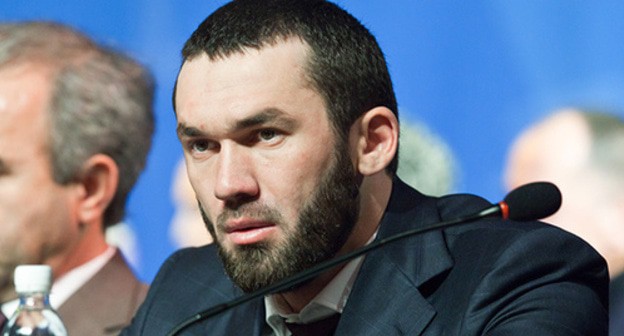
![Tumso Abdurakhmanov. Screenshot from video posted by Abu-Saddam Shishani [LIVE] http://www.youtube.com/watch?v=mIR3s7AB0Uw](/system/uploads/article_image/image/0001/18460/main_image_Tumso.jpg "Tumso Abdurakhmanov. Screenshot from video posted by Abu-Saddam Shishani [LIVE] http://www.youtube.com/watch?v=mIR3s7AB0Uw")