


UN special rapporteurs called on the Azerbaijani authorities to release Abilov and Samedov.
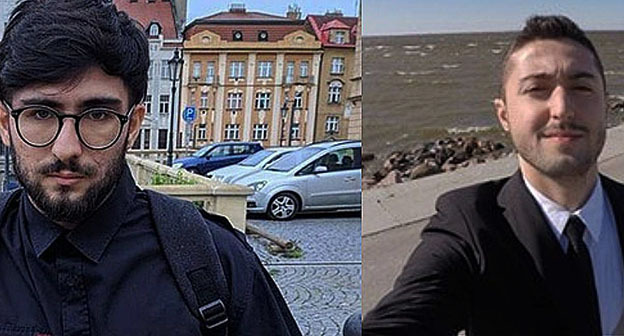
The trials of researchers Igbal Abilov and Bahruz Samedov equated academic research, peace advocacy, and the promotion of minority cultural identity with treason, UN special rapporteurs said, calling on Azerbaijani authorities to review the cases.
As reported by the Caucasian Knot, 35-year-old Azerbaijani citizen Igbal Abilov, who lived in Belarus since childhood, came to Azerbaijan in 2024 for his cousin's wedding and was detained on charges of collaborating with Armenian intelligence services. The case is being investigated under articles of treason and incitement to ethnic hatred, and the scientist faces up to life imprisonment. The trial is being held behind closed doors. On April 4, in his testimony before the court, Abilov denied the charges and stated that he was engaged solely in scientific activities. On May 2, the prosecutor proposed sentencing Abilov to 19 years in prison. On May 20, the court sentenced Abilov to 18 years in prison.
Abilov's relatives believe the real reason for the persecution is his research on Talysh culture. The treason charge appears unconvincing and is yet another episode in the persecution of activists from Azerbaijan's national minorities, human rights activists stated. The "Caucasian Knot" has prepared a report "How is Igbal Abilov's arrest connected to the persecution of Talysh activists".
Special Rapporteur in the field of cultural rights Alexandra Xanthaki and Special Rapporteur on minority issues Nicolas Levrat have called on the Azerbaijani authorities to release researchers Igbal Abilov and Bahruz Samedov, who have been held in custody for over a year in connection with their academic activities, criticism of the government, anti-war views, and advocacy for minority rights.
"We are deeply concerned that the arrests and trial of Abilov and Samedov have equated academic research, peace advocacy, and the promotion of minority cultural identity with treason," the UN experts said.
29-year-old Bahruz Samedov was sentenced by a Baku court to 15 years in prison; his sentence was upheld. Samedov was detained in Azerbaijan on August 21, 2024, and arrested on charges of treason. According to investigators, he wrote and translated articles commissioned by Armenian representatives. The defense noted that the charges are based on correspondence between Bahruz Samedov and three women from Armenia. Samedov has categorically denied the treason charge. Samedov is known for his criticism of the Azerbaijani authorities, which he has expressed in foreign publications. His defense believes that his "anti-war views" were the reason for his arrest.
They noted that Abilov's specialized academic research on ethnic minorities in the South Caucasus was used to accuse him of treason, anti-state calls, and inciting national, racial, social, or religious hatred and enmity. "No credible evidence has reportedly been presented to support these allegations, raising serious concerns about the protracted process and academic freedom," the Special Rapporteurs stated.
Political scientist and doctoral candidate Bahruz Samedov was charged with treason and sentenced to 15 years in prison for his criticism of political developments and military action in Azerbaijan, as well as his active efforts to achieve peace with Armenia.
"The use of broad national security provisions to suppress academic freedom, minority identities, and voices calling for peace reflects the pattern of judicial harassment and intimidation in Azerbaijan," the experts stated. “Such practices violate human rights and send a chilling signal to academics, researchers, and human rights defenders across the country,” they added.
The experts urged the Azerbaijani authorities to “promptly and impartially review both cases and immediately release the two researchers if the charges are not substantiated.”
“The Azerbaijani government should ensure that academics, writers, and activists can carry out their work in a safe environment free from intimidation and reprisals, and bring its laws and practices into line with its international human rights obligations, including guarantees of cultural rights, academic freedom, and freedom of expression for all,” the special rapporteurs said.
“We reiterate our concern that national security legislation appears to be being abused to "[The] suppression and punishment of the free exercise of cultural rights, freedom of opinion and expression, and academic freedom in Azerbaijan," they added.
The experts have conveyed their concerns to the Azerbaijani government and will continue to closely monitor the situation.
The Azerbaijani authorities have not responded to the statement by the UN special rapporteurs.
Translated automatically via OpenAI from https://www.kavkaz-uzel.eu/articles/416376

![Tumso Abdurakhmanov. Screenshot from video posted by Abu-Saddam Shishani [LIVE] http://www.youtube.com/watch?v=mIR3s7AB0Uw](/system/uploads/article_image/image/0001/18460/main_image_Tumso.jpg "Tumso Abdurakhmanov. Screenshot from video posted by Abu-Saddam Shishani [LIVE] http://www.youtube.com/watch?v=mIR3s7AB0Uw")