


The meeting between Aliyev and Putin opened up prospects for normalizing relations between Moscow and Baku
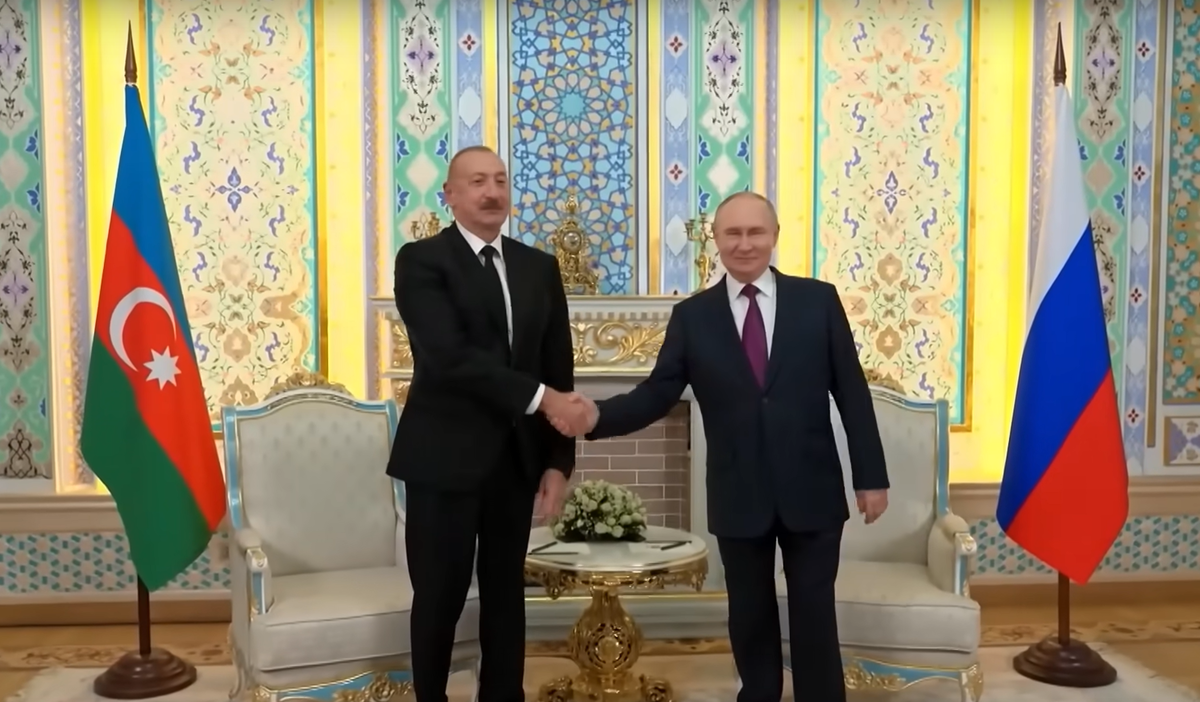
The preconditions for resolving the diplomatic crisis between Russia and Azerbaijan were Moscow's admission of responsibility for the AZAL plane crash and the payment of compensation. Putin's statement on this issue in Dushanbe paved the way for a normalization of relations in the interests of both sides.
As reported by the " Caucasian Knot ," the first meeting in a long time between Russian and Azerbaijani leaders Vladimir Putin and Ilham Aliyev took place on October 9 in Dushanbe. Two missiles fired by Russia's air defense system did not directly hit the AZAL plane, but exploded several meters away, Putin stated during the meeting.
On December 28, 2024, Vladimir Putin called Azerbaijani President Ilham Aliyev and apologized "for the tragic incident" involving the AZAL (Azerbaijan Airlines) plane "occurring in Russian airspace." On December 29, Aliyev publicly demanded that Russia admit responsibility for the plane crash, and on January 6, he criticized the Russian authorities for refusing to admit guilt and demanded that those responsible for the crash be punished. Ethnic raids in Russia and retaliatory detentions of Russians in Azerbaijan marked a new stage in the deterioration of relations between the two countries. Baku accuses Russian authorities of extrajudicial killings of Azerbaijanis, and footage of the brutal detention of Russians in Baku appears to be a demonstrative response to Moscow's actions, according to the "Caucasian Knot" report " Crisis in Relations between Azerbaijan and Russia ."
The meeting between the presidents of Azerbaijan and Russia, which took place in Dushanbe, will undoubtedly contribute to a reset in bilateral relations, which sharply deteriorated after the crash of the Azerbaijani passenger plane flying from Baku to Grozny, says Baku-based analyst Shahin Hajiyev .
He recalled that Baku insisted that Moscow acknowledge responsibility for the plane's destruction, punish those responsible, and pay compensation for the plane's destruction, as well as to the victims and relatives of the victims. Although it was obvious that the plane was damaged by external influence, specifically Russian air defense, the Kremlin steadfastly refused to do so, and Putin's apology for the "air incident" did not clarify the causes of the tragedy, Gadzhiev said.
"Finally, only now, at a meeting in Dushanbe, Putin acknowledged that the plane was damaged as a result of 'technical failures' by Russian air defense systems, which repelled an attack by Ukrainian drones. True, he specifically stated that there was no direct hit on the plane, and that two missiles exploded 10 meters from the airliner, and that it was damaged by debris from the 'self-destructing' missiles. However, Baku, too, has stated from the very beginning that it does not consider the attack on the plane intentional," Gadzhiev told a "Caucasian Knot" correspondent.
Putin stated that the Russian side would pay compensation and "provide a legal assessment of the actions of all officials," meaning those responsible would be held accountable. Judging by Ilham Aliyev's reaction to Putin's statements, the Azerbaijani side is satisfied with these clarifications and the measures Moscow is prepared to take, the analyst explained.
Aliyev thanked Putin for "detailed information regarding the tragedy of last December, when the Azerbaijan Airlines plane crashed." "I would also like to thank you for personally overseeing this situation. As we have repeatedly discussed, and as members of our teams are in constant contact, you are personally overseeing the investigation, and we had no doubt that it would objectively resolve everything. Therefore, I would like to once again express my gratitude for your consideration of addressing this issue at our meeting," the Kremlin press service quoted Aliyev as saying.
According to Gadzhiev, the meeting in Dushanbe was obviously preceded by some diplomatic preparation. Therefore, Aliyev's birthday greetings to Putin on October 7th appear more than just a formal courtesy, he noted. In all likelihood, agreements had already been reached before the call to meet the leaders in Dushanbe, he believes.
Another topic that has negatively impacted bilateral relations in recent months—the arrests of members of the Azerbaijani diaspora in Russia, followed by the arrests of two Sputnik-Russia employees and 10 Russian citizens in Azerbaijan—was likely also discussed during the closed portion of the meeting, Gadzhiev believes. Relieving tensions in bilateral political relations will have a positive impact on cooperation in various areas, he concluded.
The resumption of high-level political contacts between Azerbaijan and Russia is driven by mutual interests, primarily in the economic sphere, according to Togrul Juvarli, a member of the Azerbaijan National Public Committee for European Integration .
"Despite political tensions, trade and economic relations have developed, with trade turnover this year, as Putin put it, growing by 16 percent. However, the freeze in political relations jeopardized the implementation of more global projects that promised significant benefits to both sides. In this sense, Russia was even more interested in fully restoring political relations with Baku. It is very interested in implementing the global North-South transport corridor, which will ensure efficient freight transportation from the Indian Ocean basin. Furthermore, Azerbaijan is an important link in Russia's plans to supply gas to the northern regions of Iran. The importance of this project for Gazprom is particularly significant given the loss of markets in Europe," Juvarly told a "Caucasian Knot" correspondent.
Russia can compensate for Azerbaijani goods, particularly agricultural products, with supplies from other countries. Azerbaijan can also reorient its agricultural exports to other countries, such as Kazakhstan and the Middle East. However, Moscow will not be able to implement the North-South pipeline projects, which are vital for Russia, as well as the gas and electricity pipelines to Iran, without Azerbaijan. For Baku, in turn, the situation of the Azerbaijani diaspora and migrants in Russia is of great importance, Juvarly believes.
"Azerbaijanis working in Russia provide financial support to their relatives in Azerbaijan, amounting to hundreds of millions of dollars annually. Furthermore, any pressure on Azerbaijanis in Russia upsets Azerbaijani society, which expects its government to protect its compatriots. I believe that after the meeting between Putin and Aliyev, the demonstrative raids by Russian security forces against Azerbaijanis in various regions of the Russian Federation that have been taking place in recent months will cease," he said.
Resolving the downed plane remains the primary prerequisite for improving relations between the two countries, says conflict specialist Arif Yunusov . "For Azerbaijan, this means an apology, acceptance that Russia did this, and compensation. Putin is taking action in this direction by apologizing and promising compensation. Everything else is secondary and derivative," he told a "Caucasian Knot" correspondent.
Yunusov believes there was no threat of a complete breakdown in relations between the two countries. "Basically, this conflict is like a quarrel between spouses: they may quarrel, but they share a common household and aren't considering divorce. Azerbaijan is close to Russia. Ilham Aliyev regularly repeats that he wants only business relations with Europe, and he considers any statements about democracy and human rights interference in Azerbaijan's internal affairs. The ties between Russia and Azerbaijan are so strong that, despite Azerbaijan's importance as an energy supplier, Europe is already beginning to question whether all the oil and gas Azerbaijan sells is its own, or whether there is also Russian production that Azerbaijan is passing off as its own. Given sanctions and the difficult situation, Russia is unlikely to want to lose opportunities related to Iran, including transport, and in a few days, the deputy prime ministers of Russia, Iran, and Azerbaijan will meet in Baku to discuss this issue. So, if relations deteriorate, both countries will lose out," he noted.
Speaking about Russia's influence in the South Caucasus, the conflict specialist emphasized that Russia's influence has declined not only in the South Caucasus but throughout the post-Soviet space. "Putin sees that other countries are watching his actions and no longer perceive Russia as a stronger country. On the other hand, Russia cannot demonstrate greater toughness in its efforts to 'press' Azerbaijan, as it risks losing it," he stated.
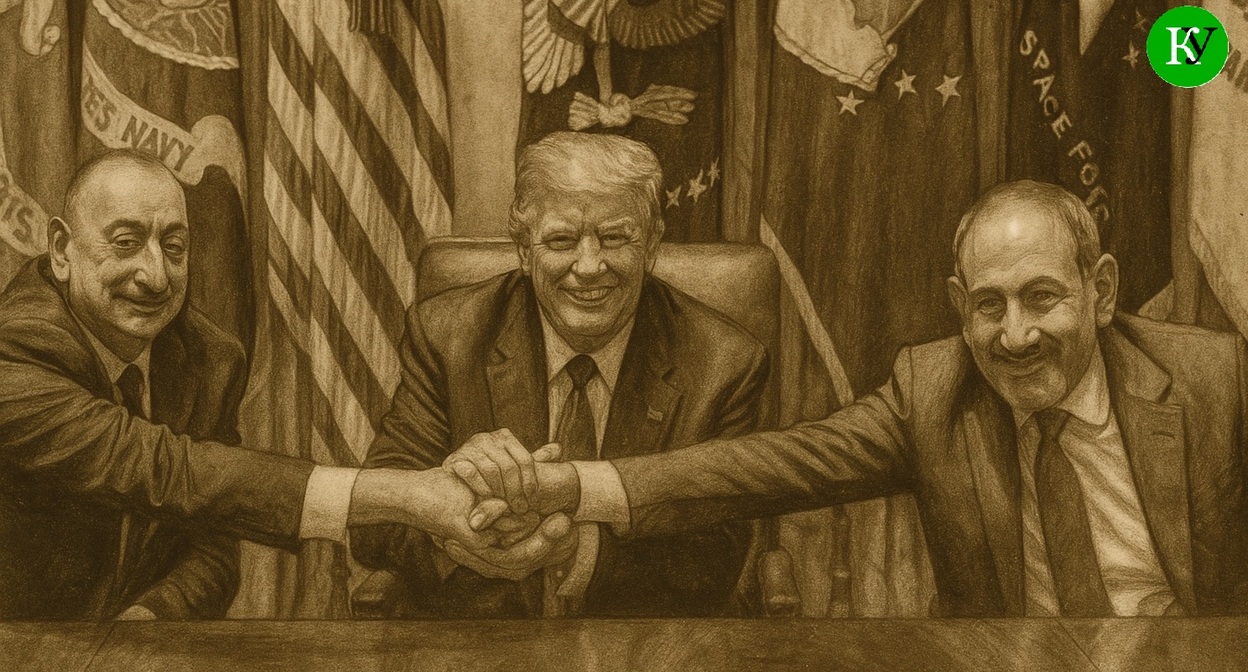
He believes the Washington Accords, which impacted Russian influence, were primarily due to Turkish lobbying. "Turkey seized the moment and began pressuring Azerbaijan, demanding peace with Armenia and the expulsion of Russia from the region. The United States stood behind Turkey. The agreement became all the more possible because Azerbaijan had resolved its problems by restoring its territorial integrity," he stated.
According to the conflict expert, Russia has little chance of regaining influence in the South Caucasus. "Russia is seen as a country where one can work, but it's not attractive for living. European countries are viewed as attractive, but for Azerbaijanis, Russia is a poor country like Azerbaijan, only much larger. Russia will only have a chance to regain influence when it appears strong and attractive. At the same time, replacing Ilham Aliyev in Azerbaijan with a pro-Western politician threatens Russia with a complete loss of influence," Yunusov concluded.
Preconditions for normalizing relations were voiced by the Azerbaijani side, stated Stanislav Pritchin , head of the Central Asia sector at the Center for Post-Soviet Studies at the Primakov Institute of World Economy and International Relations (IMEMO) of the Russian Academy of Sciences.
And, in principle, as we see, Russia is generally fulfilling these requests and demands of the Azerbaijani side. We see this especially in the words of the Russian President. He apologized for the incident during phone calls in December, and he did so again now, deliberately and publicly, emphasizing in the bilateral conversation how the situation appears from the Russian side, the reasons for Russia's actions and the air defense system. Regarding compensation, as far as I understand, certain agreements were also reached. Here, we see from the Russian side that the demands initially voiced were not rejected. As soon as the results of the investigations are officially published, the Russian Federation will fulfill its obligations under this normalization," the expert stated.
It is difficult to estimate Russia's economic losses in the event of a deterioration in relations with Azerbaijan; according to Pritchin, Azerbaijan would be the most likely to lose in this situation. "If we talk about who will lose what, Azerbaijan's share in Russia's trade turnover is 0.6%. The Russian market is the most important for Azerbaijani products, for non-oil goods. This is, first of all, agriculture, and here Russia is a key partner. With the loss of the Russian market, it will be difficult for Azerbaijan to restore it, because all of its neighbors export approximately the same range of food products. There is a competition for the Russian market between different agricultural producers; there is a system of quartering, and the share that Azerbaijan has was won, including through competition with other suppliers. The second direction is logistics, where Azerbaijan has two strategic routes. One is East-West, this is everything related to the "middle corridor", the Zangezur corridor, Baku-Tbilisi-Kars. Here, part of the cargo that goes is loaded by Russian shippers, that is, in any case, it is important for us to cooperate here. And the "North-South" is a fundamental "A Russian-Iranian-Azerbaijani project, in which the extent to which Azerbaijan's transport infrastructure is utilized and how this segment of the economy operates will depend on how cooperation is structured," he noted.
Pritchin emphasized that Azerbaijan is an important political player in the South Caucasus and the largest regional economy, but the Russian market is Azerbaijan's largest among its immediate neighbors. "Geographically, we're not far apart; confrontation would be detrimental to everyone. This includes security, the climate situation, and the Caspian Sea's environmental situation. In any case, there are mutual benefits here, and they don't just concern Russia," the expert stated.
Pritchin sees the only weakening of Russia's position in the South Caucasus as Armenia and Azerbaijan's rejection of Russian mediation to resolve their relations. In other respects, he believes, there has been no weakening. "There's the base in Gyumri, there's a full range of socio-economic relations, and there are significant issues for the countries of the South Caucasus, such as labor migration. Given the depth of Russia's interaction with the countries of the South Caucasus, high-level meetings are held regularly, even amid geopolitical tensions, even during crises," he emphasized.
Pritchin also believes that the Washington agreements do not yet provide grounds for talking about a complete exclusion from the conflict resolution process between Azerbaijan and Armenia. "All the agreements signed in Washington were, in fact, agreed upon during the normalization of relations between Armenia and Azerbaijan following the Second Karabakh War. The entire settlement architecture, which is currently being implemented, was laid out precisely by Russian mediation. It's simply that, for some obvious reasons, Armenia and Azerbaijan rejected Russian mediation. It's worth waiting and seeing whether the Washington agreements will be implemented at all, in what form, and when," he stated.
A further deterioration in Russian-Azerbaijani relations promises more trouble for Russia, although it won't pose catastrophic consequences for either side, according to economist Sergei Zhavoronkov . "Russia currently has a trade surplus with Azerbaijan. If there's a conflict, it will lose this money. Russia accounts for 5% of Azerbaijan's exports, which include agricultural products and textiles. On the one hand, these are vulnerable product groups; on the other, given Russia's share of trade, this isn't critical for Azerbaijan. In general, since both Russia and Azerbaijan are secondary trading partners, the economic component of the conflict won't be significant for either country," he told the "Caucasian Knot."
Translated automatically via Google translate from https://www.kavkaz-uzel.eu/articles/416184
Source: CK correspondents


![Tumso Abdurakhmanov. Screenshot from video posted by Abu-Saddam Shishani [LIVE] http://www.youtube.com/watch?v=mIR3s7AB0Uw](/system/uploads/article_image/image/0001/18460/main_image_Tumso.jpg "Tumso Abdurakhmanov. Screenshot from video posted by Abu-Saddam Shishani [LIVE] http://www.youtube.com/watch?v=mIR3s7AB0Uw")