


Demand for children's camps in Anapa has fallen sharply due to the fuel oil spill.
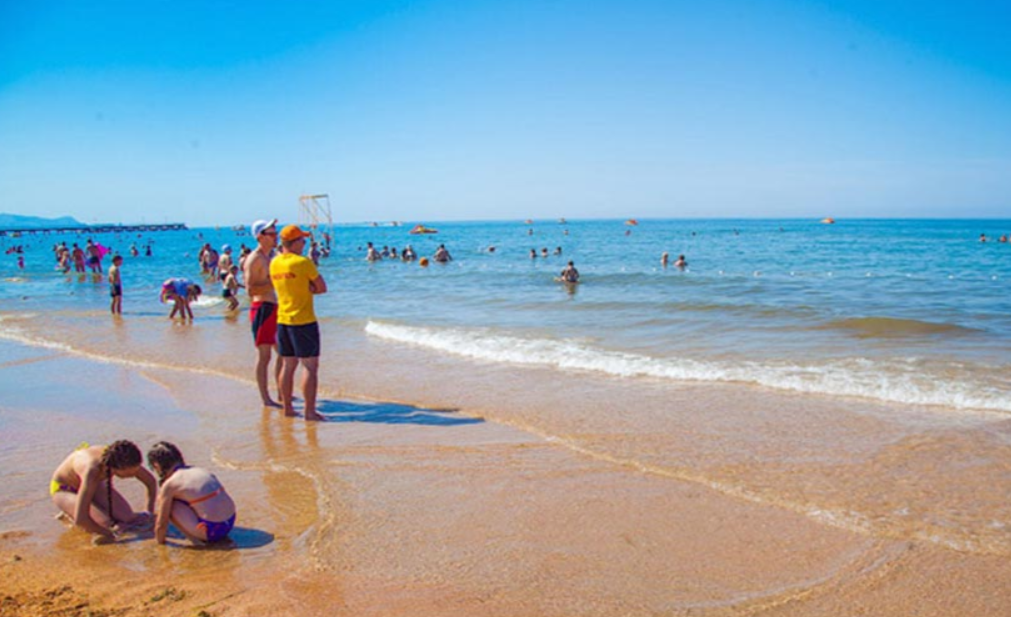
Only 18,000 children attended Anapa's children's camps this year; in previous years, the city hosted 120,000-130,000 children. Anapa will have several years to restore its reputation for children's recreation after the fuel oil spill.
As reported by "Caucasian Knot," since the beginning of the year, 1.5 million tourists have visited Anapa, which is almost three million fewer than during the same period last year. Some tourists traveled to Anapa only because hotels and other accommodations were forced to offer significant discounts due to the fuel oil spill.
Rospotrebnadzor has declared 141 beaches in Anapa and nine beaches in the Temryuk district unsuitable for recreation. Signs informing about the swimming ban have been installed, and announcements about this are also displayed on video screens in various areas of Anapa.
Tourist traffic to Anapa children's camps in 2025 reached 18,000 people, compared to the traditional 120,000-130,000 previously, Kubanpress reported today, citing Vitaly Voronov, Deputy Head of Anapa.
"This year, for the first time, we experienced what it's like when there are no children's vacations, and how many related services and small businesses around the children's industry have lost their profits. Only those camps that had managed to reclassify as regular city camps reopened, but even they saw lower traffic. Typically, 120,000-130,000 children vacationed in Anapa, but this year, around 18,000 children," RBC quoted him as saying during the "Leadership of Southern Russia During the Frosty Period" business forum. Krasnodar.
According to him, while the return of adult guests to the beach segment is shorter, Anapa still faces several years of restoring its reputation for children's vacations, as "the last thing parents want is to send their children to a potentially dangerous place." Voronov attributed this image of the resort to the media, according to a September 25 publication.
In total, 400,000 children vacationed in Kuban over the summer, including resort vacations and health camps, 150,000 of whom came from other regions, Krasnodar Krai Governor Veniamin Kondratyev reported earlier on his Telegram channel. "In Anapa, many sanatoriums quickly reoriented themselves, preparing swimming pools, excursion programs, and various events that eliminated activities at sea. This year, approximately 4 billion rubles were allocated to a children's health campaign. A significant portion of the funds went toward purchasing free vouchers," he reported on September 2.
In December 2024, two tankers carrying fuel oil sank in the Kerch Strait, leading to catastrophic environmental consequences. Details can be found in the "Caucasian Knot" report "Fuel Oil Spill in the Kerch Strait." Materials on the consequences of the fuel oil spill have been collected by the "Caucasian Knot" on the thematic page "Eco-disaster in Kuban".
Fuel oil pollution in the Black Sea continues; satellite images showed leaks from sunken tankers in August. Most of the fuel oil settled to the seabed, including in the area of Taman, Anapa, and the Bugay Spit, according to scientists from the Institute of Oceanology of the Russian Academy of Sciences.
From August 16 to 25, no fuel oil emissions were recorded in Anapa, the task force reported. Particles of fuel oil are being discovered on the shore, and fuel oil deposits are hidden under a layer of sand at Cape Tuzla, volunteers and bloggers countered. Volunteers discovered bags of fuel oil buried in the sand on the Bugayskaya Spit. Volunteers continue to clean up the layer of fuel oil hidden under the sand at Cape Tuzla.
Translated automatically via OpenAI from https://www.kavkaz-uzel.eu/articles/415810





![Tumso Abdurakhmanov. Screenshot from video posted by Abu-Saddam Shishani [LIVE] http://www.youtube.com/watch?v=mIR3s7AB0Uw](/system/uploads/article_image/image/0001/18460/main_image_Tumso.jpg "Tumso Abdurakhmanov. Screenshot from video posted by Abu-Saddam Shishani [LIVE] http://www.youtube.com/watch?v=mIR3s7AB0Uw")