


Tourists and hoteliers considered the Sochi resort season a failure.
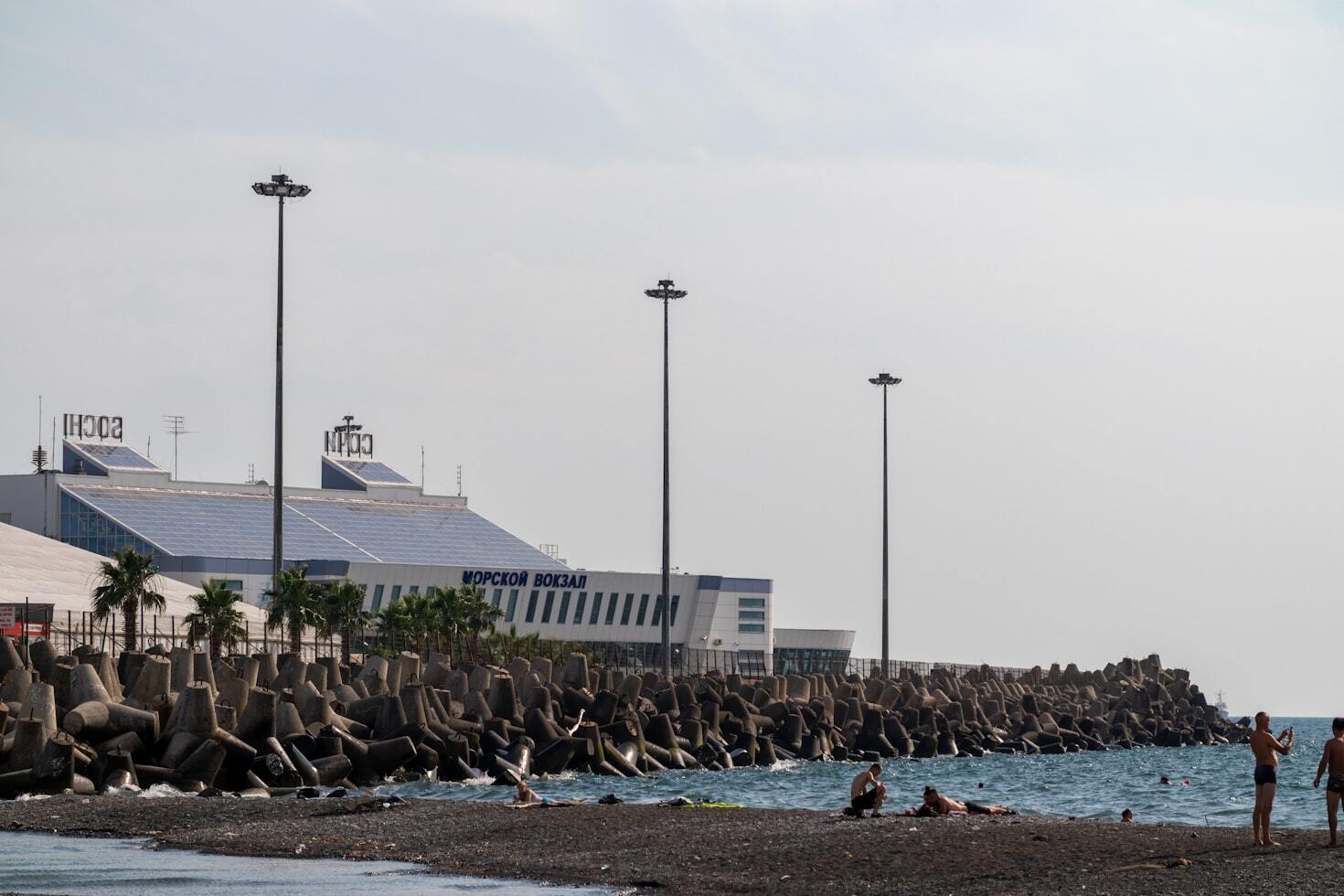
Sochi hoteliers have recorded a decline in summer tourism, and the so-called "velvet season" in September disappointed tourists. Vacationers are disappointed with the quality of service and high prices, and are also frightened by drone attacks.
As "Caucasian Knot" reported, 60% fewer tourists visited Anapa than last year amid the fuel oil spill, while demand for other resorts in the Krasnodar Territory and Dagestan has increased. Since the beginning of the year, 1.5 million tourists have visited Anapa - almost three million fewer than during the same period last year.
Rospotrebnadzor has declared 141 beaches in Anapa and nine beaches in the Temryuk district unsuitable for recreation. Signs informing about the ban on swimming have been installed there, and announcements about this are also displayed on video screens in various areas of Anapa.
The flow of vacationers to Sochi, which has remained the "main resort" for Russians since Soviet times, increased sharply after the pandemic, when international travel was restricted. However, the 2025 season did not meet the expectations of tourism industry representatives, even though tourists, according to them, "shifted their attention to Sochi after the tragedy with the oil spill in Anapa." Vacationers, in turn, were also dissatisfied with their vacation in Sochi: increased airfare prices, rising gasoline and other service prices, and the threat of drone attacks all took their toll.
Tourists surveyed by the "Caucasian Knot" in 2025 chose Sochi for their vacation for the same reasons as before: "it's 'my' resort, no visa required"; "Direct flights from Moscow and St. Petersburg"; "a combination of sea and mountains (Imeretinka, Rosa Khutor). Many expected a vacation in Sochi to be safer and more affordable than in Crimea or Turkey. However, the results showed that costs were higher than expected, service was questionable, and news of nighttime drone attacks created an atmosphere of anxiety. The survey is not representative and reflects the personal opinions of those surveyed.
Muscovite Masha and her boyfriend Oleg vacationed in Imeretinka. "We were in Sochi for a week, during the so-called velvet season, from September 10th to 17th. The flight to Sochi cost us 12-14 thousand rubles per person, the hotel in Imeretinka cost 6-8 thousand rubles per night, and meals cost 1-1.5 thousand rubles per person for lunch or dinner. "A sun lounger on the beach cost around 800-1,200 rubles a day. So, for a week for two, it was around 75,000 rubles. Meanwhile, we vacationed in Turkey for 60,000-65,000 rubles with all-inclusive. There, you don't have to worry about where to eat or how much a sun lounger costs. In Crimea, I was nervous because of all the events, even though the prices were lower than in Sochi. In Sochi, there are new expenses every day, and then there's all this news about drones in Adler," she said. Oleg added that next time they would "definitely" choose a different vacation destination.
St. Petersburg residents Igor and Kristina, vacationing in Rosa Khutor, paid 20,000 rubles each for round-trip tickets. "A hotel in the mountains costs 10,000-12,000 rubles a night. Lunches and dinners at cafes cost 1,500-2,000 rubles per person, with ski lifts and entertainment adding another 5,000-7,000. All together, a week's worth of food for two cost 120,000-130,000 rubles. We vacationed in Turkey for 70,000-80,000 rubles, and it was all-inclusive. Sochi is beautiful, but too expensive and hectic. We were there from September 18th to 24th, and we're flying home today," they told a "Caucasian Knot" correspondent on September 24th.
Vera, Sasha, and Katya, friends from St. Petersburg, who also vacationed in Rosa Khutor, also have no plans to vacation in Sochi again. "For three of us, the flight in August cost about 60,000 rubles, and the hotel in Sirius, the Bogatyr, and then Rosa Khutor cost 8,000-9,000 rubles per night," Vera notes. Sasha added that "food and the beach cost an average of 3,000 rubles per day per person, and about 150,000-160,000 rubles for a week." "Three of us vacationed in Turkey for 90,000-100,000 rubles, and didn't worry about anything. Here it's expensive, you have to pay for the beaches, there are drone attacks," Katya summarized.
A married couple from Krasnodar, Maria and Sergey, rented a room on Parkhomenko Street in Sochi in September. On September 9th—according to Maria, "less than a week of vacation had passed"—drone debris hit a car on the street, killing the driver instantly. About six private homes were also damaged at the time: their facades, roofs, windows, and fences, according to a post by Sochi Mayor Andrei Proshunin on his official Telegram channel.
"We packed our things and quickly drove back to Krasnodar on our own," Maria said. Her husband added that "the vacation was spent in fear." "The owner was also scared; we didn't even ask her for a refund. We still had five days left, for which we had paid 10,000 rubles in advance," said Sergei. The couple came to Sochi for vacation because "the sea in Anapa is dirty," "Crimea is far and unsettled," and "they've never been to Turkey." However, they don't want to vacation in Sochi again.
Authorities report success of tourist season
Sochi Mayor Proshunin claimed on his Telegram channel that "at the peak of the summer resort season, the occupancy rate of the city's hotels and resorts approached 90%." "And the total number of tourists has reached 190,000 people – almost the same as last year. But we are not aiming to break endless tourist flow records. The main thing is to ensure safety and a high level of comfort for our residents and guests," he wrote.
Proshunin also stated that "Sochi confirms its status as one of the most popular summer vacation destinations in Russia for the velvet season." "60% of the room stock has already been booked for September-October. This was largely due to special offers from 50 leading hotels in the form of preferences for families with children and early bookings," the mayor's post stated.
Regional administration officials also reported that the season is going well: the Ministry of Resorts, Tourism, and Olympic Heritage of the Krasnodar Territory reported on its Telegram channel on September 14 that nearly 4,000 SVO participants and their family members had recuperated at the region's sanatoriums.
Hoteliers' Assessments
According to hoteliers and experts from Sochi, other resorts in southern Russia, and Abkhazia, the results of the 2025 season cannot be called successful, and the prospects for the 2026 season are also not optimistic, Olga Yemelyanov, press secretary for the AMOS Hoteliers Association, told a "Caucasian Knot" correspondent.
"The 2025 summer season did not meet the expectations of hoteliers in southern Russia." For example, occupancy at some Sochi properties has fallen by 5-7% compared to last year. Revenue losses amount to 15-18%. Three factors contributed to this situation: the strengthening of the ruble (many tourists preferred foreign resorts to vacations in the south of the country), high airfare costs, and a cold start to summer. "Tourist traffic to Sochi has decreased in the summer of 2025," she reported, citing the unanimous opinion of industry representatives.
In the mountains, according to Yemelyanova, the average room rate has increased by 5.5%. "Overall, year-round vacations in the mountains of Sochi are the leading choice for tourists in 2025." "Sochi's mountain cluster is showing growth in demand, while the beach cluster is declining due to competition from Turkey, Egypt, and the UAE," she clarified. Dmitry Bogdanov, Chairman of the Expert Council of the Hoteliers Association and founder of AMOS, identified the main factors behind the decline in tourist flow. He believes these include a decline in air travel due to rising ticket prices, the loss of large corporate clients, increased administrative and tax burdens, a shortage of trained management personnel, and low trust among market participants. Hoteliers also confirm that vacations abroad are cheaper, and the threat of drone attacks frightens many tourists.
We have updated the applications on Android and IOS! We welcome criticism and development ideas both on Google Play/App Store and on KU's social media pages. You can follow us on Telegram without a VPN (with a VPN in Dagestan, Chechnya, and Ingushetia). Using a VPN, you can continue reading the Caucasian Knot on the website as usual and on social networks: Facebook*, Instagram*, VKontakte, Odnoklassniki, and X. You can watch the "Caucasian Knot" video on YouTube. Send messages to +49 157 72317856 on WhatsApp*, to the same number on Telegram, or write to @Caucasian_Knot.
* Meta (owner of Facebook, Instagram, and WhatsApp) is banned in Russia.
Translated automatically via OpenAI from https://www.kavkaz-uzel.eu/articles/415720

![Tumso Abdurakhmanov. Screenshot from video posted by Abu-Saddam Shishani [LIVE] http://www.youtube.com/watch?v=mIR3s7AB0Uw](/system/uploads/article_image/image/0001/18460/main_image_Tumso.jpg "Tumso Abdurakhmanov. Screenshot from video posted by Abu-Saddam Shishani [LIVE] http://www.youtube.com/watch?v=mIR3s7AB0Uw")