


Lawyers pointed out the contradiction of legal norms in the prosecution of Ivan Shukshin*
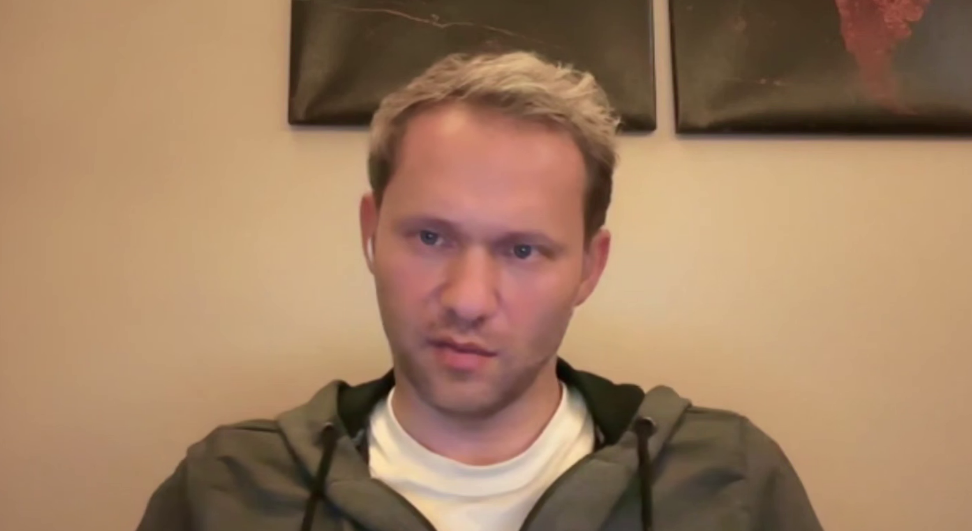
Publications by Gelendzhik-based electoral analyst Ivan Shukshin* about the scale of fraud constitute criticism of the electoral system, and the libel case against him violates the Constitution's provisions on freedom of expression. To prosecute under libel, it must be proven that Shukshin* knowingly disseminated false information.
As reported by "Caucasian Knot," in January 2025, Gelendzhik activist Ivan Shukshin* learned that security forces in Krasnodar had placed him on a wanted list. He then linked the security forces' interest to his social media posts about election violations. The report Shukshin received from the Ministry of Internal Affairs at the time mentioned drug trafficking (Article 228 of the Russian Criminal Code), but the activist himself assumed it was actually libel (Article 128.1 of the Russian Criminal Code). Law enforcement officials considered Shukshin's* articles on election fraud, published on the "Golos"* website, to be libel against "unspecified members" of election commissions.
Ivan Shukshin* is a native of Volgodonsk (Rostov Oblast), a programmer and electoral analyst, the author of publications on methods of voter fraud, and the creator of a Telegram bot that tracks updates in the Rosfinmonitoring registry of terrorists and extremists. He himself was present at the polling stations as an observer - for example, during the autumn 2023 elections, Shukshin reported on the detention of observer Valentina Shostak.
Ivan Shukshin* reported that there had been no progress on his case since February.
"Apparently, they are looking for me purely formally. They haven't informed my lawyer of anything new. The defense's position is still unclear, since there is no indictment, and I have already assessed the decision to initiate the case and the expert examination as unfounded. Yes, I criticize the actions of the election commissions, because I have the right to do so and have ample grounds for it. If they want to accuse me of slander, let them prove that I knowingly knew the opposite. For example, that I knowingly knew that the Kuban election commissions were not stuffing ballots on Friday "Bulletins," he pointed out.
According to him, the initial information that the case was opened under the drug trafficking article was due to the fact that it was issued in a hurry.
"They issued a certificate with one incorrect number. 228.1 and 128.1 differ only in the first digit. The Ministry of Internal Affairs employee didn't particularly bother with the New Year's table. They already know how to work on time. Unfortunately, they don't know how to work efficiently," Shukshin* lamented.
Shukshin* is a physicist by education. "I'm a programmer by profession, and I've been monitoring elections since 2011, when I first encountered fraud. I moved to Lithuania with my three children when the military operation in Ukraine began," Shukshin* said.
Vadim Ternovoy believes Shukshin's prosecution is related to his position on election fraud, and he considers him a competent specialist.
What I see in his conclusions and calculations, in my opinion, corresponds to reality. In fact, this criminal case is more of a confirmation of his correctness, especially his calculations of the level of fraud. "I think it was these numbers that caused such a stir," Ternovoy said.
Timur Filippov, a lawyer not associated with Shukshin's defense*, stated that initiating a case under the defamation article, using the term "individually unspecified members of election commissions at various levels," is formally permissible.
"Part two of Article 128.1 of the Criminal Code explicitly states that defamation may be committed against "several persons, including individually unspecified ones." Therefore, the investigation is using the term "an unspecified number of members of election commissions"—purely from a formal standpoint. The phrase "an indefinite number of election commission members" is a typical ploy used when there are no actual victims named. This construction is extremely vague: it's impossible to understand who exactly is offended and why. It's legally flawed, but politically effective, allowing for the criminal prosecution of individuals who publicly criticize government bodies," the lawyer explained.
However, in his opinion, this is essentially an extremely controversial practice. "Posting information about elections constitutes criticism of the institution's activities, not the dissemination of knowingly false information about specific individuals." In legal terms, such cases are considered a violation of freedom of expression and should definitely not give rise to criminal prosecution, because criticism of an institution is a value judgment, not slander, and the right to freely express oneself is guaranteed by the Russian Constitution,” Filippov emphasized.
According to him, law enforcement agencies have long ignored the Constitution’s provisions on freedom of expression.
"Furthermore, in this case We're talking about statements based on mathematical analysis. To initiate a libel case, the investigation should have at least disproved the accuracy of these calculations and then established the intent of the publication, which was not done. Thus, the key element of the crime is missing—proof of the deliberate falsity of the information and the intent aimed at disseminating knowingly false information that defames the honor and dignity of another person or undermines his reputation,” — noted Filippov.
The Shukshin* case is distinguished by the length of the investigation and the fact that the investigation was initiated by the Prosecutor General's Office, the lawyer noted.
"In libel cases, everything usually happens quickly: an investigation, a ruling, and a trial. These are "minor" categories; they rarely take months. When an investigation drags on, it's usually not due to the complexity of the case, but to its political weight—meaning they're coordinating at the top on how exactly to pursue it. For a typical libel case, the Prosecutor General's Office's involvement is completely unusual. It's usually initiated by an investigator or inquiry officer following a statement from the "victim." If the Prosecutor General's Office initiates the case, it's a clear signal that it's being viewed not as a private dispute about honor, but as a matter of "national importance." "This essentially means that a decision has been made at the leadership level to grant the case special status," Filippov concluded.
Timofey Shirokov, a lawyer also not connected with the Shukshin case*, agrees with this opinion.
"As in cases of 'fake news,' as presented by law enforcement agencies, it is presumed that the state is always right, that information disseminated by the state is beyond doubt, and if you doubt it, then you are slandering. This is not a legal approach, but a purely voluntaristic, political approach. I can imagine how it works: a report, say, comes from the FSB, signed by some general, about the discovery of signs of a crime in the actions of a certain citizen from Gelendzhik. This is a signal for the system to address it. It's unlikely that the Prosecutor General himself has reviewed any of Shukshin's publications*. But the goal here is political, roughly speaking, to show that critics of the electoral system are under control, the lawyer explained.
On May 14, Moscow's Basmanny Court sentenced Grigory Melkonyants, co-chairman of the Golos* movement, to five years in a general regime penal colony. On June 3, the defense's appeal was filed with the Moscow City Court. Melkonyants was accused of collaborating with the European Network of Election Monitoring Organizations (ENEMO)**. He pleaded not guilty. The Golos* movement is not affiliated with ENEMO, and the Golos* Association of the same name, which was a member of ENEMO, was liquidated by the court in 2020, a year before ENEMO was declared an undesirable organization, Melkonyants' allies stated earlier.
He also noted that the charge of defamation requires knowledge.
"He must not simply express an opinion, even a categorical one, he must know that it is not true, disseminating knowingly false information. From an objective point of view, in order for a charge of defamation to be proven, it must be proven that a person not only disseminated information, "The statements are not true, but rather that he knew they were false, deliberately manipulated the facts, and distorted the information—then we can talk about defamation. This is very difficult to prove in a fair and honest trial. Furthermore, there are international standards and decisions, including those of the European Court of Human Rights, that even if articles and publications may be provocative, this is permitted by the right to freedom of speech," Shirokov said.
We have updated the apps on Android and IOS! We would be grateful for criticism and development ideas both in Google Play/App Store and on KU pages in social networks. Without installing a VPN, you can read us on Telegram (in Dagestan, Chechnya and Ingushetia - with VPN). Using a VPN, you can continue reading "Caucasian Knot" on the website as usual, and on social networks: Facebook***, Instagram***, "VKontakte", "Odnoklassniki" and X. You can watch the "Caucasian Knot" video on YouTube. Send messages on WhatsApp*** to +49 157 72317856, on Telegram to the same number, or write to @Caucasian_Knot.
* added to the register of foreign agents.
** the organization is considered undesirable.
*** Meta (owner of Facebook, Instagram, and WhatsApp) is banned in Russia.
Translated automatically via OpenAI from https://www.kavkaz-uzel.eu/articles/415716


![Tumso Abdurakhmanov. Screenshot from video posted by Abu-Saddam Shishani [LIVE] http://www.youtube.com/watch?v=mIR3s7AB0Uw](/system/uploads/article_image/image/0001/18460/main_image_Tumso.jpg "Tumso Abdurakhmanov. Screenshot from video posted by Abu-Saddam Shishani [LIVE] http://www.youtube.com/watch?v=mIR3s7AB0Uw")