


The persecution of those convicted of links to militants in Ingushetia has become a common practice for security forces
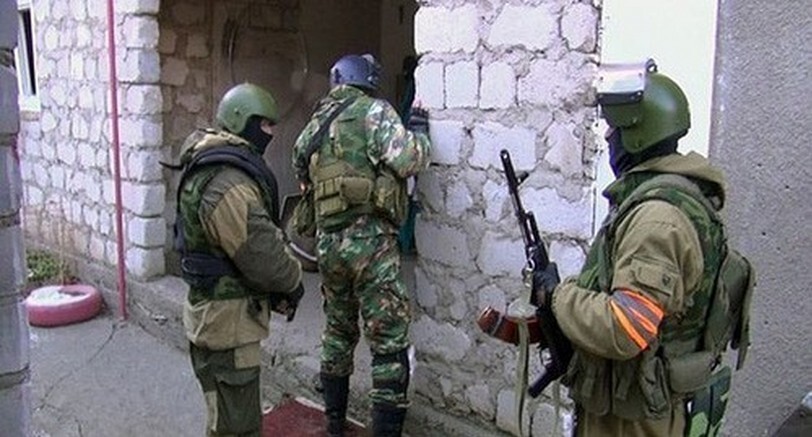
The criminal cases of Ingushetia residents Khasan Dzhandigov and Leyla Chemurzieva, who were convicted of helping militants and years later faced charges of possessing explosive devices, have become standard practice for security forces.
As "Kavkazsky Uzel" reported, on September 3 it became known that the appellate court reduced the sentence of 49-year-old Khasan Dzhandigov from 10 to nine years in prison. In February, Dzhandigov was convicted on charges of aiding the leader of the "Nazran" group Ilyas Vedzizhev and illegal trafficking of an explosive device. Moreover, the charge of illegal trafficking of explosives was brought in 2022 - then, according to the investigation, security forces found a homemade "khattabka" grenade in his home. Dzhandigov did not plead guilty.
According to the investigation, in the summer of 2015, Dzhandigov helped Ilyas Vedzizhev, in particular, he secretly transported him in a car. Leyla Chemurzieva, who was wounded during this special operation, was also convicted for helping Vedzizhev, who was later killed during a special operation in Nazran on October 31, 2015. According to relatives, Chemurzieva did not transport militants in the car, as the investigation believes, but was traveling to a relative in the hospital, and confessed under torture. In August 2016, the court sentenced Chemurzieva to eight years in prison, the appellate court reduced the sentence by one and a half years. In March 2025, the ECHR found that Chemurzieva's rights had been violated in this case, while in 2022, Leyla Chemurzieva, like Hasan Dzhandigov, was again prosecuted - on charges of illegal trafficking of an explosive device. According to Chemurzieva's sister, the explosive device was planted in her house by security forces. Human rights activists indicated that the woman gave the testimony needed by the investigation after torture and threats.
Leyla Chemurzieva told a "Caucasian Knot" correspondent that she is not familiar with Hasan Dzhandigov or his criminal case. She noted that she is already free, but under police supervision.
"In the last case, I was sentenced to 3.5 years in prison. I was released on September 12, 2024. But I have supervision for eight years, I report twice a month, and the district police officer also makes night visits," she said, adding that the security forces do not cause her any other difficulties.
Lawyer Basir Ozdoev, who defended Chemurzieva in the last trial, declined to comment on the details of the case, but expressed satisfaction that it had a relatively favorable outcome. "I will just say briefly that Chemurzieva is finally free. I really hope that she will not have any more problems," Ozdoyev told a "Caucasian Knot" correspondent.
In turn, lawyer Rustam Matsev, who represented Chemurzieva's interests in the ECHR, called it a standard practice for security forces to prosecute people on new charges who came to their attention many years ago in connection with their alleged involvement in militants.
They always work through those previously held accountable for similar crimes
"This is a traditional practice for law enforcement agencies in general. They always work through those previously held accountable for similar crimes and those who came to their attention and were on their overt or covert register, supervision. It cannot be said that this has been happening in recent years or in some particular region. This is, to put it mildly, "in other words, "all-Union methodology", the practice of operational work as such," Matsev told a "Caucasian Knot" correspondent.
A similar opinion was expressed by Ingush human rights activist Magomed Mutsolgov. "The persecution by security forces of people who have already been brought to criminal responsibility or are in places of imprisonment has already become commonplace, has become such a legalized lawlessness," he told a "Caucasian Knot" correspondent.
There are even precedents that such convicts are brought to justice not for the second time, but for the third time
According to the human rights activist, those who previously agreed to take the blame under pressure are especially often caught in the spotlight. "These are the ones who enter into an agreement on a special procedure for considering the case, that is, they agree to a trial without consideration on the merits, hoping to get less [punishment], and they take upon themselves, perhaps, not even their own guilt. In such cases, a person is ready to incriminate himself, to take upon himself some crime, giving in to pressure. But it is precisely these people who are often prosecuted again. There are even precedents that such convicts are prosecuted not for the second, but for the third time," Mutsolgov said.
In his opinion, such an approach to previously convicted persons is unlawful. "This has nothing to do with the law. This is done only for the sake of indicators of this or that law enforcement agency - that it seems to be working effectively, preventing relapses of serious and especially serious crimes. This approach comes more from the leadership of these agencies," the human rights activist noted.
Translated automatically via OpenAI from https://www.kavkaz-uzel.eu/articles/415186


![Tumso Abdurakhmanov. Screenshot from video posted by Abu-Saddam Shishani [LIVE] http://www.youtube.com/watch?v=mIR3s7AB0Uw](/system/uploads/article_image/image/0001/18460/main_image_Tumso.jpg "Tumso Abdurakhmanov. Screenshot from video posted by Abu-Saddam Shishani [LIVE] http://www.youtube.com/watch?v=mIR3s7AB0Uw")