

Surgeon testified in court about the need for surgery on Anton Chechin
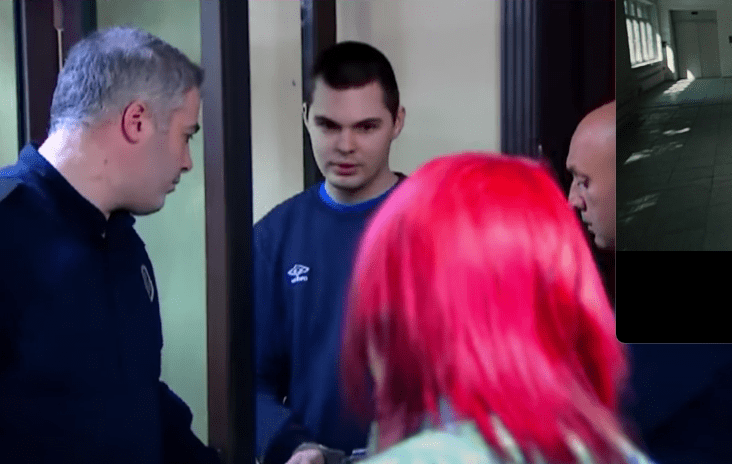
The neoplasm that was found in the brain of Anton Chechin, a Russian citizen accused of drug charges after participating in protests in Georgia, needs to be examined and preferably removed, said a surgeon questioned in the case.
As "Kavkazsky Uzel" reported, Anton Chechin, a Russian citizen, has been accused of drug possession in Georgia. According to the lawyer, the activist is being persecuted because of his participation in protests in Tbilisi, and the testimony of prosecution witnesses is questionable and insufficient. Chechin has been diagnosed with a brain cyst, which is why he needs medical care. Several other protest participants have also been charged under the drug charges, including Russians Anton Chechin, Artem Gribul, and Anastasia Zinovkina. Chechin and Gribul announced a dry hunger strike in prison on July 21, but ended it on July 24.
Neurosurgeon Edisher Magalashvili was questioned in the case of Anton Chechin, who was arrested on charges of drug possession during the protests. According to the results of an MRI of the brain, Chechin was found to have a cystic formation in the brain. Based on the results of the tomography, Edisher Magalashvili recommended surgery, Publika reported today.
"I held a consultation based on medical records, the patient was not present in person. I was presented with the results of the magnetic resonance imaging of the brain. The patient has a volumetric process in the right frontal lobe, which is small in size in its content, but whatever tissue is in the human body, its genesis, whether cancerous, benign, malignant, can only be determined by excision and pathomorphological verification," he said.
He spoke about the risks that the patient may face. "A neoplasm located in the cerebral cortex can cause quite serious problems. There are risks of developing epileptic seizures, hemorrhages. Therefore, I believe that this node should be excised, examined histomorphologically and microscopically <...>. If it continues to grow, weakness in the left limbs is possible," he noted.
According to the neurosurgeon, the formation is very similar to so-called benign tumors, but this cannot be said with certainty, and the node detected during the examination should be completely removed. "I do not think it is advisable to leave such nodes, especially at a young age... If the patient has a high surgical risk, for example, diabetes, heart failure, when the surgical risk is high, then dynamic observation is possible, but when you have a young patient, with minimal surgical risks, in this case I am still more inclined to surgical intervention," his words are quoted in the publication.
This week, hearings on Chechin's case are held daily, in 11:00 (10:00 Moscow time), the project "Assistance to Victims of Protests Georgia" reported on July 27.
Chechin could face eight to 20 years in prison under the article on illegal drug trafficking on an especially large scale (Part 6 of Article 260 of the Criminal Code of Georgia).
"Caucasian Knot" also wrote that in December 2024, a court in Tbilisi remanded in custody resuscitator Giorgi Akhobadze, who was detained after a protest and accused of drug possession. Akhobadze refused to admit guilt and said that the drugs were planted on him by security forces. It was expected that he would be sentenced on July 25. On that day, dozens of activists gathered in the courtyard of the Tbilisi City Court to support him, but the judge postponed the announcement of the verdict. On August 6, the court href="https://www.kavkaz-uzel.eu/articles/413614">found him not guilty and released him from custody.
"Caucasian Knot" published a report "The Main Thing About the Persecution of Protest Participants in Georgia". "Caucasian Knot" collected materials about the parliamentary elections and the protests that followed them on the page "Elections in Georgia-2024".
We have updated the applications on Android and IOS — now they work without VPN! We would be grateful for criticism, ideas for development both in Google Play/App Store and on KU pages in social networks. Without installing a VPN, you can read us in Telegram (in Dagestan, Chechnya and Ingushetia - with a VPN) or use the browser Ceno to bypass blocking. Through a VPN, you can continue to read the "Caucasian Knot" on the website, as usual, and on social networks Facebook*, Instagram*, "VKontakte", "Odnoklassniki" and X. You can watch the "Caucasian Knot" video on YouTube. Send messages to WhatsApp* to +49 157 72317856, to Telegram - to the same number or write to @Caucasian_Knot.
* Meta (which owns Facebook, Instagram and WhatsApp) is banned in Russia.
Translated automatically via OpenAI from https://www.kavkaz-uzel.eu/articles/413642


![Tumso Abdurakhmanov. Screenshot from video posted by Abu-Saddam Shishani [LIVE] http://www.youtube.com/watch?v=mIR3s7AB0Uw](/system/uploads/article_image/image/0001/18460/main_image_Tumso.jpg "Tumso Abdurakhmanov. Screenshot from video posted by Abu-Saddam Shishani [LIVE] http://www.youtube.com/watch?v=mIR3s7AB0Uw")