


Kuban authorities report on the progress of dismantling the protective embankment in Anapa
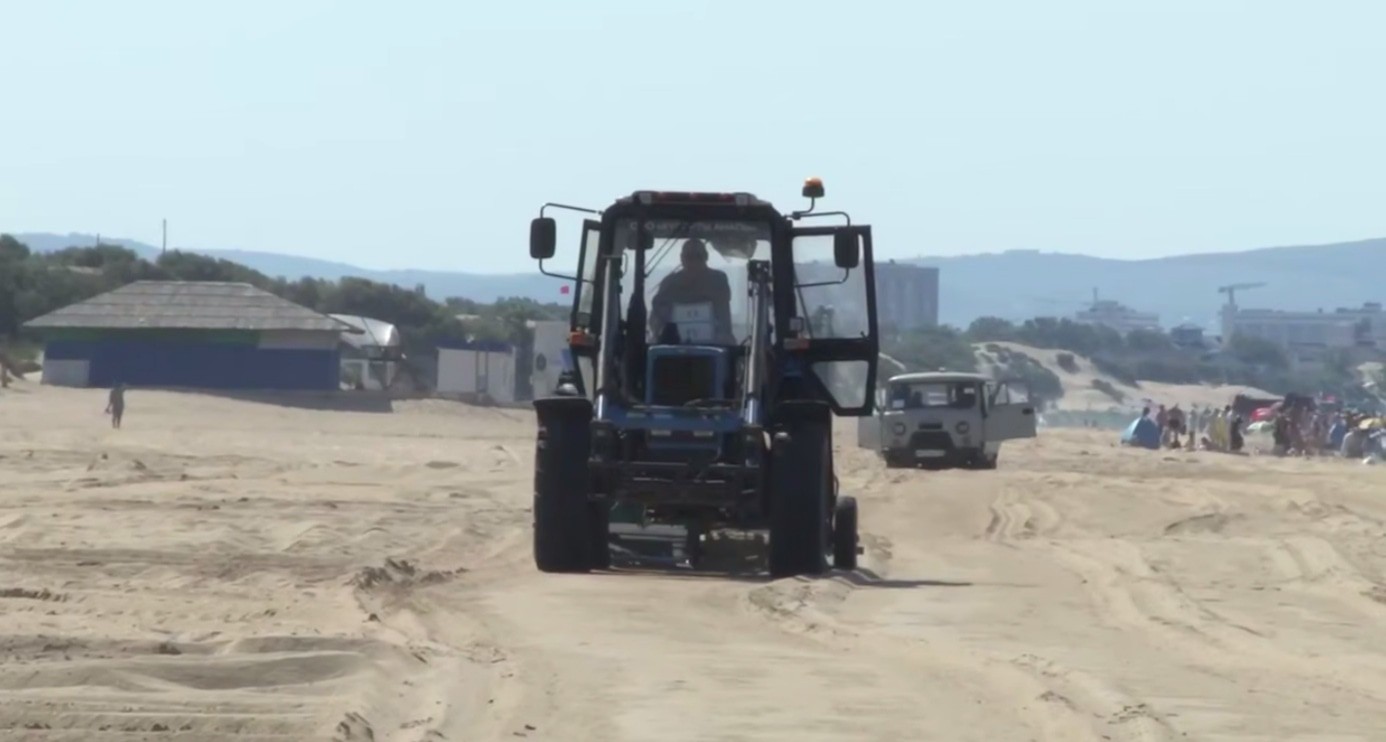
In Anapa, the dismantling of two of the three sections of the sand embankment that protected the coast from fuel oil emissions has been completed. Vacationers, despite the ban, visit the beaches where the sand is being cleaned, the head of the work reported.
As "Kavkazsky Uzel" wrote, on July 5, the Kuban operational headquarters reported that the dismantling of the embankment on the coast in Anapa, which was intended to protect the beaches from fuel oil emissions, had begun. By July 17, a 7.4-kilometer section of the embankment had been dismantled.
In February, the authorities announced that protective structures had been installed from the Central Beach of Anapa to the Bugayskaya Spit, which include a ditch, an embankment, and a polypropylene net covering the embankment. The purpose of these structures is to protect the shore from waves during a storm and to absorb fractions of fuel oil if the waves reach the rampart. A lot of fuel oil has accumulated in the sand banks and ditches, which, if dismantled poorly, will end up on the beach and in the sea again, environmentalists warned.
The dismantling of most of the protective rampart along the coast in Anapa has been completed, the Kuban operational headquarters reported today on its Telegram channel.
The structure was completely dismantled on two of these three sections of the coast
"The work took place on two sides - from the Medical Beach in Anapa and from the village of Vityazevo. The created rampart was conditionally divided into three sections. As planned, the structure was completely dismantled on two of these three sections of the coast," the publication says.

There have been no significant emissions of oil products in these areas for several months, which the rampart is supposed to protect against, the authorities emphasized. "It was dismantled to complete the cleaning of the beaches, since the embankment itself is made of sand, which contains fragments of fuel oil. And without cleaning it, it is impossible to complete the work on the shore," the report says.
The protective embankment was left on the section from the beach in the area of the Era technopolis to the mouth of the Mozhepsin River. "Since diving operations are underway there, fuel oil that has settled on the bottom is being collected near the shore. At the same time, a ban on visiting beaches and swimming in the sea remains in Anapa," the regional operational headquarters said.
A day earlier, on July 25, the operational headquarters reported that systematic mechanized cleaning of beaches had been completed on 9.5 kilometers of the Anapa coastline. "The work that started from the Medical Beach of Anapa is already underway in the village of Vityazevo. The protective embankment was previously removed here, so the equipment immediately sifts and cleans the main body of the beach as close to the water as possible," the publication says.
I ask all vacationers to leave the area where the equipment is working
In front of "Pearl Russia" from "Selena", the primary sifting of the beach is underway with cleaning machines with a mesh of 8 to 4 millimeters. In total, since the start of the work in Anapa, 9.5 kilometers have already been sifted. In hectares, this is about 55 hectares out of 102. [...] I ask all vacationers to leave the area where the equipment is operating, to be especially attentive to their children and monitor their movements," the statement quotes Nikolai Zalivin, director of Anapa Resorts LLC.
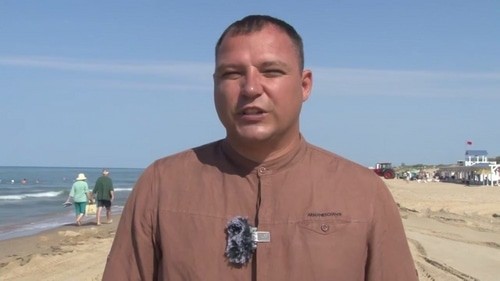 The publication is illustrated with a video version of Nikolai Zalivin's report. Behind him special equipment working on the sandy beach and groups of vacationers, including with children, are visible on the shore and in the water.
Recall that Rospotrebnadzor has recognized 141 beaches in Anapa and nine beaches in the Temryuk district as unsuitable for recreation. Signs with information about the ban on swimming have been installed there, and announcements about this are also displayed on video screens in different areas of Anapa.
In addition, government officials are patrolling coastal areas and asking vacationers not to visit these places. When checking into hotels and sanatoriums, tourists are required to sign written notices about the ban on swimming and health risks.
On December 15, 2024, two tankers with fuel oil sank in the Kerch Strait, which led to catastrophic environmental consequences. Details can be found in the "Caucasian Knot" reference "Fuel oil spill in the Kerch Strait".
Materials about the consequences of the fuel oil spill have been collected by the "Caucasian Knot" on the thematic page "Eco-disaster in Kuban".
Translated automatically via OpenAI from https://www.kavkaz-uzel.eu/articles/413333




![Tumso Abdurakhmanov. Screenshot from video posted by Abu-Saddam Shishani [LIVE] http://www.youtube.com/watch?v=mIR3s7AB0Uw](/system/uploads/article_image/image/0001/18460/main_image_Tumso.jpg "Tumso Abdurakhmanov. Screenshot from video posted by Abu-Saddam Shishani [LIVE] http://www.youtube.com/watch?v=mIR3s7AB0Uw")