


The case of the attack on the military in Chechnya continued the practice of showy work by security forces
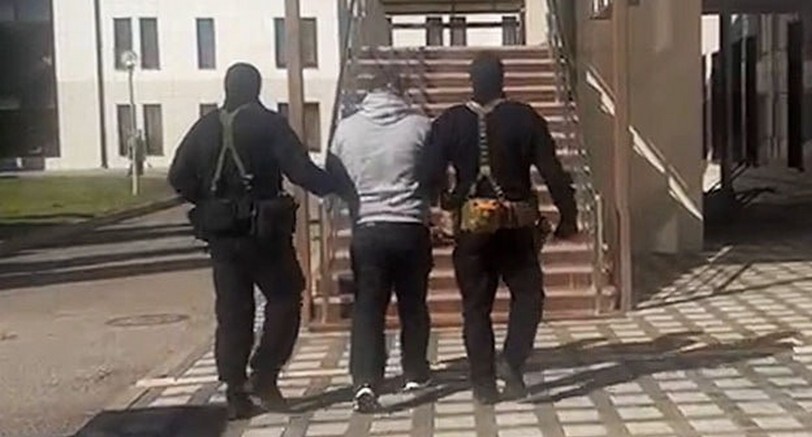
Investigation of criminal cases on participation in military actions in Chechnya allows security forces to curry favor, but leaves doubts about the objectivity of the investigation and the guilt of the convicted, the human rights activist and political scientist pointed out.
As "Kavkazsky Uzel" wrote, a resident of Chechnya Vakhit Khamzatkhanov and a resident of Stavropol Takhir Begeldiev were charged under Part 2 of Article 209 (participation in a gang), Article 279 (armed mutiny) and Article 317 (attempt on the life of military personnel) of the Criminal Code of the Russian Federation. On June 25, the court found them participants in the attack on military personnel in the village of Chervlennaya in 1999. Begeldiev was sentenced to 21 years in prison, Khamzatkhanov - to 24 years in prison.
In October 1999, in the village of Chervlennaya in the Shelkovsky district, militants of Shamil Basayev and Khattab attacked servicemen of the Ministry of Defense, as a result of which 15 people were killed and 28 were wounded. According to the investigation, Khamzatkhanov and Begeldiev personally participated in the shelling, deliberately shooting at servicemen. The defendants did not admit guilt.
The investigation of the Begeldiev and Khamzatkhanov case, which was completed more than 25 years after the clash in Chervlennaya, was commented on by the "Caucasian Knot" human rights activist Oleg Orlov and Chechen political scientist Ruslan Kutayev (both are included in the register of foreign agents).
According to Oleg Orlov, it is necessary to distinguish between the invasion of Basayev's militants into Dagestan in 1999 and subsequent clashes between Chechen armed formations and the Russian army.
"In the case of the attack on Dagestan, I know that many years later specific members of Chechen formations were brought to justice, who actually killed captured Russian soldiers. In my opinion, each case of brutal murder of prisoners should be investigated, and the perpetrators should be punished. For example, I remember, I was in Dagestan at the time, and in the area of the village of Tukhchar, if I'm not mistaken, they simply cut the throats of captured Russian soldiers. This was recorded, and many years later some of the perpetrators of these crimes were sought, named and punished," he said.
Ichkeria, self-proclaimed, unrecognized, was a participant in negotiations with Moscow

But Those convicted of attacking the military in Chervlennaya acted under different circumstances, the human rights activist pointed out. "In this case, we are talking about a completely different event, we are simply talking about military actions, during which representatives of armed formations from both sides died. Moreover, we note that the Chechen armed formations, that is, in general Chechen Republic of Ichkeria, self-proclaimed, unrecognized, - it was a participant in negotiations with Moscow. Moscow recognized it as a party with which it was possible to negotiate, it is impossible not to take this into account. While the attack on Dagestan, of course, was carried out by illegal armed formations. They were not from any side, these were illegal armed formations of Shamil Basayev, so these are completely different cases," Orlov explained.
In his opinion, this also applies to other cases, when "people who participated in battles with federal troops are being tried." "The same applies to the events where a company of Pskov paratroopers died. It follows from the verdicts that from the very beginning they simply believed that some gangs attacked Russian military personnel, which is true in relation to the attack on Dagestan and absolutely unfair to all subsequent armed clashes, the events of the second Chechen war, where there were some formations of the Chechen Republic of Ichkeria and there were large serious military clashes," Orlov said.
In December 2023, the case of four residents of Tatarstan, charged under Articles 209 (participation in a gang), 279 (armed mutiny) and 317 (attempt on the life of military personnel) of the Criminal Code of the Russian Federation, was transferred to court. According to investigators, all four took part in the attack by Shamil Basayev and Khattab’s group on Pskov paratroopers in 2000. In June 2025, it became known that the court sentenced them to imprisonment for terms ranging from 13 to 24 years.
It is unfair to prosecute all participants in those clashes unless they committed war crimes, the human rights activist believes.
"Yes, there were battles, there were armed clashes. They ended a long time ago, and for what purpose should all those who met federal troops with weapons in their hands be prosecuted, is unclear. Moreover, amnesties have passed, and among those who then took up arms against the federal troops, there are [people] in the current power structures of the Chechen Republic, among the Kadyrovites," Orlov noted.
Ramzan Kadyrov during the first Chechen campaign, in 1994-1996, fought on the side of the militants. In the fall of 1999, at the beginning of the second Chechen campaign, Akhmat and Ramzan Kadyrov went over to the side of the federal troops. Magomed Daudov, now the Chairman of the Chechen Government, participated in armed clashes on the side of the militants.
Bringing criminal responsibility to participants in those military actions from the Chechen side is simply a bureaucratic continuation of some old criminal cases, Oleg Orlov believes.
Investigators are simply looking for more and more new participants in a rather random manner
"Just to report, to get ranks, stars for investigators. There is no other meaning in all this. Moreover, the cases have long been investigated. There are plenty of sentences on this topic. Investigators are simply looking for more and more new participants in a rather random manner. There is no sense in this from the point of view of law, expediency, state necessity, except for the benefit of the investigator," he said. Orlov.
Criminal cases on participation in the gangs of Basayev and Khattab are of the same type and often falsified, lawyer Narine Ayrapetyan told the "Caucasian Knot" earlier. "The witnesses are the same everywhere. Five witnesses are usually taken - three secret witnesses and two open ones," she said. Ayrapetyan emphasized that cases are also fabricated against innocent people. "When people did not participate, but under threat, including torture, other people are forced to testify against them. For example, one of my clients, who is serving a sentence in the Ulyanovsk region, told me that he was being pressured to testify about the events of 1999 against people he had never known before," the lawyer said.
The presence of secret witnesses additionally casts great doubt on the sentences handed down, the human rights activist emphasized. "The presence of secret witnesses does not give the defense the opportunity to verify the veracity of their testimony in any way," Orlov explained.
In addition, cases where representatives of the federal forces committed war crimes are not investigated, he noted. "Neither then, long ago, nor now. You see, they bring people to justice simply because they participated in military actions [on the side of the Chechen formations]. But they do not bring their own servicemen to justice. For example, the mass murder of civilians in the suburbs of Grozny, in the village of Aldy. The fact has been established. Civilians were killed by representatives of federal forces. A criminal case has been opened. But no one has been brought to justice. They are not even being sought. While such cases as the ones you are asking about are being investigated senselessly for some reason. I repeat, all cases where war crimes or crimes against humanity are committed, of course, they have no statute of limitations, and they must be investigated. Whoever committed it, the feds or the Chechen fighters," he pointed out Orlov.
Back in 2007, the ECHR recognized that responsibility for the murders of 11 residents of the village of Novye Aldy lies with the security forces and authorities of Russia. The ECHR also condemned the Russian authorities for the lack of an effective investigation into the deaths of these people.
The main reason for the investigation of the Begeldiev and Khamzatkhanov case, as well as other similar criminal cases, is the personal interest of the security forces, their desire to show their importance and earn titles and awards, agreed Ruslan Kutayev.
They just suck cases out of their fingers
"They need to somehow confirm their existence, that they are capable. When someone needs an appointment, another title, they just suck cases out of their fingers," the political scientist shared his opinion.
In March 2021, Takhir Begeldiev was already sentenced to 14 years in a maximum security penal colony. The court concluded that in July 1999 he voluntarily joined Basayev's militants and took an active part in the attack on Dagestan.
The indictment, which is based on the testimony of secret witnesses, increases doubts about the objectivity of the investigation of these cases, he noted. "They keep everything secret, they don't show anything. They do whatever they want. This is what their behavior, their official practice and their actions consist of. "They include and prosecute anyone they want [in the list of suspects]," Kutayev said.
Recall that in 2022, 63-year-old Grozny resident Alavdi Batykayev was also accused of attacking Pskov paratroopers in 2000. The Grozny resident claimed his innocence, and his lawyer claimed there was no evidence in the case file. However, in September 2024, the military court sentenced Alavdi Batykayev to 16 years in a maximum security penal colony.
They recognize people from photographs whom they saw briefly 22 years ago
At the same time, none of the victims were able to identify Batykaev, and their stories about the course of the battle fundamentally contradicted the testimony of secret witnesses, which formed the basis of the case, Batykaev's lawyer and human rights activist Oyub Titiev said in November 2023. "The testimony of the three secret witnesses is the same: they recognize people from a photograph whom they saw briefly 22 years ago and did not know personally, but they even remember their names," Oyub Titiev noted at the time.
The testimony of the victims in the case of the attack on the Pskov paratroopers is used in every criminal case on this matter and has no relation to a specific defendant, human rights activists previously indicated.
In September 2024, the court sentenced to 10 years in prison native of Chechnya Magomed Alkhanov, also accused of involvement in the attack on the Pskov paratroopers. Alkhanov's defense claimed that he did not participate in the fighting: in particular, there are no scars on his body that should have appeared as a result of injuries. The prosecution referred to the testimony of a soldier who allegedly identified Alkhanov 20 years later.
The Second Chechen War officially began in late September 1999, but in fact, violence in the Caucasus did not stop after the peace agreements were signed in Khasavyurt in 1996. In the three conditionally peaceful years after the end of the First Chechen War, there were a series of terrorist attacks and militant attacks, kidnappings and murders continued, according to a report from the "Caucasian Knot" "25 years later: the main points about the Second Chechen War".
Translated automatically via OpenAI from https://www.kavkaz-uzel.eu/articles/412627

![Tumso Abdurakhmanov. Screenshot from video posted by Abu-Saddam Shishani [LIVE] http://www.youtube.com/watch?v=mIR3s7AB0Uw](/system/uploads/article_image/image/0001/18460/main_image_Tumso.jpg "Tumso Abdurakhmanov. Screenshot from video posted by Abu-Saddam Shishani [LIVE] http://www.youtube.com/watch?v=mIR3s7AB0Uw")