


Grozny residents called for a humane solution to the problem of stray dogs
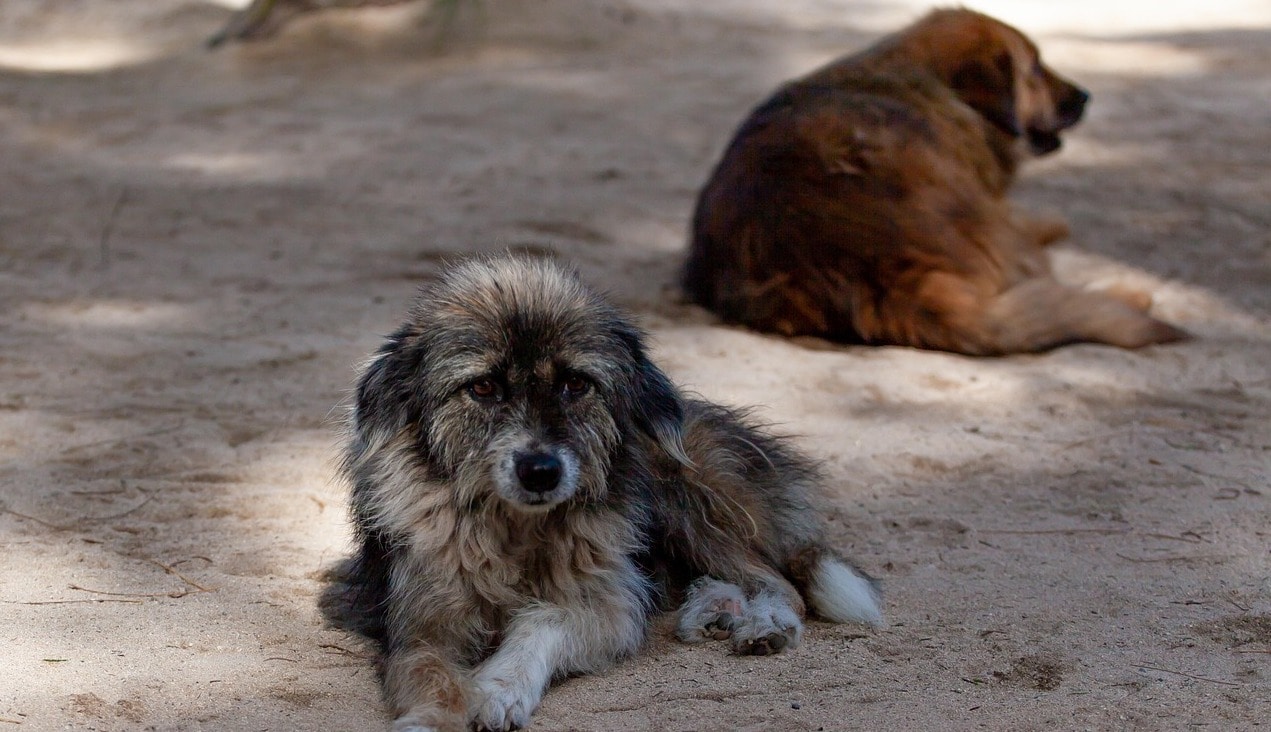
Residents of Grozny have noted an increase in the number of stray dogs on city streets, some animals are behaving aggressively and attacking people. In the republic, private individuals are shooting dogs, who are not punished for cruelty to animals, volunteers said.
In May, a reader of “Kavkazsky Uzel” with the nickname hugh_shields reported that stray dogs had become a problem for residents of Grozny. “It must be admitted that the problem with stray dogs in Grozny is quite acute. Just a few days ago, my niece, who was taking her children to kindergarten, was almost bitten by several huge dogs. The road to the kindergarten goes through a large vacant lot, and there she and the children encountered a pack of dogs. It’s good that several young guys who were passing by came to the rescue. Why the city authorities are not taking any measures is unclear,” he wrote in the comments to one of the publications. City residents are also discussing the problem on social networks: a resident of the Visaitovsky district of Grozny filmed a pack of large stray dogs near a kindergarten, reporting that they “don’t give a break” to either children or adults and “literally attack people.” “I was with my little two-year-old child, they pounced on us and I fell with the child in my arms, the child hit his head hard on the asphalt. Today, right in front of me, our neighbor was also walking to the garden and they pounced on her, she fell on her stomach,” the Instagram* public page chp_grozniy_ quotes the author of the video as saying. In the comments to the publication, dozens of users confirmed that packs of stray dogs are bothering residents of different areas of the city. Some users also expressed concern that the authorities will not look for humane methods to solve the problem and will simply kill the animals.
The number of stray animals in Grozny has noticeably increased recently, and the problem has become even more obvious with the onset of warm weather, confirmed Grozny resident Uvais. "When it was cold, cats spent their time in basements and entryways, and dogs found shelter in unfinished houses or in the ruins of barracks, of which there are many in the areas of the Old Works. And now it's summer, there is no need to look for protection from the rain and wind," he shared his observations with a correspondent of the "Caucasian Knot".
The man agrees that stray dogs pose a danger to passers-by, noting that a few days ago he himself protected a boy of about eight years old from them on the street. "It's good that it was not far from school No. 12. The guard heard the dogs' barking and my screams, ran out with a mop in his hands, and dispersed the dogs. The guard said that these dogs have long settled in the area of Nizhnyaya Katayama and they seem calm, but they attack boys: when they walk in a crowd, they act hooligan, throw stones at the dogs, and that's the result," he explained.
English teacher Alina was attacked by a dog in the center of Grozny, on Pervomayskaya Street. According to the young woman, she was walking down the street and was going to call a friend with whom they were going to meet, when the dog attacked her with a loud bark, tore her windbreaker and ran away. “All of this - how the barking dog runs towards me, how it pounces on me - was recorded on my iPhone. I was stunned, the dog's attack happened so quickly that I didn't even have time to get scared,” Alina said (the video is at the disposal of the “Caucasian Knot”).
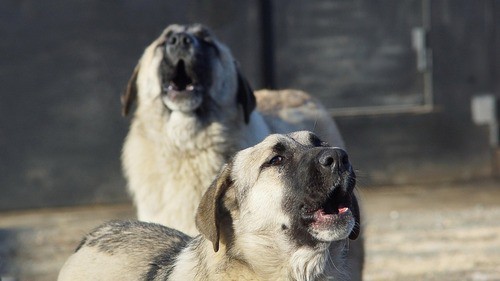 She noted that social media users argue about the problem of stray dogs: some insist that such animals are dangerous for people, others defend animals and blame the city dwellers themselves for their cruel treatment of them, which is why dogs, in their opinion, become aggressive. “I have a normal attitude towards animals, I have two cats, no dog, but from time to time I send money to those who provide shelter and care for animals. But if before I had a normal attitude towards dogs, I was not afraid and did not shy away, now I will avoid them,” says Alina.
Ramira lives in a five-story building near the Beryozka store and complains that it is impossible to take out the trash in the evening: many dogs gather around the containers, rummaging through the trash in search of food. “It is impossible to approach, three or four mouths growl at me at once. I understand that the animals are hungry, but we, the residents, who are at work all day, have no opportunity to take out the trash during the day,” the woman is indignant. Ramira's daughter, who lives in the theater area in the center of Grozny, has recently avoided walking her child in the park, as there have been a lot of dogs there lately. "They seem calm, not aggressive, but it's still scary to walk near them with a child," the woman explained, quoting her daughter. Ramira also noted that she believes animal shelters are necessary.
The situation with the number of homeless dogs and cats is most acute in the south of Russia, including in the republics of the North Caucasus, the Veterinary Science magazine points out. The publication cites data from the Center for the Study of Animal Nutrition and Welfare: there are about 3.6 million homeless dogs and cats in Russia, with about 36 homeless animals per 10,000 people. Most of them (over 3 million) live on the streets, and only 170,000 live in shelters.
Dog shelters were created in Grozny, but those who opened them often did not have enough money to keep the animals, noted elderly Grozny resident Tamara. "They not only need to be fed, but also treated, sterilized, buy bedding, all kinds of cat and dog shampoos. There are a lot of expenses, so in the end the animals had to be given away and the shelter closed," she stated.
According to Tamara, for some time her friend, who rented a house with a fenced yard, kept dogs behind her high fence. "She collected money for food and maintenance: she simply went from house to house, told them what she was doing and why she needed the money. At the same time, she reported on every ruble and people did not refuse to help, but the dogs' barking greatly irritated the residents of nearby houses. They constantly demanded that she get out with her dogs, threatened to poison the animals. The woman could not stand it and closed her small shelter," said a resident of Grozny. Two more of Tamara's friends organized mini-shelters for cats in their homes, where they kept several dozen animals at their own expense, but with the help of relatives, friends and neighbors.
She noted that children, especially teenagers, are cruel to homeless animals. "A dog gave birth to puppies in the basement of the house, so the boys began to throw stones and sticks at the dog and puppies. They simply beat the newborns with sticks, aiming specifically at the babies! My friend Malika and I began to talk about this attitude towards animals of the mothers of these boys, in response only dirty words. Malika herself climbed into the basement, saved the puppies, hid them in different places so that the teenagers would not find them. Dogs roam the city center, almost all of them with tags and microchips. They are not aggressive, they are kind. And we, people, need to be kinder to animals, parents and teachers need to raise children correctly,” Tamara said.
Ayshat is the owner of three cats and a disabled dog named Abdurakhman, and often communicates with animal rights activists and zoo volunteers. Abdurakhman is missing his right hind leg, one eye, and his ear is torn. “His ear was torn in a fight by the same tramps as him, and the fact that he is missing one leg and eye is because a man who lives behind the intersection shot at him. A neighbor pointed him out, saying that he shoots stray dogs,” the woman said.
Ayshat found her pet on the street in the morning when she was going to buy bread. "He was lying all bloody in a ditch, on the side of the road. I remember his look when I approached him: there was hope, gratitude and suffering in them. That's how dogs looked, wounded dogs that we found in Grozny during the first Chechen war," she said.
Animal rights activists and shelters in wartime and modern Grozny
Aishat recalled that in January 1995, when the most brutal fighting was going on, people not only fled the bombings themselves, but also took cats, dogs and other pets with them to shelter. "At the beginning of the war, pets whose owners were killed or left in a hurry were drawn to people. It was later that they went wild and stopped trusting people," she noted. According to her recollections, during the most difficult months of the war, one Grozny resident, an acquaintance of hers, gave shelter to dogs and cats that were left without owners in her home for about six months, and together with her acquaintances, she looked for food for them. Subsequently, owners were found for all the animals.
“There are now two shelters in Grozny, one is the largest not only in Grozny, but also among the republics of the North Caucasus. This shelter is called “Hachiko”, today it contains about 600 dogs and several dozen cats. Another animal shelter is called “Hope for Life”, it was created in 2015 by two friends, Elita Zumaeva and Alena Danish. It began with the girls finding sick cats and treating them, and in addition to this, in their free time they walked around the city and fed homeless animals, - Aishat told a correspondent of the “Caucasian Knot”.
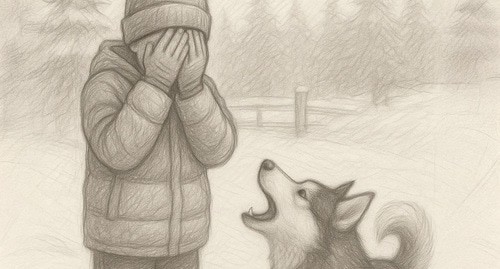 In 2016, the "Hope for Life" shelter received premises on the outskirts of Grozny from the authorities. As Elita Zumaeva writes on social media, it has everything for the comfortable stay of animals and the work of volunteers: 32 enclosures for the winter and summer seasons, three rooms for healthy cats, an infectious disease ward and a room for caring for animals. According to Zumaeva, the shelter accepts sick and injured animals that have been hit by cars or suffered from human cruelty - in particular, dogs with gunshot wounds have been brought to them.
The "Hachiko" shelter, where, according to Aishat, even more injured, sick and maimed animals are brought, was founded by Aina Idalova. In 2010, she took four puppies found in the basement of her house for temporary shelter, and later, when there were already 22 dogs in her house, she began looking for a place to keep the animals. One of the last locations of the shelter was the territory of an abandoned landfill on the outskirts of Grozny, improved with the help of volunteers who installed enclosures and planted trees there. There, "Hachiko", which by that time had several hundred animals, existed for two years. After complaints from residents of nearby houses, the authorities planned to close the shelter and ordered Idalova to "release" the animals, but Aina and her supporters managed to convince the Chechen leadership to provide the shelter with a space. "On August 25, 2022, the shelter moved to its permanent location. It has all the conditions: a veterinary office, a rest room, a laundry room, 34 enclosures, a canopy, an adjacent territory. "Not only Aina celebrated the housewarming, but also all the residents of Grozny who were watching Aina and her charges, the number of which has exceeded six hundred," Aishat said.
Animal volunteers are alarmed by the private shooting of dogs in Chechnya
Volunteers from shelters interviewed by the "Caucasian Knot" are sure that stray dogs need to be vaccinated and sterilized so that they do not pose any threat to people. Animal rights activist and lawyer Svetlana Zibert recalled that in Russia there is a program called OSVV (catch, sterilization, vaccination, release), which, in her opinion, is quite effective if properly implemented. "After sterilization, dogs are deprived of uncontrolled reproduction, feel better without hormonal surges, become calmer and less aggressive, and are less likely to get cancer," she told a "Caucasian Knot" correspondent.
The shelters that exist in Grozny, although they received premises for work from the authorities, operate on a volunteer basis with the support of caring residents.
“Sometimes we have unsolvable problems. They built us wonderful premises, enclosures for our pets, we are grateful to the leadership of the republic for creating conditions for us to work. But, unfortunately, our problems do not end there. All volunteers have the same ones: we really need the help and understanding of veterinarians. We cannot cope with the huge bills in veterinary clinics, we are drowning in debt. We are desperately helpless when not a single veterinary clinic in Grozny accepts our sick dogs and cats until we pay for previous operations and treatment. All veterinary clinics in the republic are private, it is not profitable for them to give us discounts. We understand, this is their business. Therefore, we would like to see a state veterinary clinic in the republic where medicines would be sold at an acceptable discount,” volunteers from shelters in Grozny told a “Caucasian Knot” correspondent.
They noted that without the support of the authorities, it will not be possible to form a humane attitude towards homeless animals among residents and eradicate manifestations of cruelty towards them. “We, volunteers, cannot cope alone without the help of government officials. Take at least the most important, alarming aspect, the shooting of dogs, I would like them to finally stop shooting dogs in our republic. And people who commit this crime should be punished according to federal law. I would like to see dog and cat feeders appear in cities and districts, thus teaching children to take care of homeless animals,” the volunteers concluded.
We have updated the applications on Android and IOS — now they work without VPN! We would appreciate criticism, ideas for development both in Google Play/App Store, and on KU pages in social networks. Without installing a VPN, you can read us in Telegram (in Dagestan, Chechnya and Ingushetia — with VPN) or use the Ceno browser to bypass blocking. Using VPN, you can continue reading "Caucasian Knot" on the website as usual, and on social networks: Facebook*, Instagram*, "VKontakte", "Odnoklassniki" and X. You can watch the video of "Caucasian Knot" on YouTube. Send messages to WhatsApp* to the number +49 157 72317856, to Telegram - to the same number or write to the address @Caucasian_Knot.
* the activities of the Meta company (which owns Facebook, Instagram and WhatsApp) are prohibited in Russia.
Translated automatically via OpenAI from https://www.kavkaz-uzel.eu//articles/412596

![Tumso Abdurakhmanov. Screenshot from video posted by Abu-Saddam Shishani [LIVE] http://www.youtube.com/watch?v=mIR3s7AB0Uw](/system/uploads/article_image/image/0001/18460/main_image_Tumso.jpg "Tumso Abdurakhmanov. Screenshot from video posted by Abu-Saddam Shishani [LIVE] http://www.youtube.com/watch?v=mIR3s7AB0Uw")