

Social media users concerned about reform of local government in Chechnya
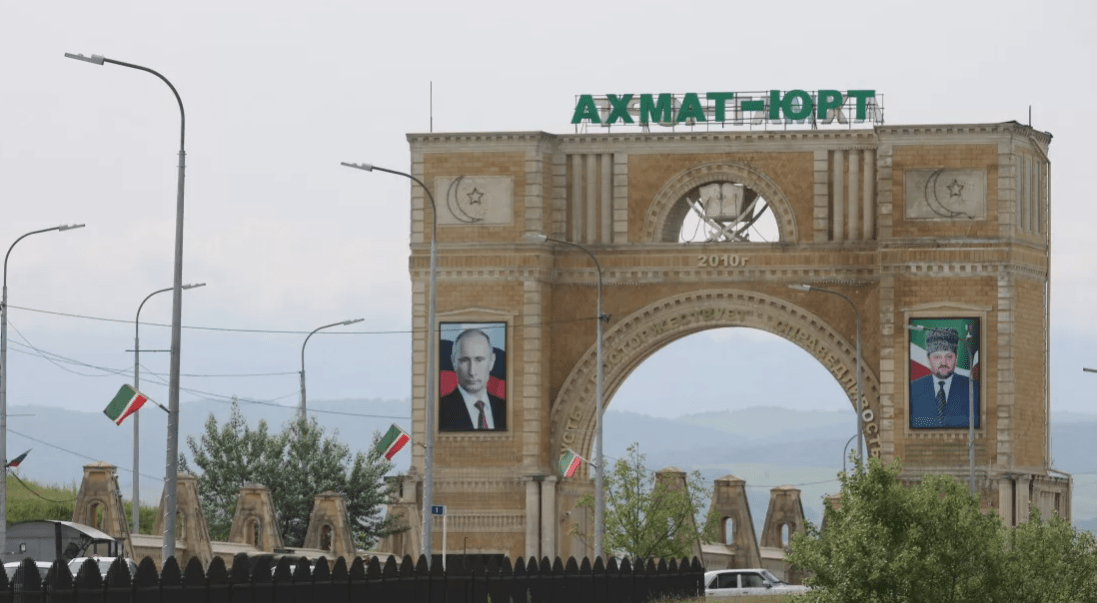
As part of the reform of local government in Chechnya, 17 municipal districts will be created, and the urban districts of Grozny and Argun will also be preserved, the Chechen Ministry of Finance reports. Social media users suggest that the reform will result in job cuts and difficulties for citizens in obtaining official documents.
The Chechen Ministry of Finance has reported about the discussion of preparations for the transition to a single-tier system of local self-government.
Changes in the territorial organization of local self-government are being introduced in accordance with Federal Law No. 33-FZ, signed by Russian President Vladimir Putin on March 20, 2025. The law provides for the abolition of the usual rural and urban settlements that are part of municipal districts, as well as the municipal districts themselves, which previously constituted the so-called two-tier system of local self-government. After the completion of the reform, local self-government in the Chechen Republic will be carried out only in the form of 17 municipal districts to be created by January 1, 2027, as well as two currently existing municipal urban districts of Grozny and Argun,” the Chechen Ministry of Finance announces.
Galas Taimaskhanov, the chief of the administration of the Chechen leader and government, has noted that “the new system allows for increased management efficiency and eliminates duplication of functions of local governments.” According to the official’s report, budget expenditures will be optimized, the transparency and accessibility of municipal services will increase, and clearer mechanisms for interaction between the government and the population will be introduced. The federal law comes into force on June 19 of this year. At the same time, a transition period is established until January 1, 2027, reports the message posted on the Telegram channel of the administration of the Chechen leader and government.
This message has also been posted in Instagram* on the public page of the “Grozny” Chechen state TV and Radio Company, which account on Instagram* has 985,000 subscribers. By 9:33 p.m. Moscow time, 18 comments were posted under the message.
In their comments written in Russian, social media users suggested that the abolition of village councils would create problems for villagers.
“Now, to get a certificate of family composition, for example, will we have to stand in line not for a couple of hours, but for a whole day or even more?” asked user lika_198919189.
“Everything is being done for our convenience,” answered user __di__999, putting a smiley.
“Does that mean a reduction in jobs?” wondered user zulikhan_1.
“So this is likely to mean a reduction in jobs,” commented user kit_kat_ars.
Earlier, it was reported that the authorities of Chechnya do not intend to transfer to the single-tier system. In particular, on March 5, the “Vedomosti” news agency reported that 18 regions of Russia, including Kabardino-Balkaria, Karachay-Cherkessia, Adygea, Kalmykia, Chechnya, and the Rostov Region, plan to maintain the two-tier model.
The Stavropol Territory is among the 20 regions that have already switched to the single-tier model.
Twenty-six regions, including Ingushetia, North Ossetia, and the Astrakhan Region, intend to fully switch to the single-tier model.
Twenty-five regions plan to only partially switch to the single-tier model and partially leave the two-tier model of operation. In particular, these are Dagestan, the Krasnodar Territory, and the Volgograd Region, the news agency reports.
This was originally published on the Russian page of 24/7 Internet agency ‘Caucasian Knot’ on June 1, 2025 at 09:32 pm MSK. To access the full text of the article, click here.
*On March 21, 2022, the Tverskoi Court of Moscow banned the activities in Russia of the Meta Company, owning the Facebook, Instagram, and WhatsApp, in connection with extremist activities.
![Tumso Abdurakhmanov. Screenshot from video posted by Abu-Saddam Shishani [LIVE] http://www.youtube.com/watch?v=mIR3s7AB0Uw](/system/uploads/article_image/image/0001/18460/main_image_Tumso.jpg "Tumso Abdurakhmanov. Screenshot from video posted by Abu-Saddam Shishani [LIVE] http://www.youtube.com/watch?v=mIR3s7AB0Uw")