

The Kadzo case demonstrated the normalization of violence in the context of the SMO.
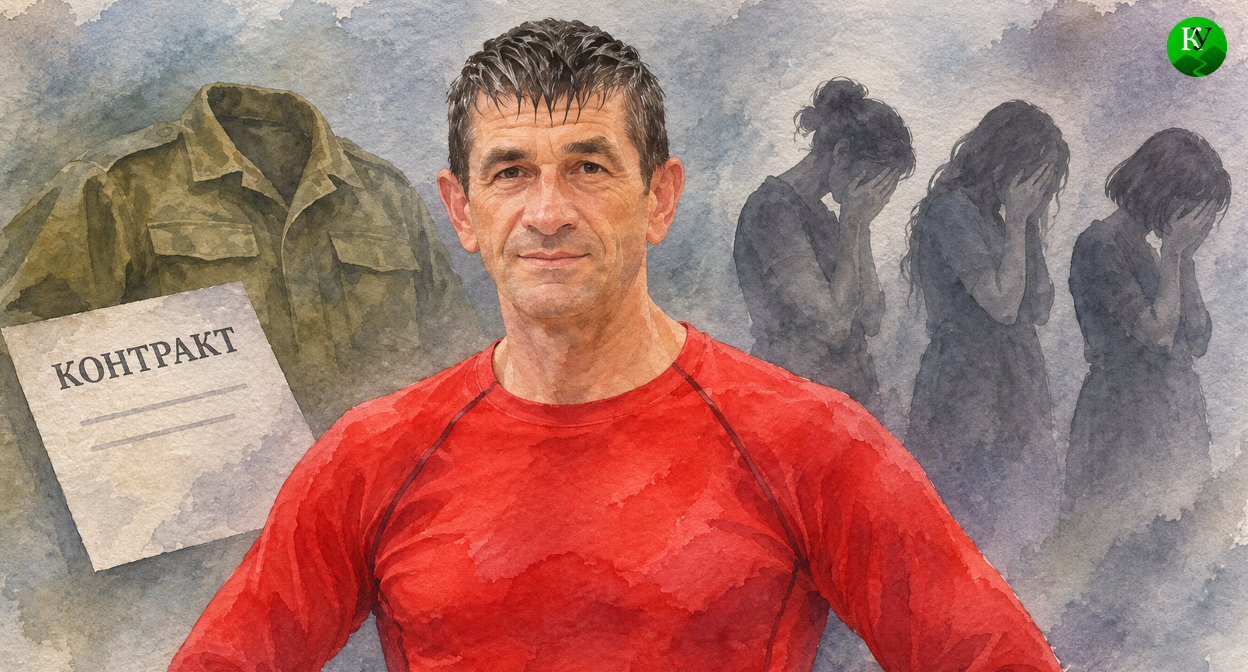
Participation in the special military operation (SMO) became an opportunity for the accused of sexual crimes against minors, coach Gennady Kadzo from Vladikavkaz, to avoid sentencing and even gain a socially approved status. Victims in such cases lose trust in the police and courts and remain defenseless against the system, human rights defenders pointed out, noting that those accused of sexual and domestic violence should not have the opportunity to be released from prison.
As reported by "Caucasian Knot", the accused of sexual crimes against minors, coach Gennady Kadzo from Vladikavkaz, going to the SMO before the investigation is completed, may not only avoid punishment but also return with awards, gaining public recognition, some commentators on social media stated. Their opponents pointed out that Kadzo's guilt has not been proven and until a verdict is issued by the court, he is considered innocent.
On November 20, it became known that the accused of sexual crimes against minors, coach Gennady Kadzo from Vladikavkaz, went to the SMO before the investigation and trial were completed. The founder of the fight club "Ars" was detained in April after complaints from students who claimed that he had been harassing them since 2022 and threatened to disgrace them. Kadzo was charged with 11 counts, including lewd acts against minors. The parents of the alleged victims suspect that he decided to go to the SMO to avoid imprisonment. Kadzo himself rejected the accusations, and some parents of the students spoke in his defense.
Human rights defenders considered such practices to infringe on the rights of victims
The president of the Center for the Study of Global Issues of Modernity and Regional Problems "Caucasus. World. Development" Said Sirajudinov called the practice of sending defendants in violence cases to combat zones extremely traumatizing for the victims.
There should be no possibility of release from prison for crimes related to sexual and domestic violence.
"This is an extremely traumatizing practice for the victims. There should be no possibility of release from prison for crimes related to sexual and domestic violence. This creates devaluation of life, moral and physical harm to the victims. Criminals understand that they have a loophole and act more brazenly now. Just look at the high-profile femicides in recent days. Criminals act boldly - they can pay, and they will be kept in a safe place, while victims and their relatives suffer," said Said Sirajudinov to the correspondent of "Caucasian Knot".
According to him, society is witnessing the heroization of former criminals, which causes victims and their relatives to live in constant fear that the guilty will evade responsibility and continue to persecute them.
"Yes, it is a common opinion that there is a heroization of former criminals. This is true - they are invited to schools with honor, they have a high status, they are currently exalted, considered heroes who have atoned for their guilt. Victims have no other option but to try to protect themselves, but they are filled with fears. The fear that the criminal will not be punished now exists for all victims and their relatives. This trend - and we actually know many cases of evasion of punishment - leads to an increase in crimes and additional oppression of victims. Not only is there no law on domestic violence, but the criminal can also be released and continue to torment the victim without punishment, and if she is no longer there, then her relatives," emphasized Sirajudinov.
The chairwoman of the "Civic Assistance" committee* Svetlana Gannushkina* noted that the participation of the accused in combat actions should not become an obstacle for judicial assessment of serious violent crimes, as such practices create direct risks for new potential victims. According to her, the country's participation in combat actions "shifts all notions of good and evil and affects public morality".
"It takes a long time for long-established concepts to return, so it is especially important for legal mechanisms to operate during this time. In this case, of course, participation in the SMO should not affect the consideration of a criminal case for a serious violent crime. Moreover, young people who may become new victims of this person participate in military actions. This practice is dangerous and poses risks to society and specific potential victims of crime," said Svetlana Gannushkina* to the correspondent of "Caucasian Knot".
When a case is effectively cut off halfway, and a person against whom the victims sought an investigation returns in a completely different, socially approved status, the victims feel a complete defenselessness before the system.
According to her, the escape of defendants from sentencing due to being sent to the SMO deprives victims of violence of their right to justice and undermines trust in the very idea of protection by law.
"For people who have experienced violence, it is fundamentally important for the state to give a clear legal assessment of what happened and to call the crime a crime. When a case is effectively cut off halfway, and a person against whom the victims sought an investigation returns in a completely different, socially approved status, the victims feel a complete defenselessness before the system. As a result, people stop believing that turning to the police and court can protect them from the aggressor, and a dangerous notion forms in society that any violence can be dismissed and reset without a court verdict," emphasized the human rights defender.
An activist from North Ossetia pointed out that such cases break the very logic of protecting the rights of victims, as the victims lose their right to a fair trial and public recognition of the violence they experienced.
"When an accused of serious violence evades court and returns as a hero, for the victim, this means a complete nullification of their pain and rights. It turns out that in the social hierarchy, participation in combat actions automatically outweighs any crime against a person, and the victim with their demands for justice becomes somehow inconvenient and secondary. This is a destructive signal for all who have experienced sexual or domestic violence: people see that even an initiated criminal case does not guarantee a verdict, and next time they simply will not go to the police, understanding that the system is incapable of providing protection to the end," she stated to the correspondent of "Caucasian Knot" on condition of anonymity.
According to the activist, the accumulation of such precedents in the North Caucasus, where victims of violence already face strong social pressure, makes the situation of victims even more vulnerable and undermines the remnants of trust in justice.
"In our regions, victims already require colossal strength to dare to report violence, to go against stigma and social pressure. When a person goes through all the circles of investigation, and in the end, the case is effectively frozen and the accused returns home with awards and new authority, this becomes a double trauma and a direct threat to safety. Such stories are becoming more frequent, and they form a dangerous norm where violence can be dismissed, and the victim's right to justice and protection is no longer taken into account by the state and society," she added.
Human rights defender Lena Patyaeva stated that the practice of releasing defendants and convicts from criminal liability due to being sent to a combat zone leads to a split in society and an increase in social tension.
"I think that such practices will lead to a split in the community and an increase in social tension. Some people will agree to dismiss all past crimes of participants in the SMO, but others will remember what they did and what they were accused of," she said to the correspondent of "Caucasian Knot".
According to her, the destruction of the court institution and the effective impunity of criminals lead to the normalization of violence and may push victims and their relatives towards vigilante justice.
"Social tension and hatred between different layers of society will only grow. I admit that some victims or their relatives may resort to vigilante justice. If previously victims could at least in some cases achieve justice through the court, now the institution of the court is becoming increasingly meaningless. Naturally, some people may decide that in such a case, they need to take justice into their own hands: for example, kill the offender and then go to the SMO themselves to avoid court. Overall, I fear that violence will be normalized. The existence of a judicial system, even one as corrupt as ours, is still better than its absence, and such practices of releasing defendants and convicts by signing a contract for the SMO are clearly driving nails into the coffin of the court institution," she noted.
According to the human rights defender, most citizens will not accept the idea that violent crimes can be atoned for by participating in combat actions, although people fear openly criticizing the authorities due to fear of repression.
"I tend to think that public opinion will rather condemn criminals and the state that allows them to evade punishment through recruitment for the <SMO>. Undoubtedly, such an opinion will not be expressed publicly on a large scale, but I think it will primarily be out of fear of repression from the state. I do not think that the state will be able to sell the idea to broad layers of the population that violent crimes can be "atoned for" by participating in the <military operation>," she emphasized.
The escape of defendants and convicts in high-profile crimes outrages the relatives of victims
Human rights defenders and residents of southern Russia have repeatedly expressed outrage that defendants and convicts have the opportunity to evade punishment by signing a contract with the Ministry of Defense. For example, the story of former police officer Vadim Tekhov from North Ossetia, who in September 2019 killed his ex-wife, 22-year-old Regina Gagieva, received widespread resonance. The crime provoked a public reaction - activists created a movement against domestic violence called "Khotæ" in Vladikavkaz.
In February 2021, the court sentenced Tekhov to 16 years in prison, but later he went from the colony to the SMO, and in May 2023, Gagieva's relatives reported that they explanations from the prosecutor's office. "First of all, we would like to hear an answer from the prison chief who released him, knowing that he was serving time for such a serious charge," said the sister of the murdered, Roxana Gagieva.
Similar cases have occurred in other republics of the North Caucasus. For instance, in Dagestan in January 2023, after being detained by police, Kurban Dalgatov, a resident of Makhachkala, died. His death caused a wide resonance. After three years, most of the defendants in the case against the law enforcement officers did not receive sentences, while five of them went to the SMO. The relatives of the deceased expressed outrage over the delay in the judicial proceedings and reminded the authorities of their promises to punish the guilty.
In Stavropol, the relatives of Khalit Mustafaev, who died from a police officer's gunshot during a chase, also expressed dissatisfaction with the termination of criminal prosecution of the law enforcement officer after his deployment to the SMO. The father of the deceased, Bakir Mustafaev, emphasized that monetary compensation cannot replace the family of his son, and the relatives were unable to achieve punishment for the guilty. "And fighting with the Ministry of Internal Affairs took our health; we lost the health and peace of the whole family," he told the correspondent of "Caucasian Knot".
The opportunity to sign a contract with the Ministry of Defense is used by both convicts and defendants from other regions of southern Russia. For example, in Krasnodar Krai, a resident of Sochi, Ksenia Dushanova, who lost an eye after a brutal attack by her ex-partner, expressed her outrage that the accused of attempting to murder her was allowed to sign a contract with the Ministry of Defense and go to the SMO before a verdict was issued. The Sochi resident noted that she learned about this decision from her lawyer. "And yes! The victim is not informed! Just by the fact!" she wrote on social media, noting that the criminal prosecution had been suspended.
We have updated the applications on Android and IOS! We would appreciate criticism and ideas for development both in Google Play/App Store and on the pages of the Caucasian Knot in social networks. Without installing a VPN, you can read us on Telegram (in Dagestan, Chechnya, and Ingushetia - with a VPN). Through a VPN, you can continue to read the "Caucasian Knot" on the website, as usual, and on social networks Facebook**, Instagram**, "VKontakte", "Odnoklassniki" and X. You can watch videos of the "Caucasian Knot" on YouTube.
* included in the register of foreign agents.
** the activities of the Meta company (owner of Facebook, Instagram, and WhatsApp) are banned in Russia.
Translated automatically via OpenAI from https://www.kavkaz-uzel.eu/articles/428646